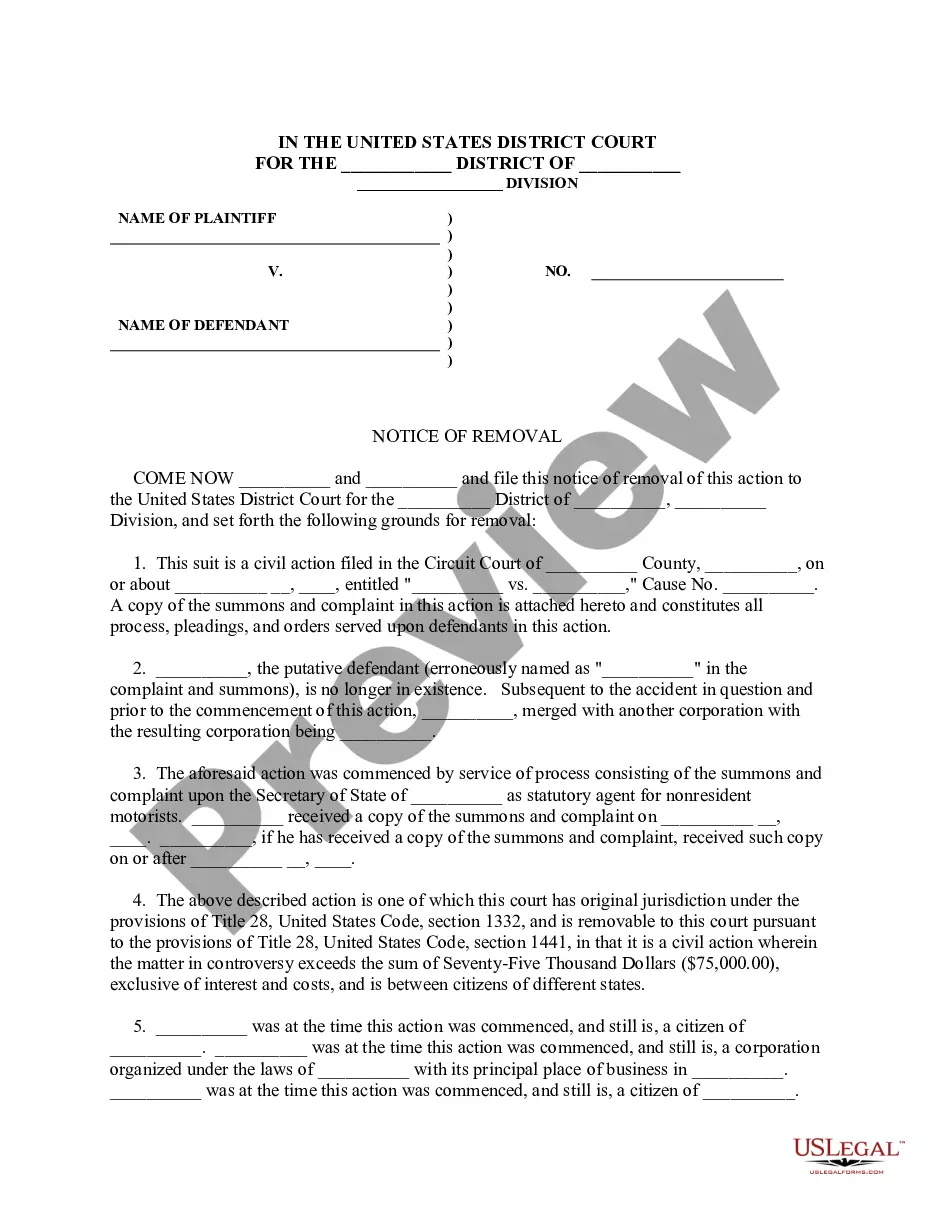
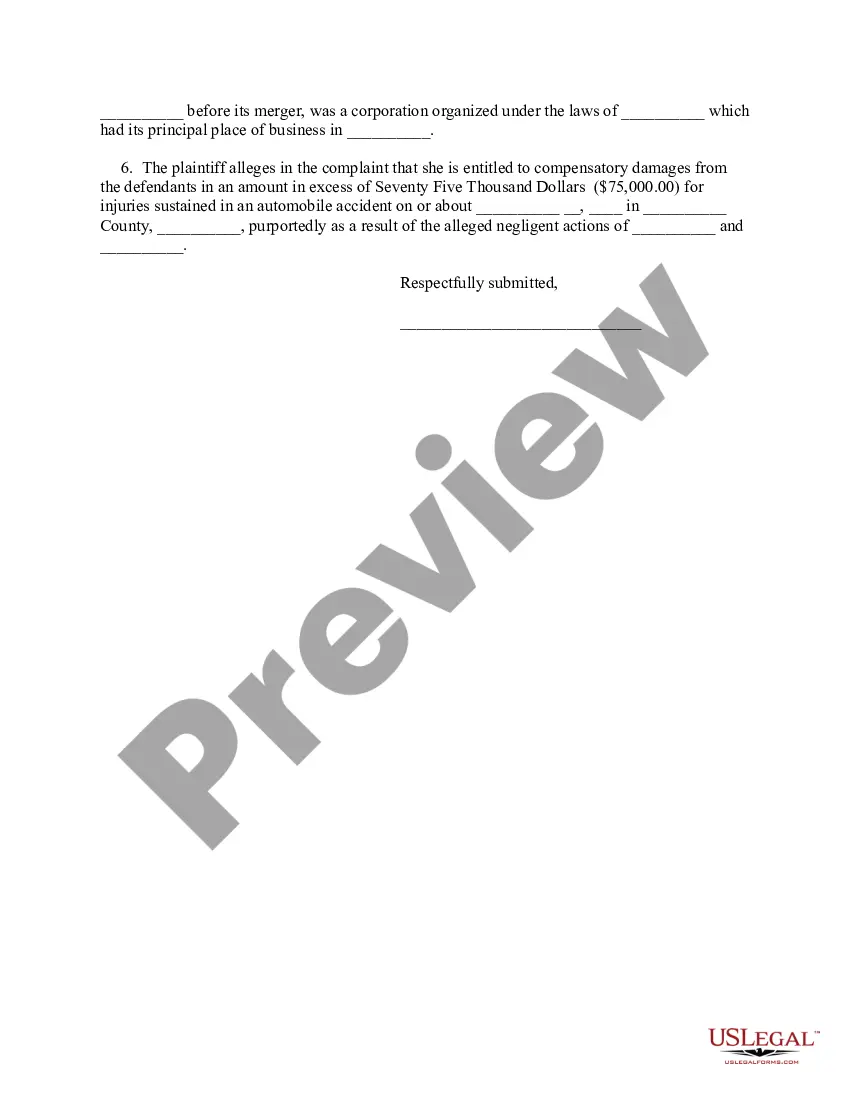
Notice Of Removal Template Without Signature In Ohio
Description
Get your form ready online
Our built-in tools help you complete, sign, share, and store your documents in one place.
Make edits, fill in missing information, and update formatting in US Legal Forms—just like you would in MS Word.
Download a copy, print it, send it by email, or mail it via USPS—whatever works best for your next step.
Sign and collect signatures with our SignNow integration. Send to multiple recipients, set reminders, and more. Go Premium to unlock E-Sign.
If this form requires notarization, complete it online through a secure video call—no need to meet a notary in person or wait for an appointment.
We protect your documents and personal data by following strict security and privacy standards.

Make edits, fill in missing information, and update formatting in US Legal Forms—just like you would in MS Word.

Download a copy, print it, send it by email, or mail it via USPS—whatever works best for your next step.

Sign and collect signatures with our SignNow integration. Send to multiple recipients, set reminders, and more. Go Premium to unlock E-Sign.

If this form requires notarization, complete it online through a secure video call—no need to meet a notary in person or wait for an appointment.

We protect your documents and personal data by following strict security and privacy standards.
Looking for another form?






Form popularity
FAQ
Rule 33 - Interrogatories to Parties (A) Availability; procedures for use. Any party, without leave of court, may serve upon any other party up to forty written interrogatories to be answered by the party served.
Application for the writ of mandamus must be by petition, in the name of the state on the relation of the person applying, and verified by affidavit. The court may require notice of it to be given to the defendant, or grant an order to show cause why it should not be allowed, or allow the writ without notice.
R. 5 duty to serve all other parties but did not authorize the party to use the facilities of a local court's electronic filing system to perform that duty-even though, under local rules, the court's facilities nevertheless serve by electronic means all parties participating in the electronic filing system.
A person who is subject to service of process shall be joined as a party in the action if (1) in his absence complete relief cannot be ed among those already parties, or (2) he claims an interest relating to the subject of the action and is so situated that the disposition of the action in his absence may (a) as ...
Service on Parties: Rule 5 mandates that every written motion, order, or other paper (except those which may be heard ex parte) must be served on each party to the litigation.
(c) If service of process is refused or was unclaimed, the Clerk shall forthwith electronically file a Return of Service Unexecuted which shall serve as notice to the attorney of record or if there is no attorney of record, the party at whose instance process was issued (who shall be copied by regular mail), that ...
For an electronic signature to be legally binding under the ESIGN Act, it is recommended that all electronic signature workflows include the following five elements: Intent to sign. Consent to do business electronically. Opt-out clause. Signed copies. Record retention.
As outlined by the National Telecommunications Information Administration (NTIA), electronic signatures are not legally valid when signing: Wills and testamentary trusts. State statutes governing divorce, adoption or other family law. Court orders or official court documents.
(B) A contract may not be denied legal effect or enforceability solely because an electronic record was used in its formation. (C) If a law requires a record to be in writing, an electronic record satisfies the law. (D) If a law requires a signature, an electronic signature satisfies the law.
Electronic signatures hold up in court since they are legal signatures. The Electronic Signatures in Global and National Commerce Act, otherwise known as the E-Sign Act, states that electronic signatures shouldn't be considered invalid simply because they're electronic.