Service Of Interrogatories Florida In Ohio
Description



Get your form ready online
Our built-in tools help you complete, sign, share, and store your documents in one place.
Make edits, fill in missing information, and update formatting in US Legal Forms—just like you would in MS Word.
Download a copy, print it, send it by email, or mail it via USPS—whatever works best for your next step.
Sign and collect signatures with our SignNow integration. Send to multiple recipients, set reminders, and more. Go Premium to unlock E-Sign.
If this form requires notarization, complete it online through a secure video call—no need to meet a notary in person or wait for an appointment.
We protect your documents and personal data by following strict security and privacy standards.

Make edits, fill in missing information, and update formatting in US Legal Forms—just like you would in MS Word.

Download a copy, print it, send it by email, or mail it via USPS—whatever works best for your next step.

Sign and collect signatures with our SignNow integration. Send to multiple recipients, set reminders, and more. Go Premium to unlock E-Sign.

If this form requires notarization, complete it online through a secure video call—no need to meet a notary in person or wait for an appointment.

We protect your documents and personal data by following strict security and privacy standards.
Looking for another form?










Form popularity
FAQ
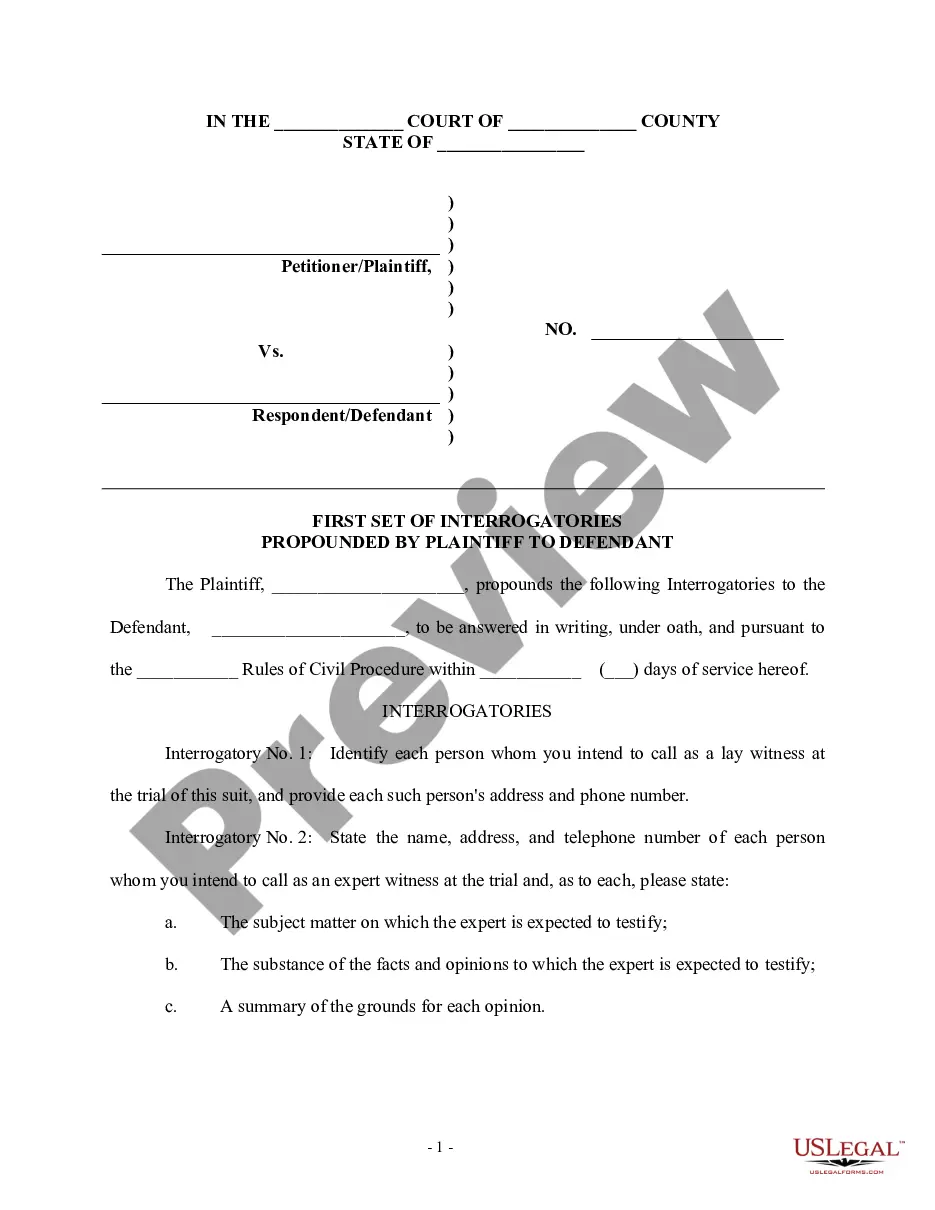
Interrogatories may, without leave of court, be served upon the plaintiff after filing of the complaint and upon any other party with or after service of the summons and complaint upon that party.
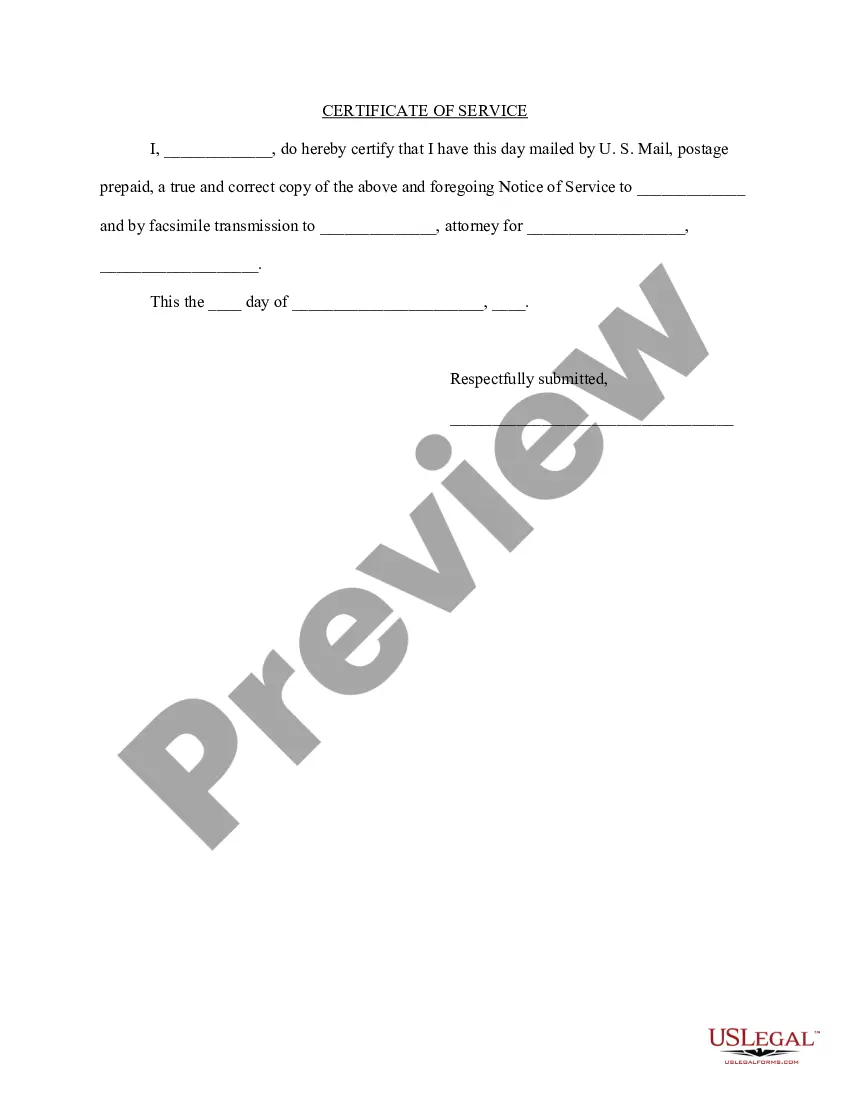
Interrogatories must be served on the party to whom the interrogatories are directed and copies must be served on all other parties. A certificate of service of the interrogatories must be filed, giving the date of service and the name of the party to whom they were directed.
(a) A defendant may propound interrogatories to a party to the action without leave of court at any time. (b) A plaintiff may propound interrogatories to a party without leave of court at any time that is 10 days after the service of the summons on, or appearance by, that party, whichever occurs first.
The original form interrogatories and signed proof of service should be retained for your records. If the other party does not respond to your requests, you may use these documents to support a motion to have the court compel responses.
A photocopy of your form interrogatories must be served on the attorney for the responding party or directly to the responding party if he or she is self-represented (in pro per). Courtesy copies should be served on all other attorneys or self-represented parties in the case.
Civ. P. 33(b)(1)(B), (3) and (5), and Petitioner never moved to compel a proper verification.” Under Rule 33, answers to interrogatories must be verified and must be signed by the person answering the interrogatory, not only by the party's attorney.
The purpose of this requirement—that defendant have time to obtain counsel before a response must be made—is adequately fulfilled by the requirement that interrogatories be served upon a party with or after service of the summons and complaint upon him.
The party upon whom the interrogatories have been served shall serve a copy of the answers and objections within a period designated by the party submitting the interrogatories, not less than twenty-eight days after the service of the interrogatories or within such shorter or longer time as the court may allow.
If you have received interrogatories, you have thirty days to prepare your written answers (unless the court has ordered something else). You do not file your written answers with the court. You simply mail the original back to the other side.
There is no form for your answer, but you typically have to respond in a specified format, using paper with numbers down the left-hand side, with your name and address at the top left, the name of the court and of the case, and the case number.