Service Notice By Email In Massachusetts
Description


Get your form ready online
Our built-in tools help you complete, sign, share, and store your documents in one place.
Make edits, fill in missing information, and update formatting in US Legal Forms—just like you would in MS Word.
Download a copy, print it, send it by email, or mail it via USPS—whatever works best for your next step.
Sign and collect signatures with our SignNow integration. Send to multiple recipients, set reminders, and more. Go Premium to unlock E-Sign.
If this form requires notarization, complete it online through a secure video call—no need to meet a notary in person or wait for an appointment.
We protect your documents and personal data by following strict security and privacy standards.

Make edits, fill in missing information, and update formatting in US Legal Forms—just like you would in MS Word.

Download a copy, print it, send it by email, or mail it via USPS—whatever works best for your next step.

Sign and collect signatures with our SignNow integration. Send to multiple recipients, set reminders, and more. Go Premium to unlock E-Sign.

If this form requires notarization, complete it online through a secure video call—no need to meet a notary in person or wait for an appointment.

We protect your documents and personal data by following strict security and privacy standards.
Looking for another form?






Form popularity
FAQ
If service is made by mail, then proof of service must include a signed receipt or other evidence of successful personal delivery to the defendant that will satisfy the court where the case is filed.
Rule 7 reflects the belief that extensive and complex pleadings are not desirable as a vehicle for the narrowing of issues in a case and that this function can be better performed by discovery and the use of the pretrial conference.
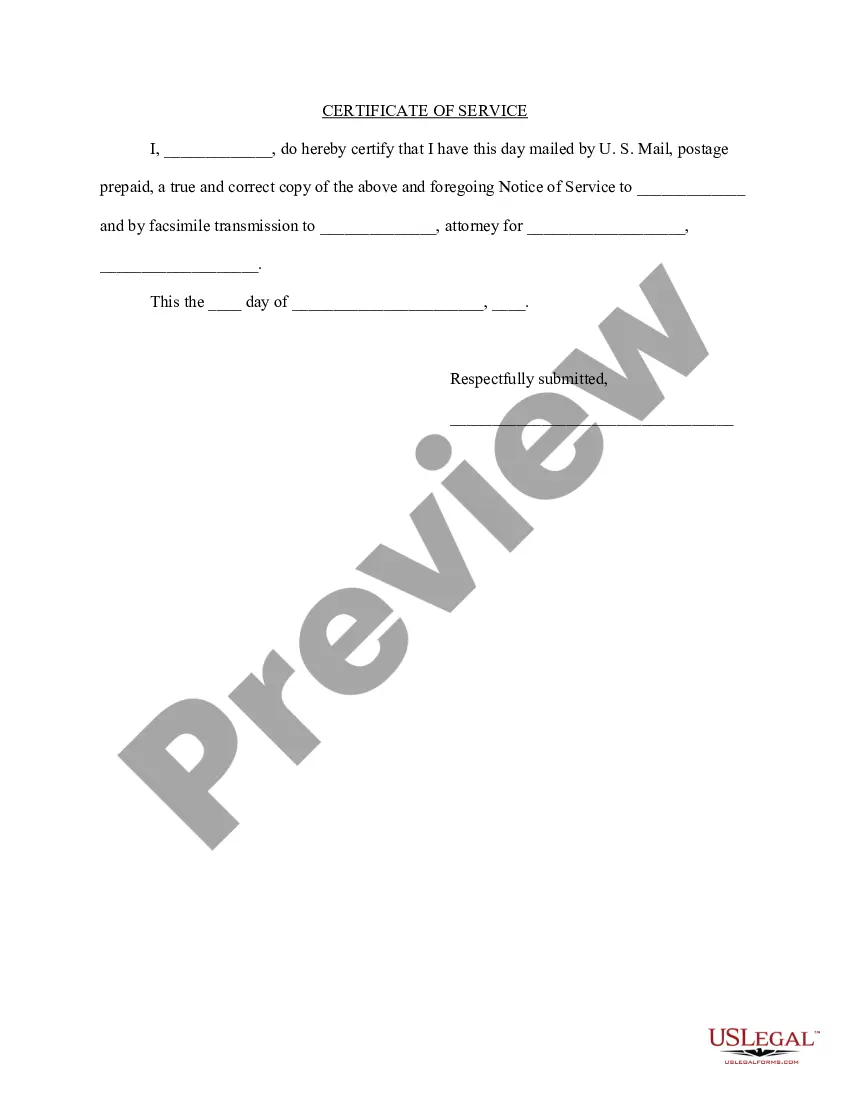
(a) All documents e-filed must be served Except as otherwise provided in the Massachusetts Court Rules and Orders, or as otherwise ordered by the court, all electronically filed documents must be served on all other parties. Any document filed through the e-filing system must include a certificate of service.
Under Rule 5(b), service may be made by mailing the paper to the party or attorney at his last known address; if no address is known, the paper may be left with the clerk of court. Prior Massachusetts practice made no provision in cases where the address was unknown.
(f) Failure to Provide Electronically Stored Information. Absent exceptional circumstances, a court may not impose sanctions on a party for failing to produce electronically stored information lost as a result of the routine, good-faith operation of an electronic information system.
Publicly accessible documents filed with the court shall conform to Supreme Judicial Court Rule , Protection of Personal Identifying Information in Publicly Accessible Court Documents. A User is responsible for redacting personal identifying information. The clerk will not review filed documents for compliance.
Notice by electronic transmission is written notice. (b) Notice may be communicated in person; by telephone, voice mail, telegraph, teletype, or other electronic means; by mail; by electronic transmission; or by messenger or delivery service.
Once a filing entity's tax liability reaches the $100,000 threshold in one taxable year, the filing entity must E-file in all subsequent years regardless of the amount due, as long as it has an obligation to file one of the three categories of taxes in Massachusetts.
Under Rule 5(b), service may be made by mailing the paper to the party or attorney at his last known address; if no address is known, the paper may be left with the clerk of court. Prior Massachusetts practice made no provision in cases where the address was unknown.