Notice Discovery Template For Product In Massachusetts
Description


Get your form ready online
Our built-in tools help you complete, sign, share, and store your documents in one place.
Make edits, fill in missing information, and update formatting in US Legal Forms—just like you would in MS Word.
Download a copy, print it, send it by email, or mail it via USPS—whatever works best for your next step.
Sign and collect signatures with our SignNow integration. Send to multiple recipients, set reminders, and more. Go Premium to unlock E-Sign.
If this form requires notarization, complete it online through a secure video call—no need to meet a notary in person or wait for an appointment.
We protect your documents and personal data by following strict security and privacy standards.

Make edits, fill in missing information, and update formatting in US Legal Forms—just like you would in MS Word.

Download a copy, print it, send it by email, or mail it via USPS—whatever works best for your next step.

Sign and collect signatures with our SignNow integration. Send to multiple recipients, set reminders, and more. Go Premium to unlock E-Sign.

If this form requires notarization, complete it online through a secure video call—no need to meet a notary in person or wait for an appointment.

We protect your documents and personal data by following strict security and privacy standards.
Looking for another form?









Form popularity
FAQ
A Rule 14 motion is a legal request to sever a defendant's trial from co-defendants or separate charges to prevent prejudice, ensuring a fair trial under the Federal Rules of Criminal Procedure.
Whenever a party is required or permitted to do an act within a prescribed period after service of a document upon the party and the document is served by first class mail or its equivalent, 3 days shall be added to the prescribed period.
At any time after commencement of the action a defending party, as a third-party plaintiff, may cause a summons and complaint to be served upon a person not a party to the action who is or may be liable to the third-party plaintiff for all or part of the plaintiff's claim against the third-party plaintiff.
However, the defendant is permitted extra time to respond from the normal 30 days to 45 days if the discovery is propounded along with the divorce summons and complaint (meaning that a defendant does not have to respond until the expiration of 45 days following the date a summons/complaint is served upon them).
The Massachusetts discovery rule, in essence, alters the starting point of the statute of limitations. Rather than commencing from the date of the incident, it begins when the injury is discovered or reasonably should have been discovered.
Q: Can I get access to documents exchanged by parties to a lawsuit during discovery? A: Generally, access is only possible if the documents have been submitted to the court, or if a party is not subject to a protective order and chooses to give them to you.
"The best evidence rule provides that, where the contents of a document are to be proved, the party must either produce the original or show a sufficient excuse for its nonproduction.
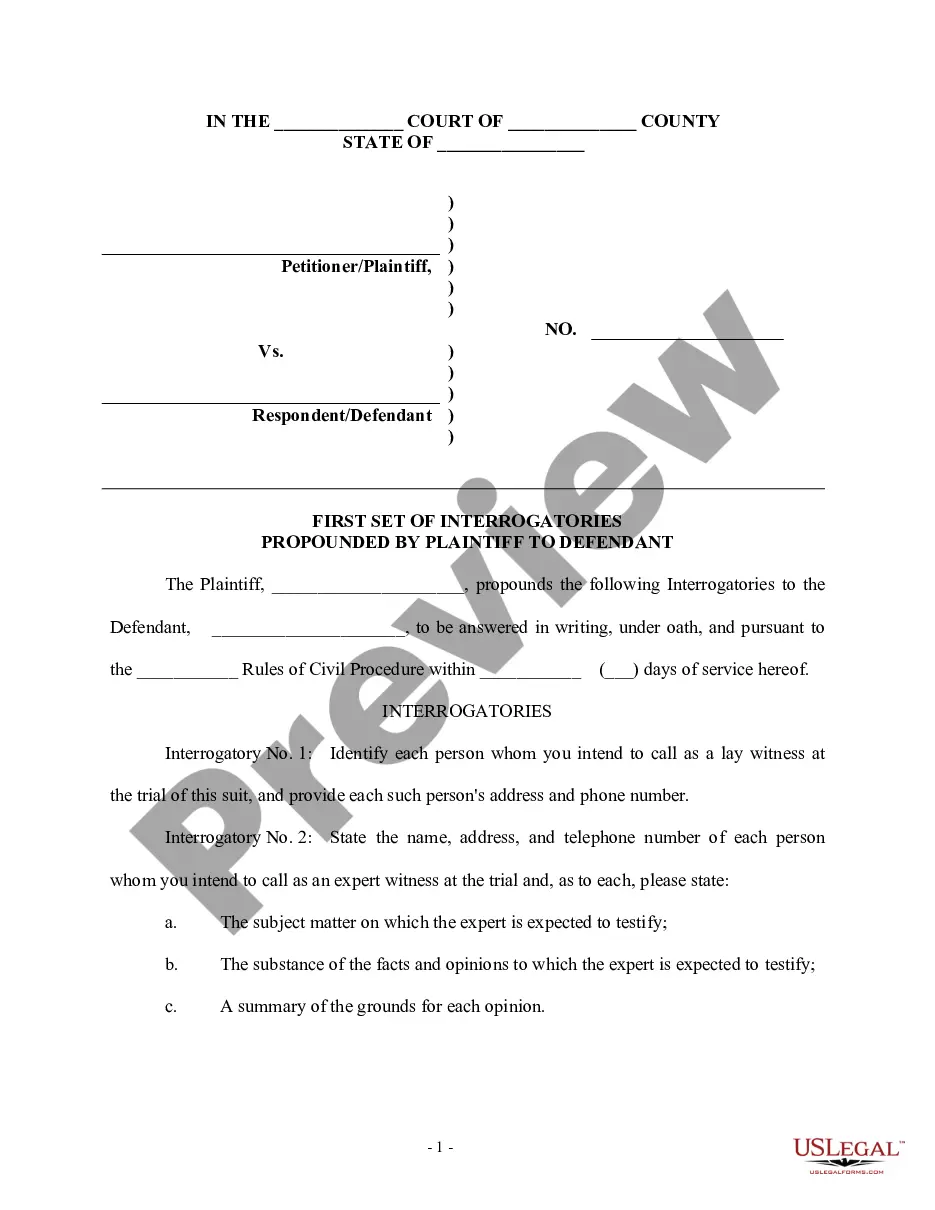
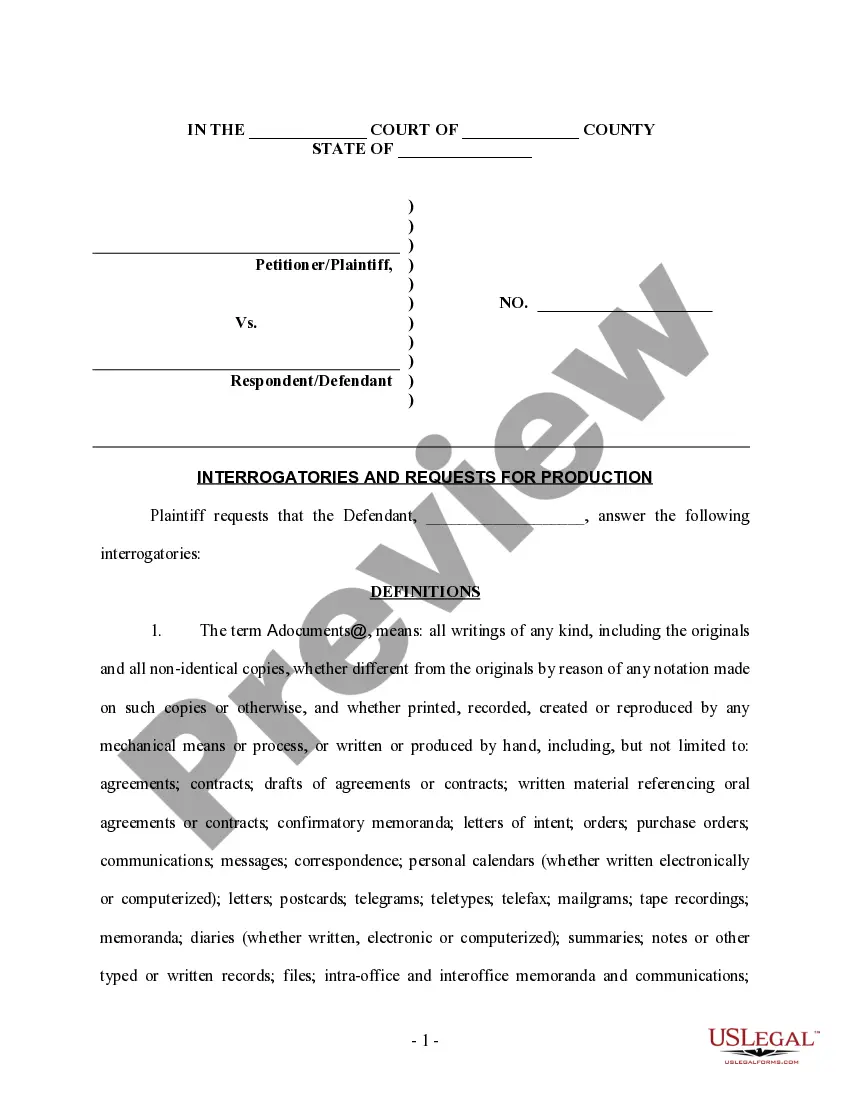
No party shall serve on any other party as of right more than one set of interrogatories, unless the total number of all interrogatories in all sets combined does not exceed thirty; including interrogatories subsidiary or incidental to, or dependent upon, other interrogatories, and however the same may be grouped or ...
Third-Party Practice. (a) When a Defending Party May Bring in a Third Party. (1) Timing of the Summons and Complaint. A defending party may, as third-party plaintiff, serve a summons and complaint on a nonparty who is or may be liable to it for all or part of the claim against it.
The rule requires that the defendant make available to the Commonwealth's examiner, within 14 days of the examiner's appointment, three categories of information: (a) the defendant's mental-health records, broadly defined, that are possessed by defense counsel, (b) the defendant's medical records that are possessed by ...