Notice Of Serving Interrogatories Form In Maricopa
Description











Form popularity
FAQ
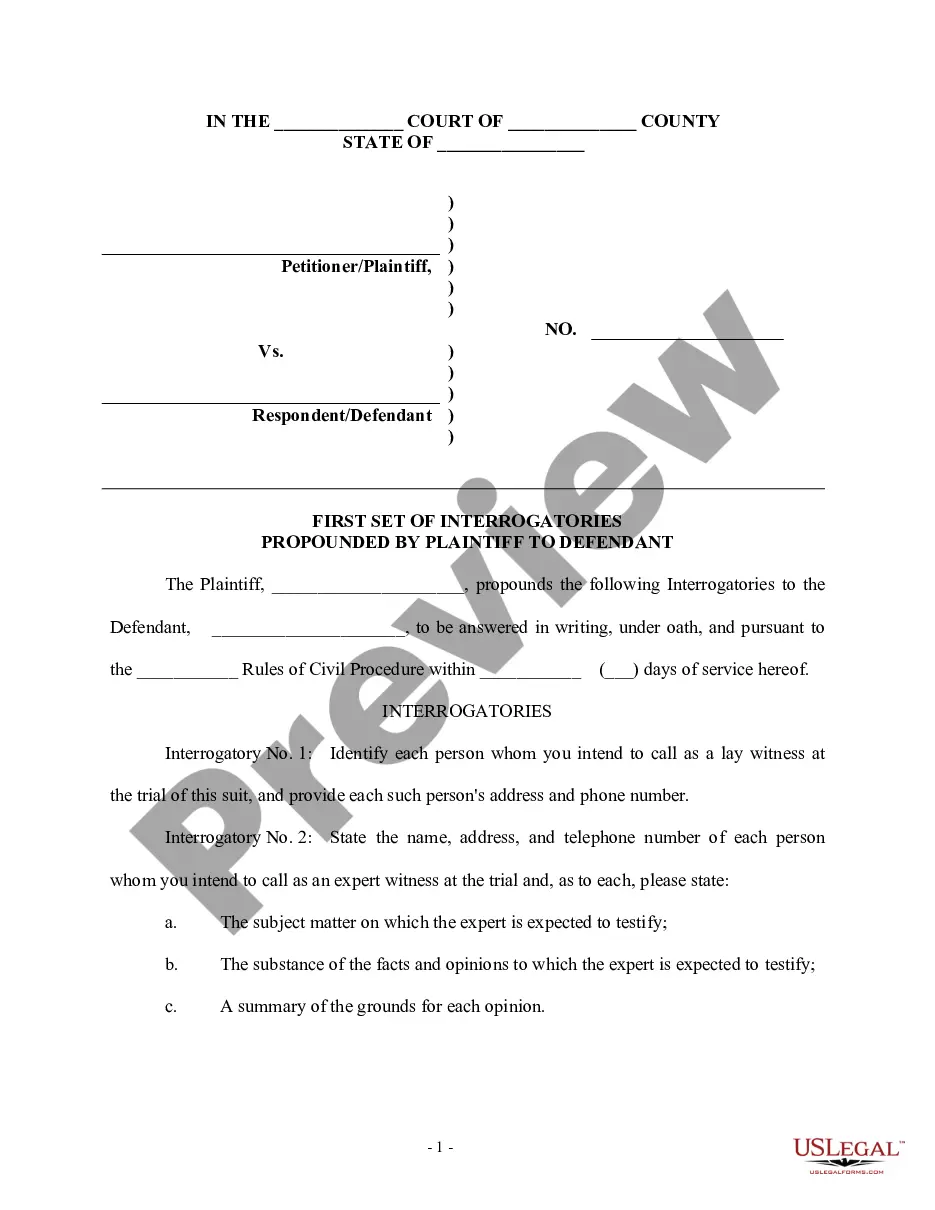
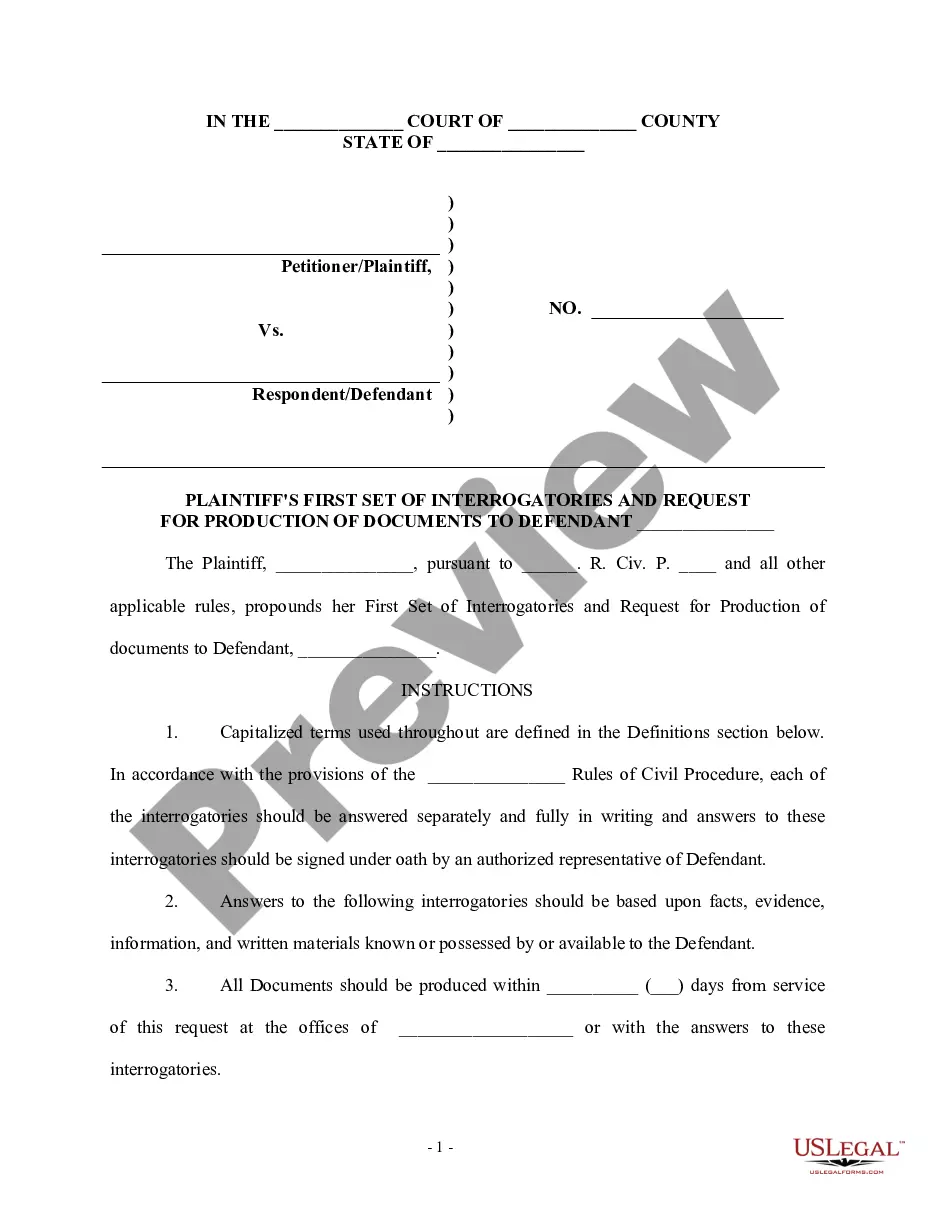
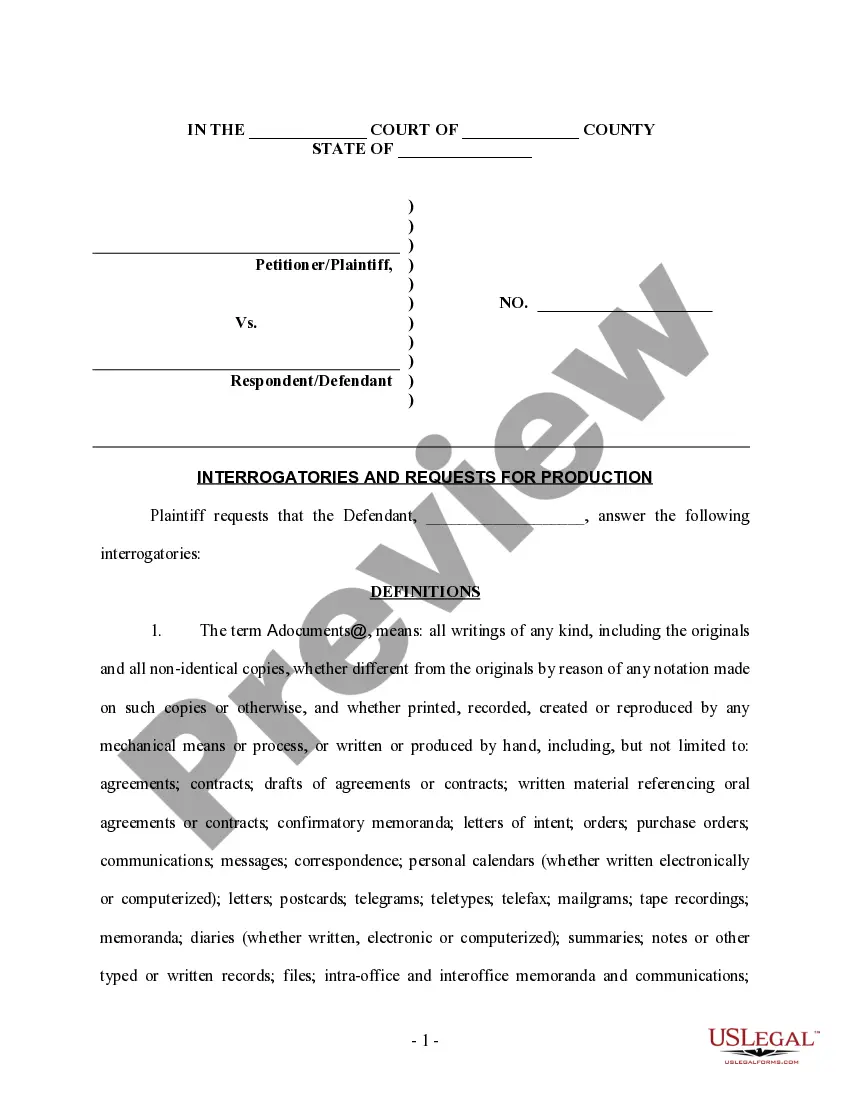
A party may use a uniform interrogatory when it is appropriate to the legal or factual issues of the particular action, regardless of how the action or claims are designated. A party propounding a uniform interrogatory may do so by serving a notice that identifies the uniform interrogatory by form and number.
A Writ of Execution allows the Constable to seize the judgment debtor's non-exempt PERSONAL PROPERTY and hold it for sale at public auction, for the purpose of satisfying the judgment. There are issuance fees and constable fees associated with a writ of execution.
Interrogatories to Parties (a) In General. (1) Availability. Unless otherwise stipulated or ordered by the court, a party may serve on any other party no more than 25 written interrogatories, including all discrete subparts.
Any party may serve upon any other party written interrogatories to be answered by the party served or, if the party served is a public or private corporation or a partnership or association or governmental agency, by any officer or agent, who shall furnish such information as is available to the party.
Rule 76 - Resolution Management Conference (a)Purpose and Setting. The purpose of a resolution management conference ("RMC") is to facilitate agreements between the parties. The court may, and on a party's request must, set an RMC.
You have to respond to interrogatories in writing to the best of your ability. If you do not answer an interrogatory question, and then the other side learns that you did in fact know the answer, it could have a negative impact on your case at trial.
Arizona Rule of Family Law Procedure 49 (Rule 49) requires both parties to share information in family law cases. It requires each party send to the other party a detailed statement with the specific positions the party proposes to resolve all issues.
New Trial. On a defendant's motion, the court may grant a new trial to that defendant if the interests of justice so require. If trial was by the court without a jury, the court may-on defendant's motion for new trial-vacate the judgment, take additional testimony, and direct the entry of a new judgment.
Divorce records are open in Arizona; therefore, anyone of legal age can access plain copies for information. Certified copies are restricted to the bearers of the record and any other individual with a court order.