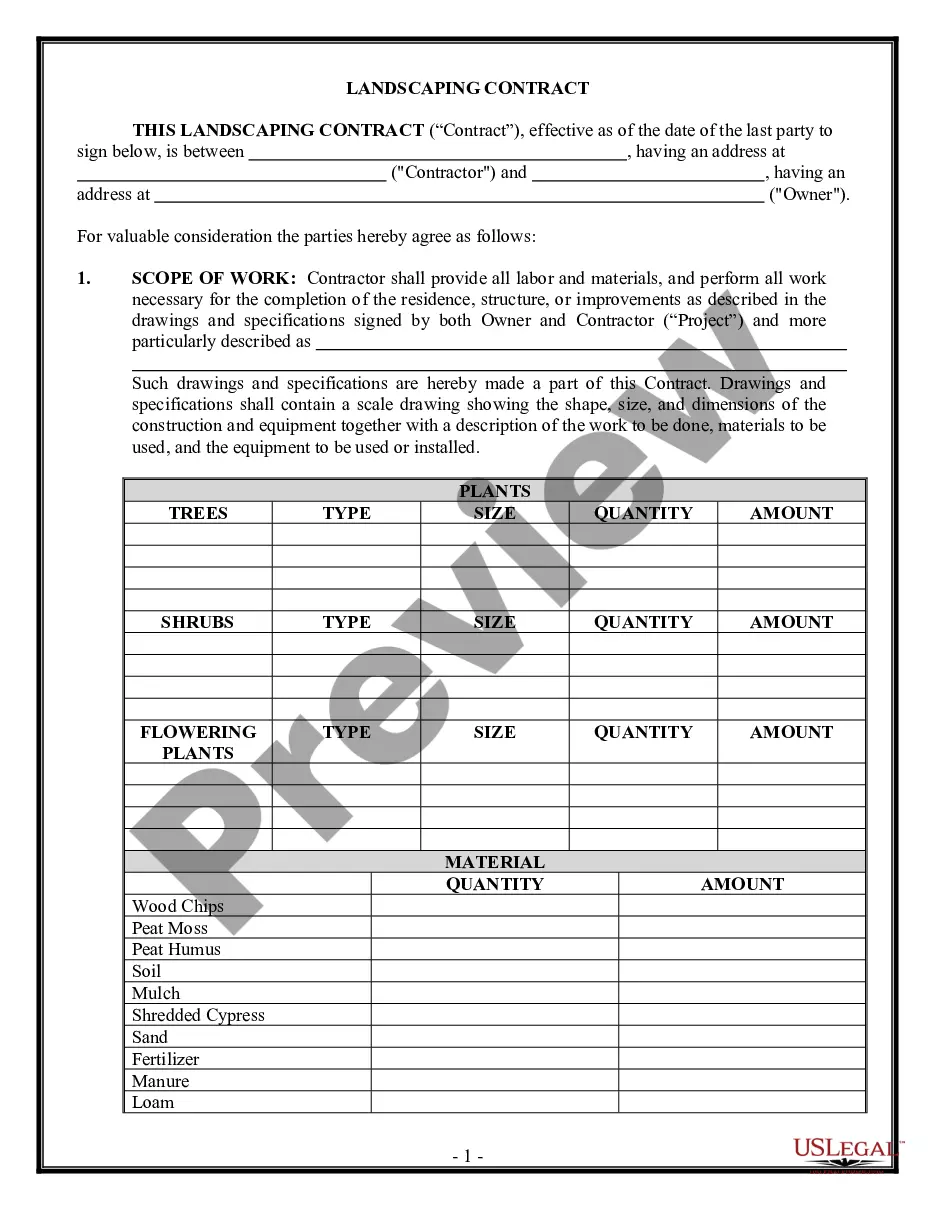
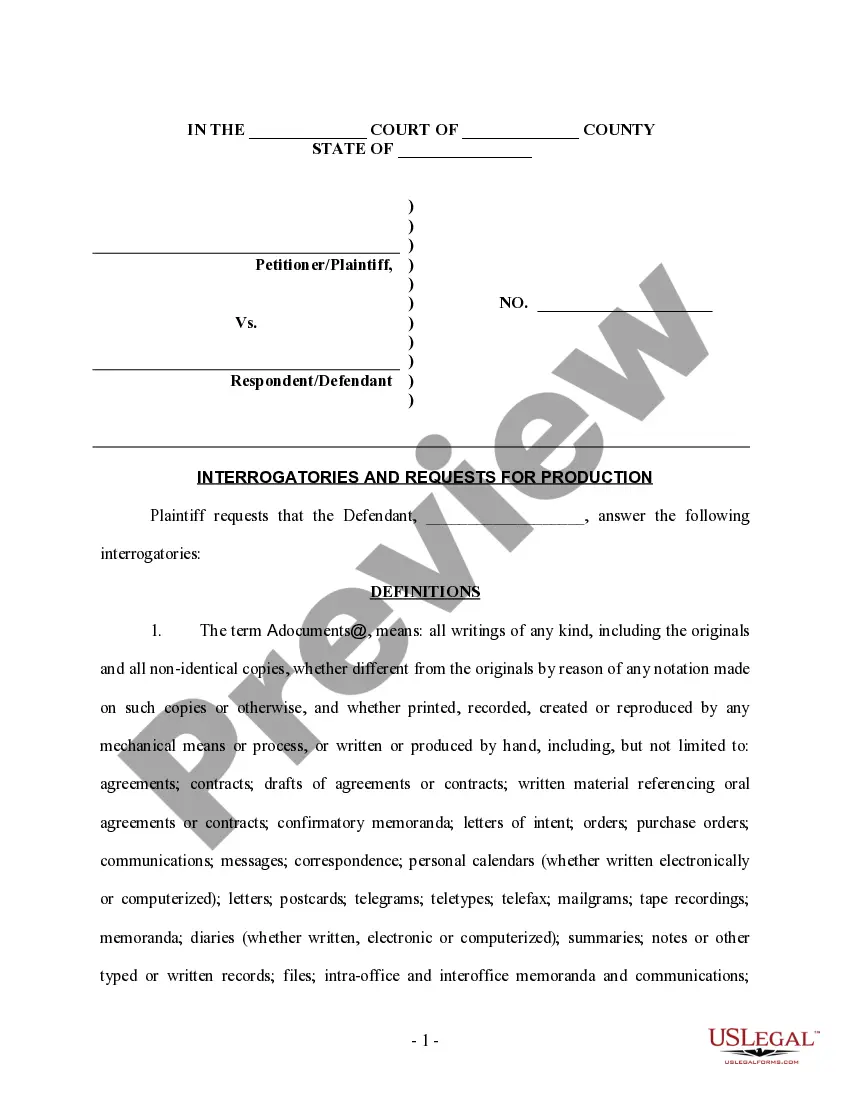
Notice Of Serving Interrogatories Form In Fulton
Description


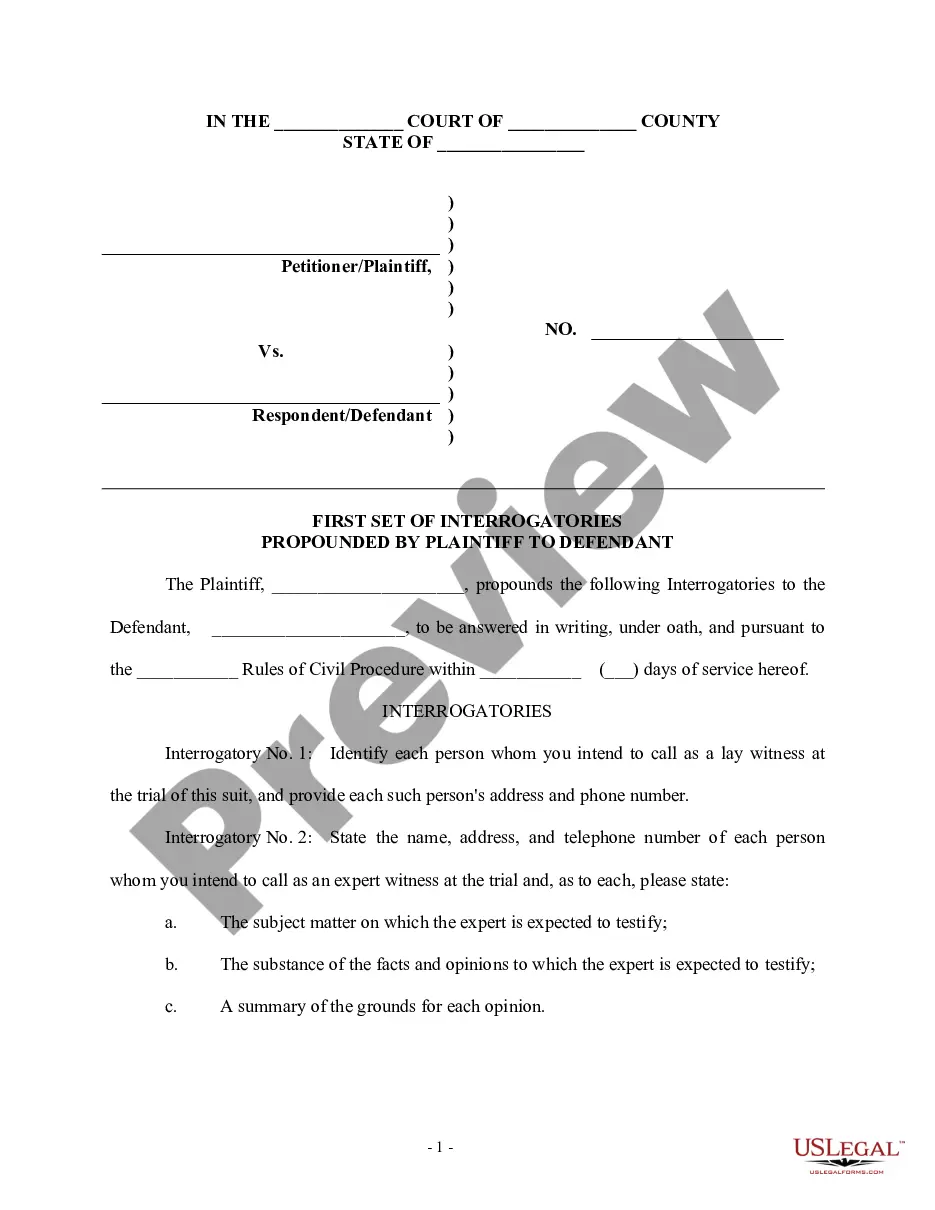
Get your form ready online
Our built-in tools help you complete, sign, share, and store your documents in one place.
Make edits, fill in missing information, and update formatting in US Legal Forms—just like you would in MS Word.
Download a copy, print it, send it by email, or mail it via USPS—whatever works best for your next step.
Sign and collect signatures with our SignNow integration. Send to multiple recipients, set reminders, and more. Go Premium to unlock E-Sign.
If this form requires notarization, complete it online through a secure video call—no need to meet a notary in person or wait for an appointment.
We protect your documents and personal data by following strict security and privacy standards.

Make edits, fill in missing information, and update formatting in US Legal Forms—just like you would in MS Word.

Download a copy, print it, send it by email, or mail it via USPS—whatever works best for your next step.

Sign and collect signatures with our SignNow integration. Send to multiple recipients, set reminders, and more. Go Premium to unlock E-Sign.

If this form requires notarization, complete it online through a secure video call—no need to meet a notary in person or wait for an appointment.

We protect your documents and personal data by following strict security and privacy standards.
Looking for another form?









Form popularity
FAQ
How to respond to form interrogatories Download the blank response template and fill in basic information. Prepare the template for your responses. Read and answer the questions. Sign the document.
How to fill out Form Interrogatories Fill in basic information at the top of the form. Provide basic information about your case. Select the questions. On Page 2, check the box next to each question you want to ask your spouse to answer. Make copies. Make 1 copy of the completed Form Interrogatories – Family Law.
Make a copy of your form interrogatories for each attorney or self-represented party in your case. You will keep the original. They are not filed with the court.
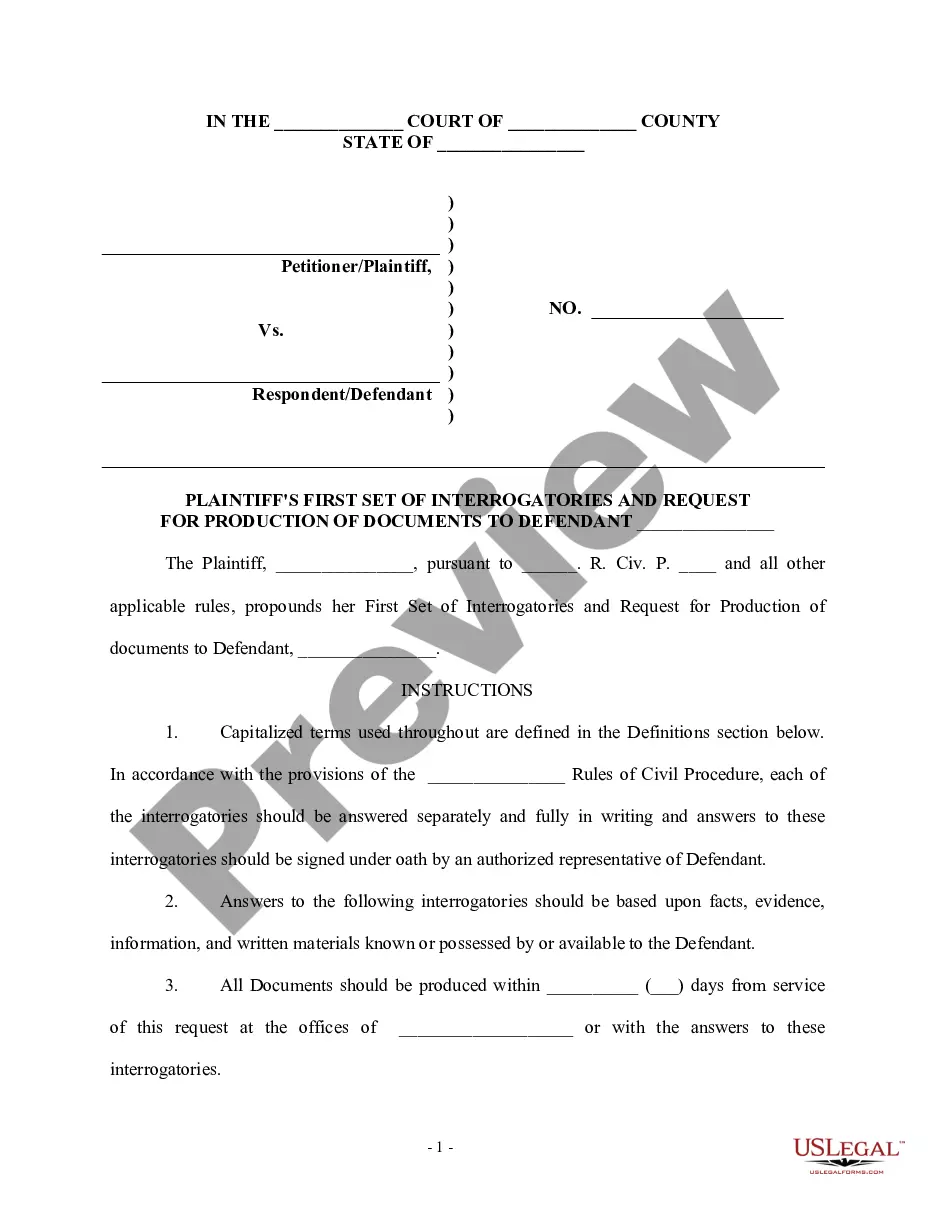
When a party to a civil case needs to get information from the other side, she can serve the other side with written requests called “discovery requests.” These requests might include: Interrogatories, which are written questions about things that are relevant or important to the case. (NRCP 33; JCRCP 33)
Each interrogatory shall be answered separately and fully in writing under oath, unless it is objected to, in which event the reasons for objection shall be stated in lieu of an answer. The answers are to be signed by the person making them, and the objections signed by the attorney making them.
Definition: Written questions submitted to a party from his or her adversary to ascertain answers that are prepared in writing and signed under oath and that have relevance to the issues in a lawsuit.
(a) Interrogatories are written questions prepared by a party to an action that are sent to any other party in the action to be answered under oath. The interrogatories below are form interrogatories approved for use in civil cases.
Interrogatories are written questions sent by one party in a lawsuit to another party in that same suit, which the responding party must answer under penalty of perjury. Interrogatories allow the parties to ask who, what, when, where and why questions, making them a good method for obtaining new information.