Notice Of Application For Discovery In Cook
Description

Get your form ready online
Our built-in tools help you complete, sign, share, and store your documents in one place.
Make edits, fill in missing information, and update formatting in US Legal Forms—just like you would in MS Word.
Download a copy, print it, send it by email, or mail it via USPS—whatever works best for your next step.
Sign and collect signatures with our SignNow integration. Send to multiple recipients, set reminders, and more. Go Premium to unlock E-Sign.
If this form requires notarization, complete it online through a secure video call—no need to meet a notary in person or wait for an appointment.
We protect your documents and personal data by following strict security and privacy standards.

Make edits, fill in missing information, and update formatting in US Legal Forms—just like you would in MS Word.

Download a copy, print it, send it by email, or mail it via USPS—whatever works best for your next step.

Sign and collect signatures with our SignNow integration. Send to multiple recipients, set reminders, and more. Go Premium to unlock E-Sign.

If this form requires notarization, complete it online through a secure video call—no need to meet a notary in person or wait for an appointment.

We protect your documents and personal data by following strict security and privacy standards.
Looking for another form?









Form popularity
FAQ
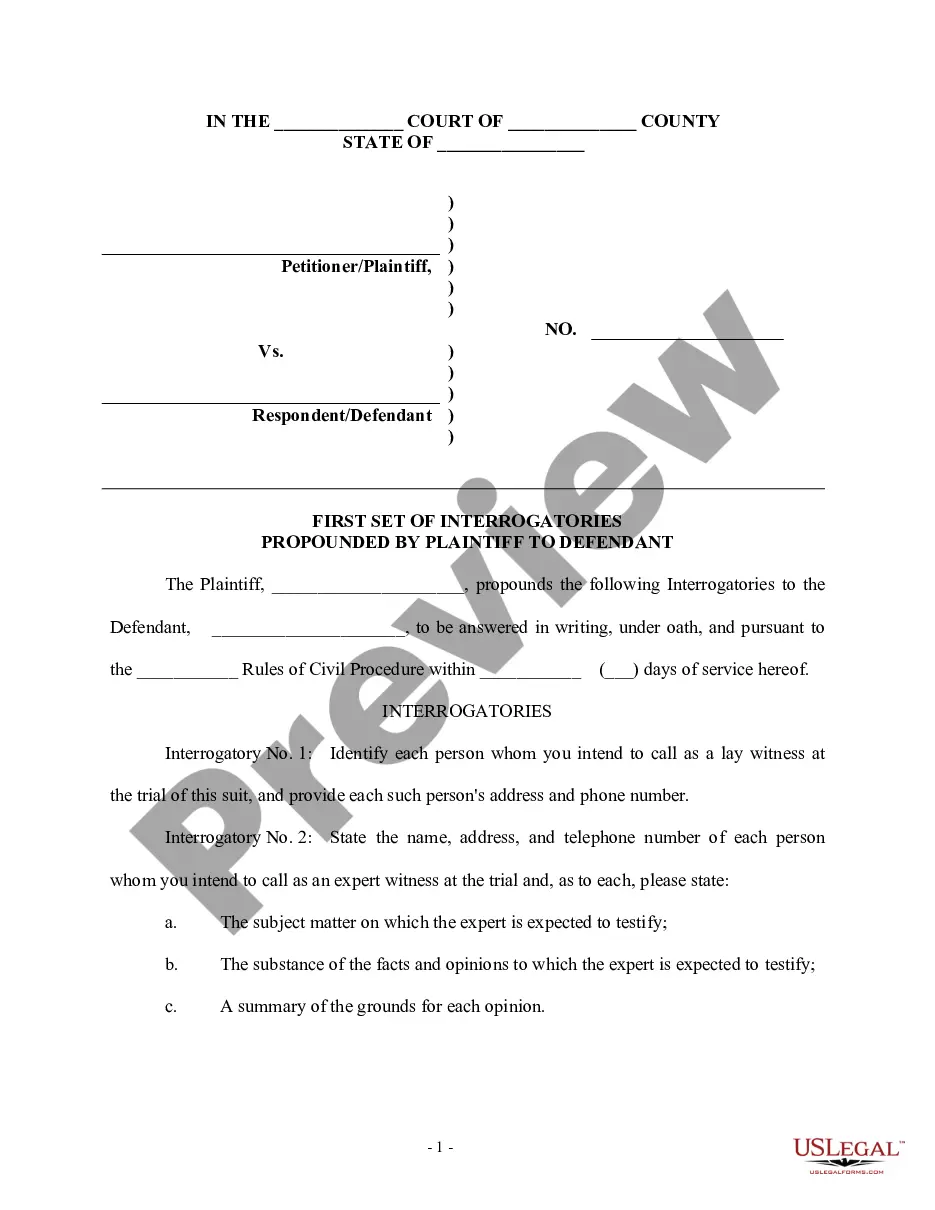
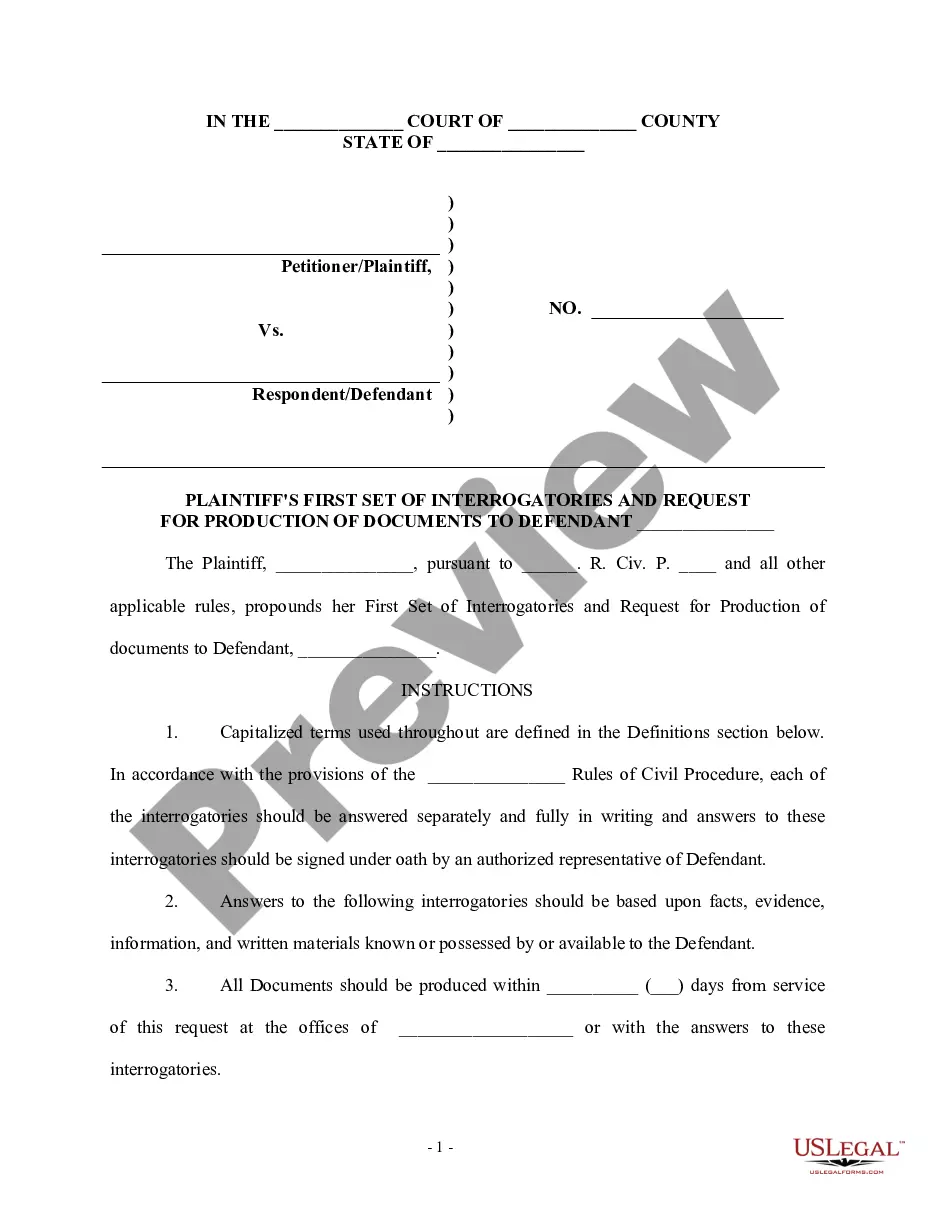
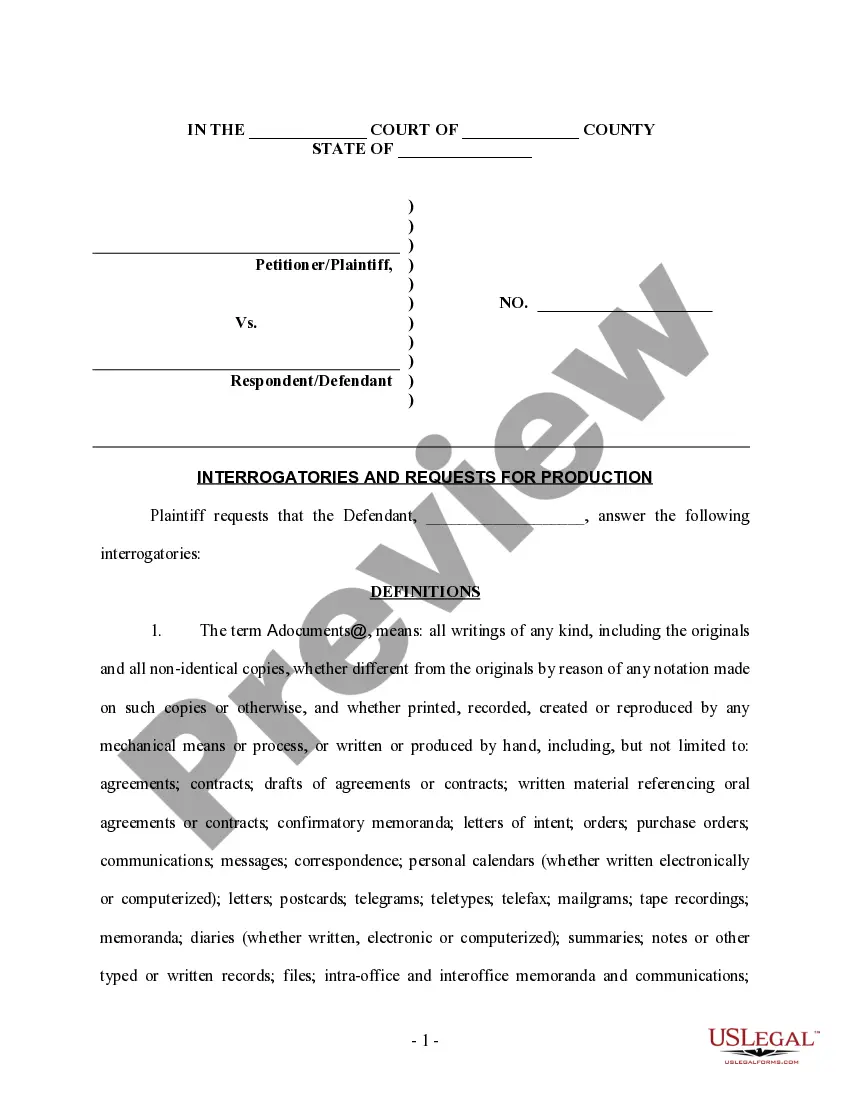
Steps Of The Discovery Process. There are four key actions in the discovery process which include interrogatories, request for documents, request for admissions, and depositions.
(a) No party shall serve on any other party more than thirty (30) written interrogatories in the aggregate including subsections except upon agreement of the parties or leave of court granted upon a showing of good cause.
Discovery is the process through which a party learns or discovers the evidence and arguments the adversary intends to rely on in the law suit. The documentary discovery rule directs what must be disclosed and produced, the form and process for that disclosure, and the possible reasons for non-disclosure.
A typical product discovery template is divided into four key sections, each addressing a crucial aspect of the product discovery process—things like ideation, research and validation, prototyping, testing, and refining.
Write out each fact you wish the other party to admit is true. When writing these facts, be as clear and concise as possible. Each request must be for a single fact; do not include multiple facts, compound questions, or subparts.
Discovery may involve the existence, description, nature, custody, condition and location of books, documents, electronically stored information or other tangible things, as well as the identity of the person or persons having knowledge of something that is “discoverable.” Even if something is arguably NOT discoverable ...
Writing as a Process of Discovery Stage One: Close Reading. Stage Two: You Need an Argument. Stage Three: Selecting and Analyzing Evidence. Introductions, Transitions, and Conclusions.
Discovery means you send the other side questions and requests for information or items (like documents) in writing. The other side must respond to your question or request in writing.
How Does Discovery Work? There are four main types of discovery requests: (1) depositions; (2) interrogatories; (3) requests for admissions; and (4) requests for the production of documents. Depositions are formal witness interviews.
How Does Discovery Work? There are four main types of discovery requests: (1) depositions; (2) interrogatories; (3) requests for admissions; and (4) requests for the production of documents. Depositions are formal witness interviews.