Notice For Discovery And Inspection New York In Broward
Description





Get your form ready online
Our built-in tools help you complete, sign, share, and store your documents in one place.
Make edits, fill in missing information, and update formatting in US Legal Forms—just like you would in MS Word.
Download a copy, print it, send it by email, or mail it via USPS—whatever works best for your next step.
Sign and collect signatures with our SignNow integration. Send to multiple recipients, set reminders, and more. Go Premium to unlock E-Sign.
If this form requires notarization, complete it online through a secure video call—no need to meet a notary in person or wait for an appointment.
We protect your documents and personal data by following strict security and privacy standards.

Make edits, fill in missing information, and update formatting in US Legal Forms—just like you would in MS Word.

Download a copy, print it, send it by email, or mail it via USPS—whatever works best for your next step.

Sign and collect signatures with our SignNow integration. Send to multiple recipients, set reminders, and more. Go Premium to unlock E-Sign.

If this form requires notarization, complete it online through a secure video call—no need to meet a notary in person or wait for an appointment.

We protect your documents and personal data by following strict security and privacy standards.
Looking for another form?

Form popularity
FAQ
Discovery can be time-consuming, but it plays a vital role in litigation. It often leads to settlements by clarifying the facts and narrowing the issues in dispute. If your case does proceed to trial, discovery ensures that both sides are better prepared to present their arguments.
Depositions of Expert Witnesses are further discussed in Florida Rule of Civil Procedure 1.390. While the goal of discovery is mutual exchange of information so that both parties can efficiently hammer out the facts and otherwise assess liability and damages, each side often possess “privileged” material.
A discovery response is essentially a choice that you make after receiving a request for information. The question then becomes, Should you comply or not?
Unlike the federal rule that ties commencement of discovery to an initial discovery conference, the new Florida rule ties the commencement of discovery to providing initial disclosures, which means that a party that completes its initial disclosures first can also serve discovery first.
A discovery response is essentially a choice that you make after receiving a request for information. The question then becomes, Should you comply or not?
Conclusion: Following discovery, the lawsuit needs a final conclusion. Most cases settle, with mediation being the most common means of reaching settlement. If settlement efforts fail, then the final outcome is determined by trial.
What is the Purpose of Discovery? The purpose of discovery is to provide parties the opportunity to gather evidence relevant to proving or defending the case.
Florida's statute of limitations for personal injury cases is generally two years from the date of the injury. However, the discovery rule allows for an exception: the statute of limitations may begin on the date you first discovered (or reasonably should have discovered) the injury.
(b) Document Demand: As the name indicates, this is a written demand in which one party demands that the other produce certain documents for inspection and copying. (This device is also referred to as a notice of discovery and inspection). The demand must define the items sought with reasonable particularity.
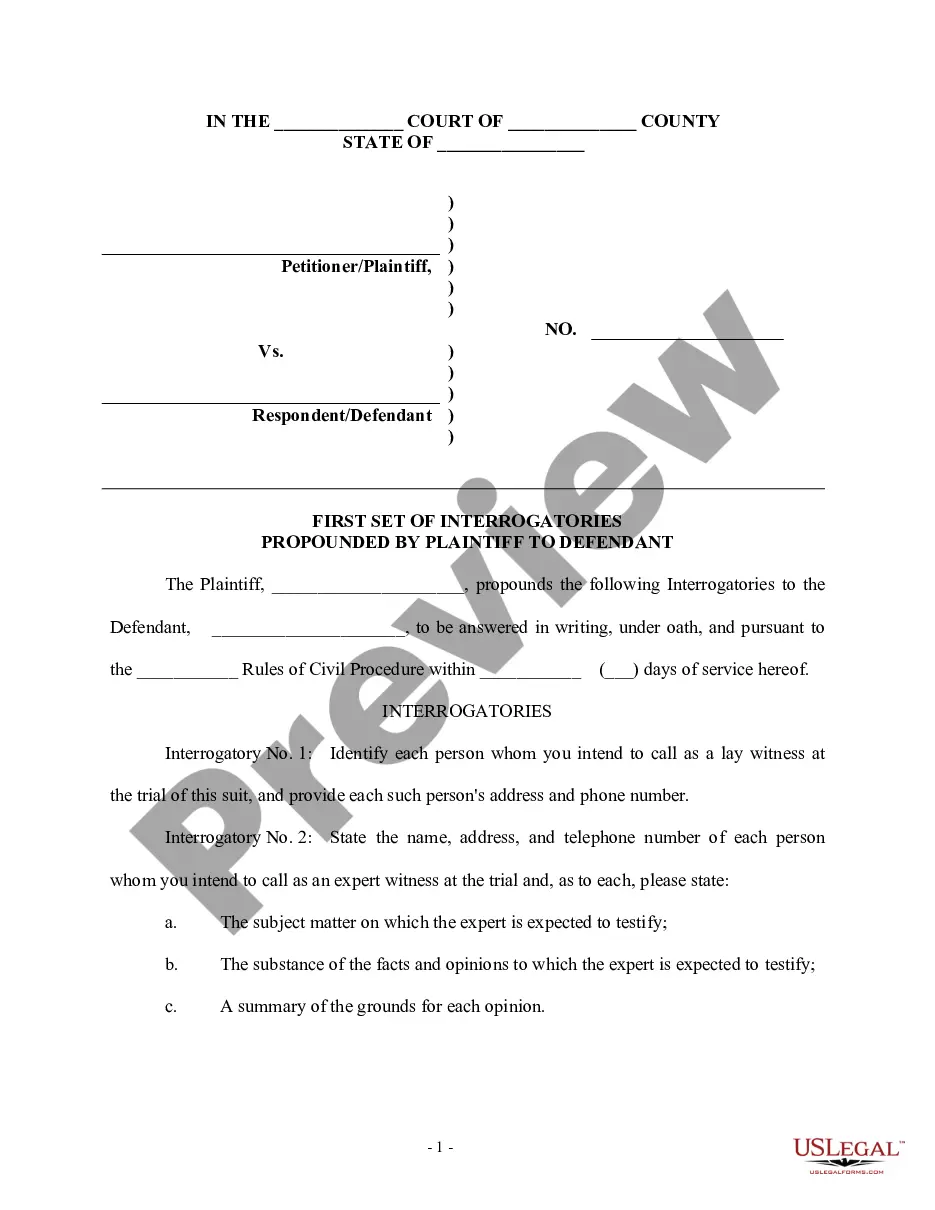
You have 30 days to respond to interrogatories, but you may ask the other party for more time. If the other party declines, you may write to the judge to ask for an extension of time. You must answer each interrogatory separately and fully in writing and under oath.