Single Member Llc Resolution Template For Funeral Program In Fairfax
Description
Get your form ready online
Our built-in tools help you complete, sign, share, and store your documents in one place.
Make edits, fill in missing information, and update formatting in US Legal Forms—just like you would in MS Word.
Download a copy, print it, send it by email, or mail it via USPS—whatever works best for your next step.
Sign and collect signatures with our SignNow integration. Send to multiple recipients, set reminders, and more. Go Premium to unlock E-Sign.
If this form requires notarization, complete it online through a secure video call—no need to meet a notary in person or wait for an appointment.
We protect your documents and personal data by following strict security and privacy standards.

Make edits, fill in missing information, and update formatting in US Legal Forms—just like you would in MS Word.

Download a copy, print it, send it by email, or mail it via USPS—whatever works best for your next step.

Sign and collect signatures with our SignNow integration. Send to multiple recipients, set reminders, and more. Go Premium to unlock E-Sign.

If this form requires notarization, complete it online through a secure video call—no need to meet a notary in person or wait for an appointment.

We protect your documents and personal data by following strict security and privacy standards.
Looking for another form?










Form popularity
FAQ
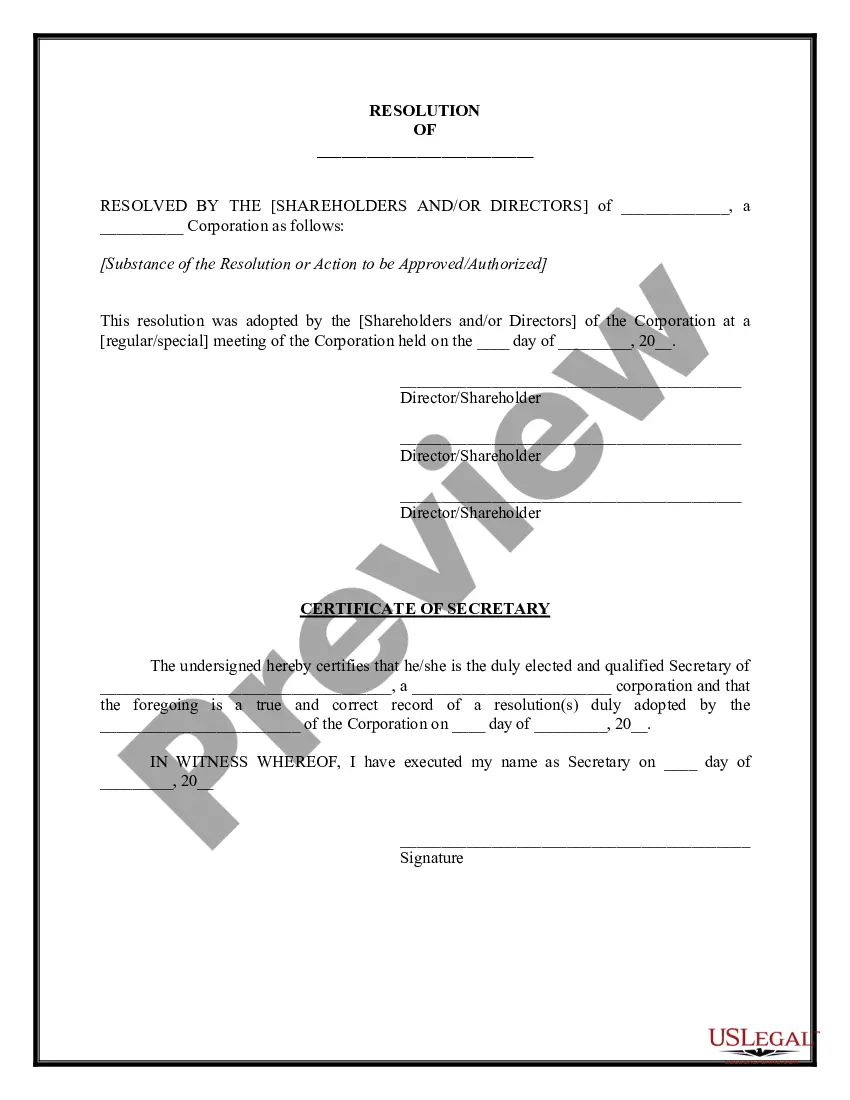
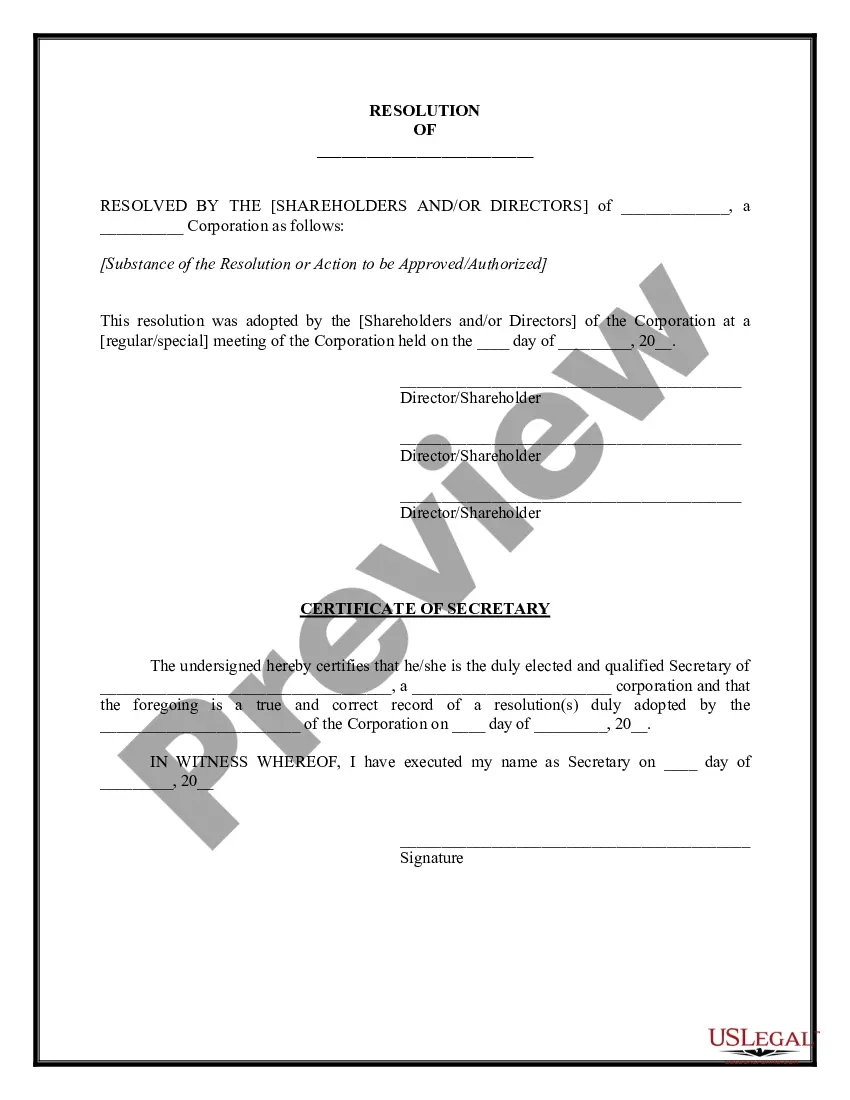
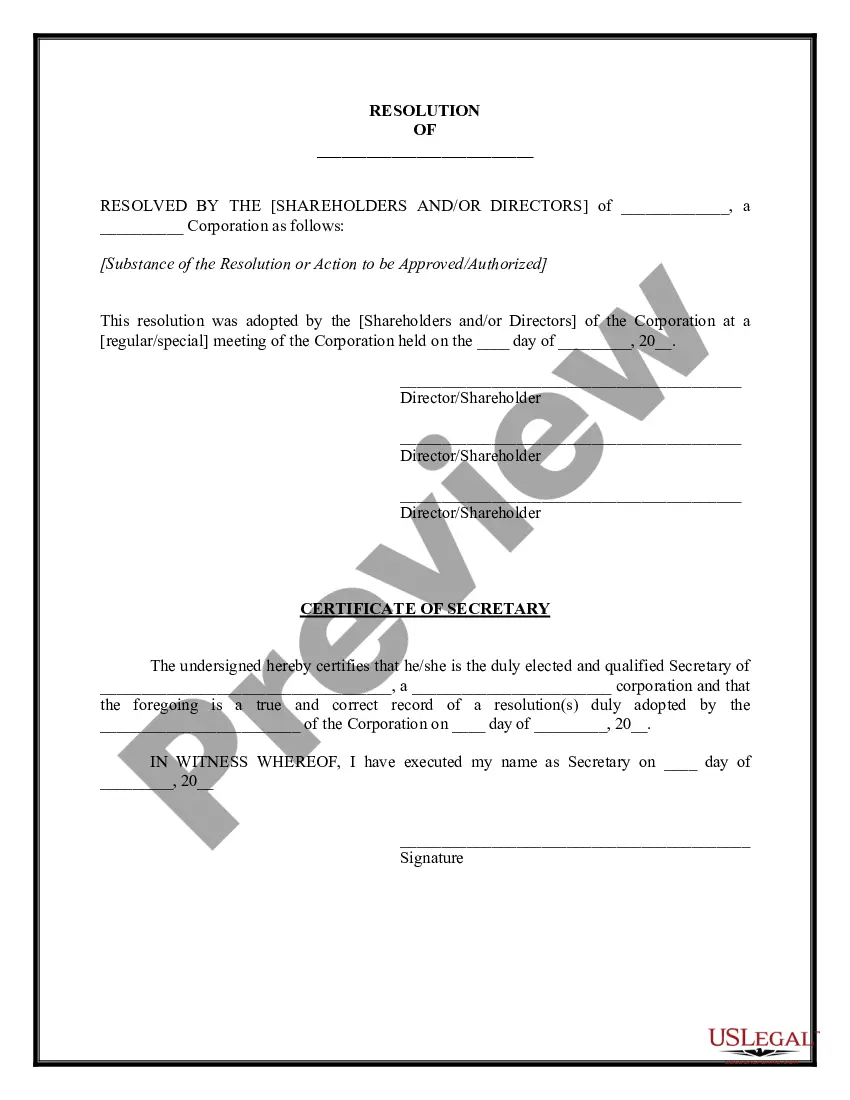
The concept of a resolution in the context of meetings refers to a formal decision or course of action agreed upon by the participants. Resolutions are fundamental in various organizational settings, including corporate boardrooms, government assemblies, or community gatherings.
A member resolution may describe a problem or situation and contain an action to help correct it. This is a “substantive resolution.” A resolution may also be a statement or declaration intended to honor a person, group or entity or commemorate an important person, entity, or event.
LLC managers may occasionally need to make a resolution—a formal record of a vote that authorizes a specific business action. Typically, resolutions are made by the members of an LLC. However, there are some cases where members have granted authority to managers to make resolutions on behalf of the company.
Corporate resolutions help single-member LLCs to maintain compliance with state laws while simplifying their activities. A business resolution lays forth important choices, including signing contracts, establishing a bank account, or making large purchases.
LLC managers may occasionally need to make a resolution—a formal record of a vote that authorizes a specific business action. Typically, resolutions are made by the members of an LLC. However, there are some cases where members have granted authority to managers to make resolutions on behalf of the company.
A member resolution may describe a problem or situation and contain an action to help correct it. This is a “substantive resolution.” A resolution may also be a statement or declaration intended to honor a person, group or entity or commemorate an important person, entity, or event.
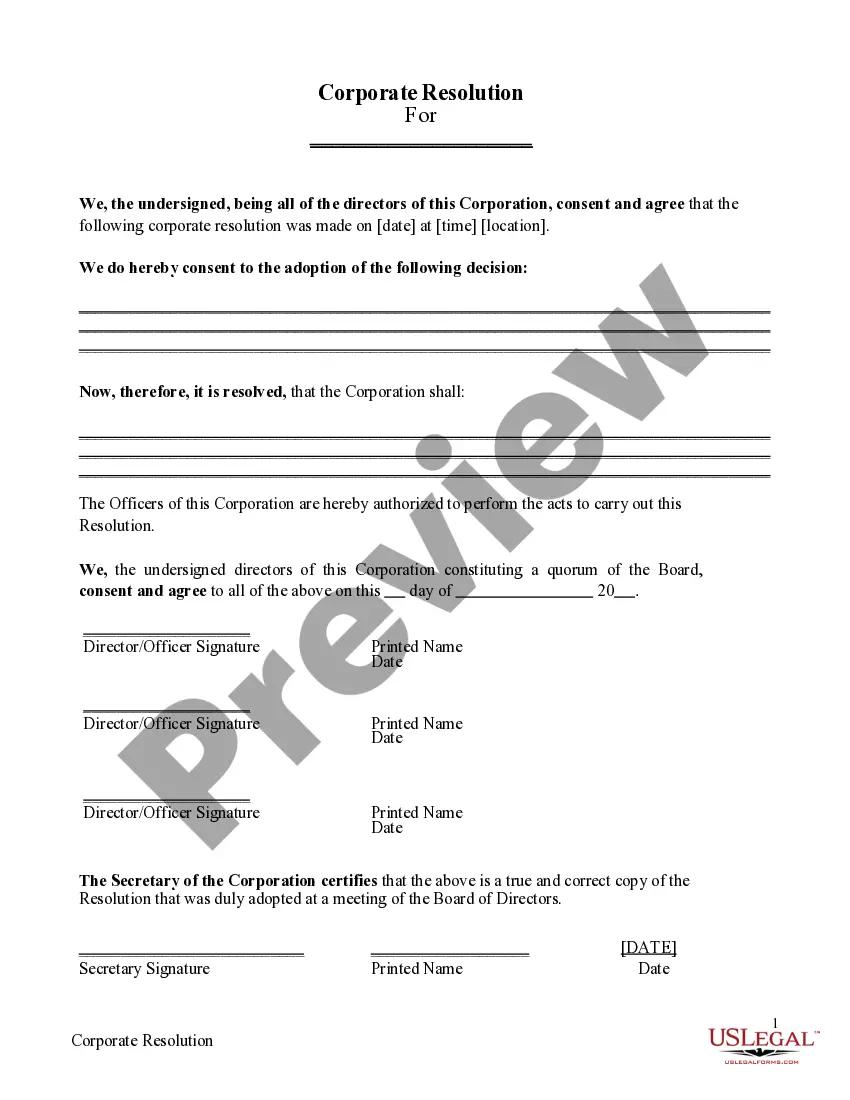
What is a Directors' Resolution? A Directors' Resolution, also known as a board resolution, is a document that records decisions made by a company's board of directors.
LLC resolutions should be signed by all members or authorized representatives of the LLC who are involved in the decision or action being documented in the resolution.
Any LLC member can propose a resolution, but all members must vote on it. Typically a majority of the members is needed to pass the resolution, but each LLC may have different voting rights. Some LLCs give a different value to each member's vote based on their percentage of interest in the company.
Single-member LLCs do not need resolutions, but they can still come in handy in certain situations, like if the company must defend itself in court. Documenting changes or actions not covered in the original bylaws or articles of incorporation can help an LLC protect itself from lawsuits or judicial investigations.