Nonprofit Resolution Template For 501c3 In Tarrant
Description
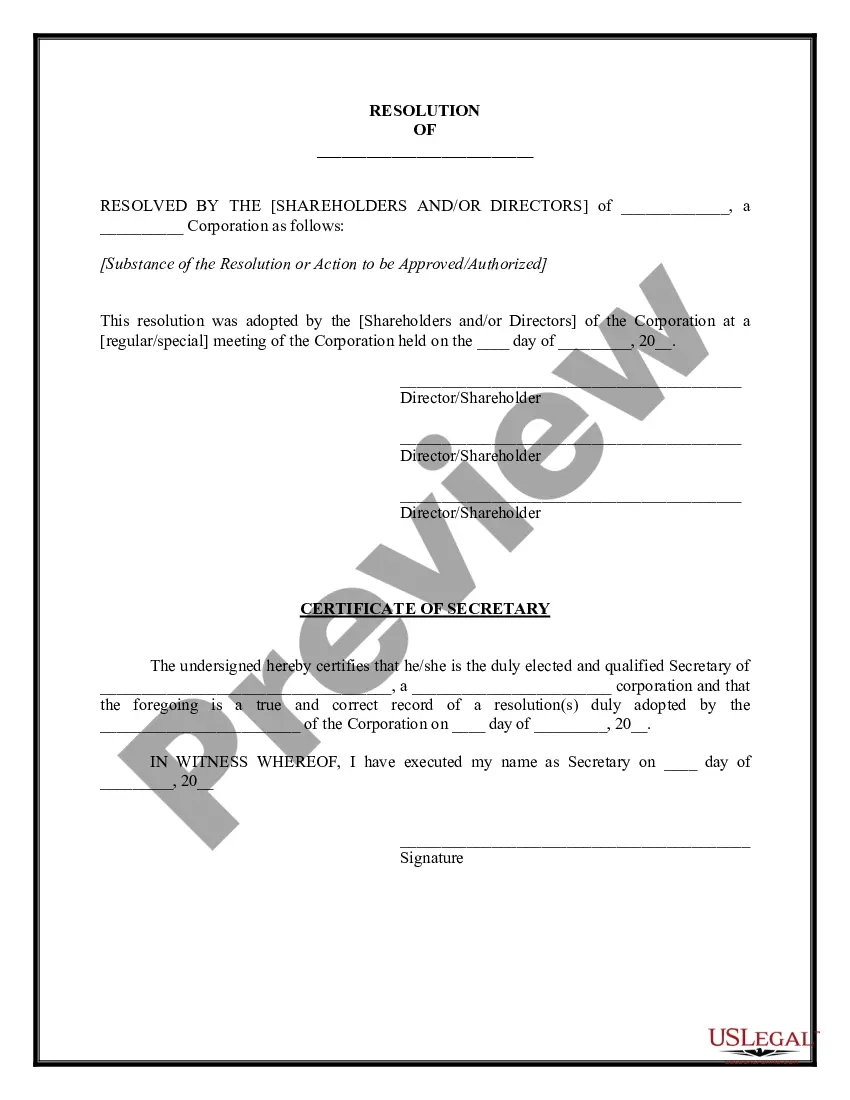

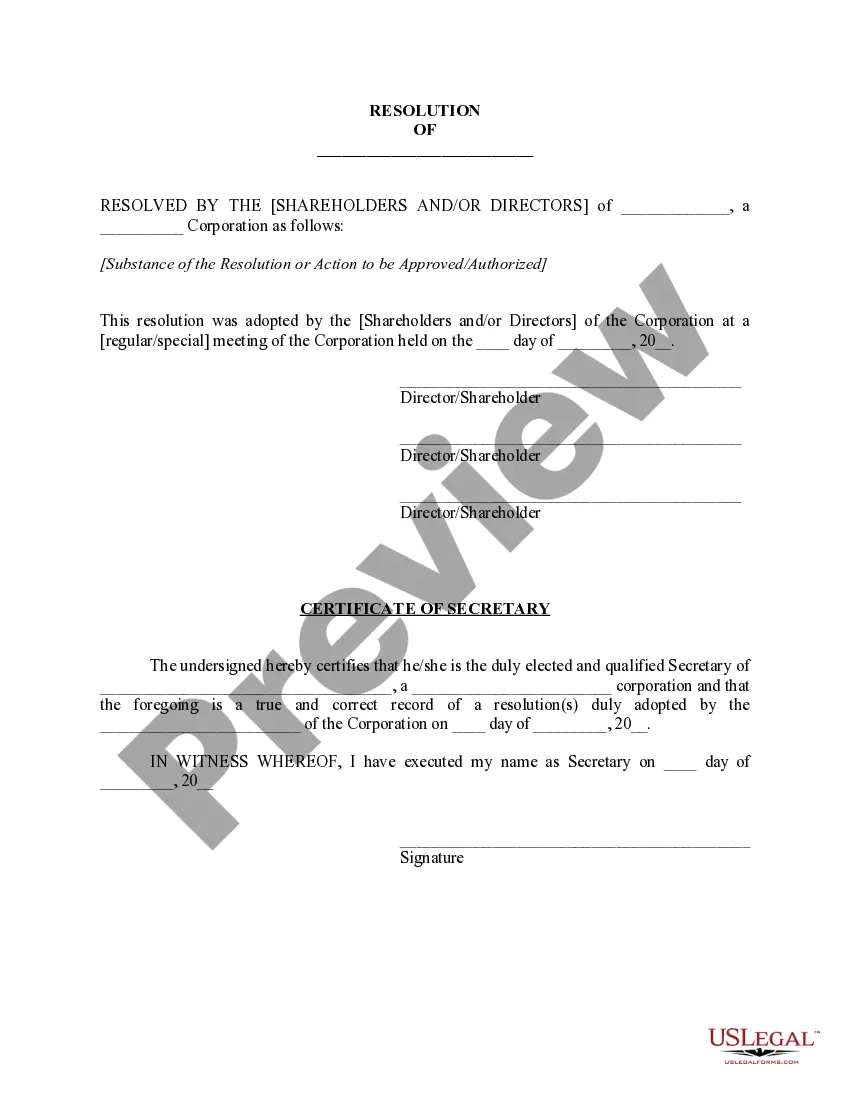
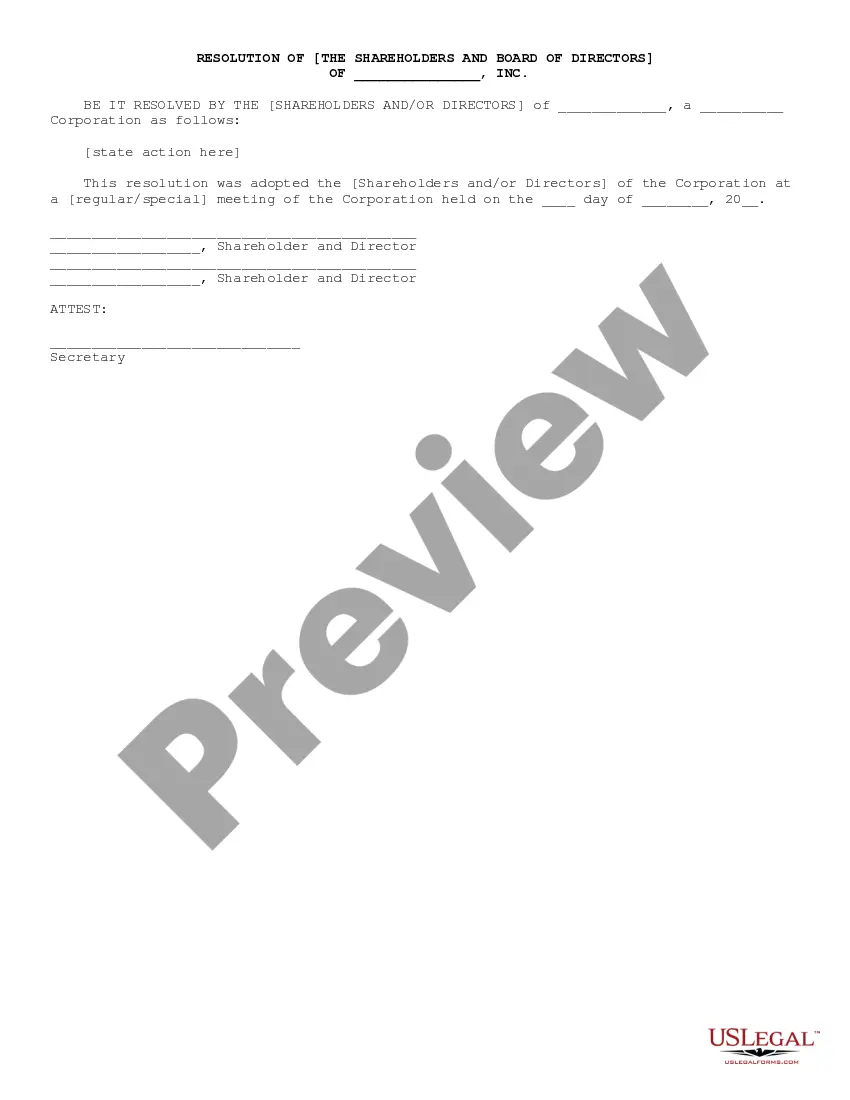
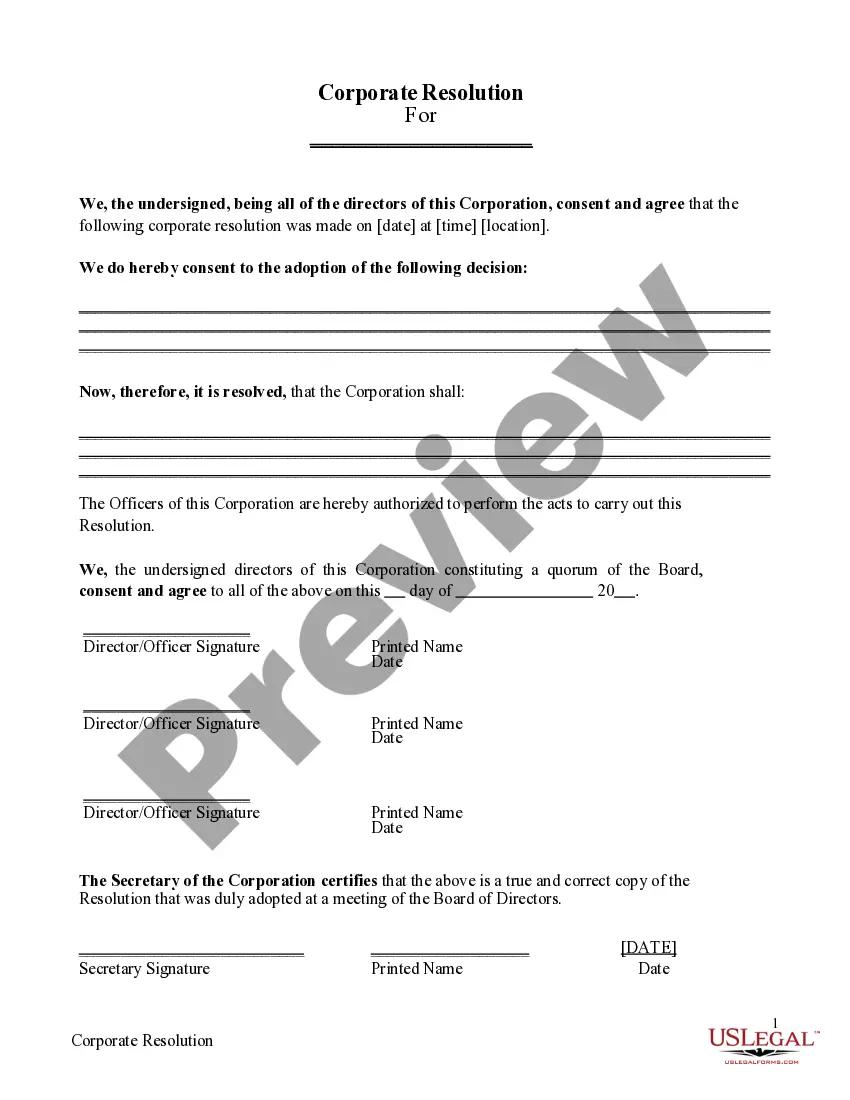
Get your form ready online
Our built-in tools help you complete, sign, share, and store your documents in one place.
Make edits, fill in missing information, and update formatting in US Legal Forms—just like you would in MS Word.
Download a copy, print it, send it by email, or mail it via USPS—whatever works best for your next step.
Sign and collect signatures with our SignNow integration. Send to multiple recipients, set reminders, and more. Go Premium to unlock E-Sign.
If this form requires notarization, complete it online through a secure video call—no need to meet a notary in person or wait for an appointment.
We protect your documents and personal data by following strict security and privacy standards.

Make edits, fill in missing information, and update formatting in US Legal Forms—just like you would in MS Word.

Download a copy, print it, send it by email, or mail it via USPS—whatever works best for your next step.

Sign and collect signatures with our SignNow integration. Send to multiple recipients, set reminders, and more. Go Premium to unlock E-Sign.

If this form requires notarization, complete it online through a secure video call—no need to meet a notary in person or wait for an appointment.

We protect your documents and personal data by following strict security and privacy standards.
Looking for another form?




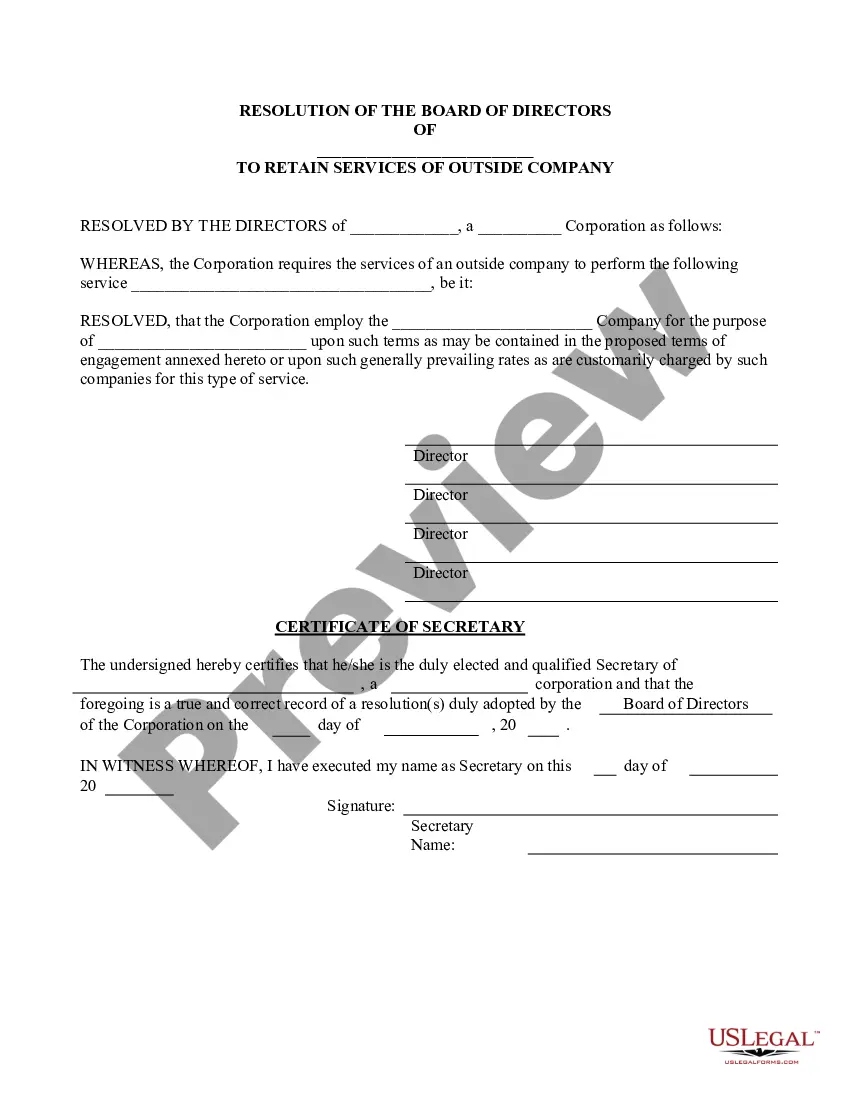



Form popularity
FAQ
Section 501(c)(3) is the portion of the US Internal Revenue Code that allows for federal tax exemption of nonprofit organizations that meet the code's requirements. These nonprofits may be considered public charities, private foundations, or private operating foundations, which we'll explain in more detail later.
A 501(c)(3) organization is a corporation, trust, unincorporated association, or other type of organization exempt from federal income tax under section 501(c)(3) of Title 26 of the United States Code. Organizations must be considered “charitable” by the IRS to receive a 501(c)(3) classification.
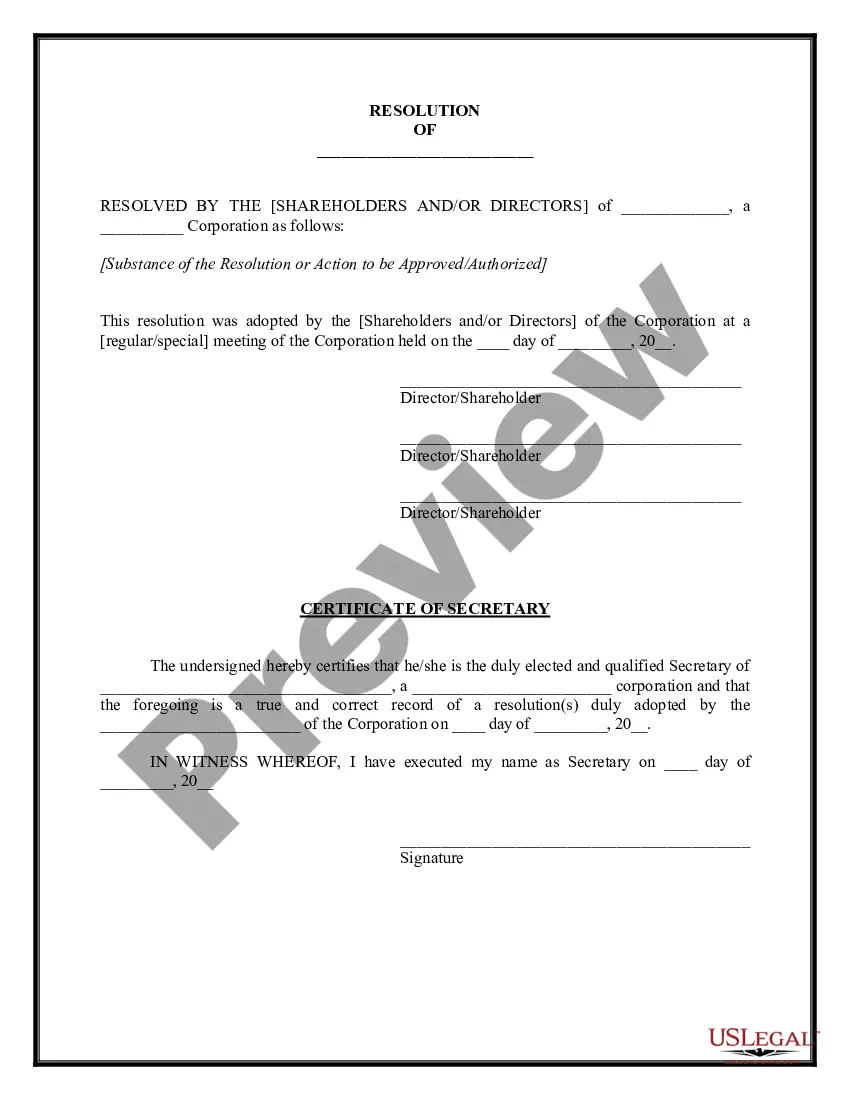
What Are the Components of a Nonprofit Board Resolution Template? The board meeting date. The number of the resolution. A title of the resolution. The resolution itself (what is being voted on) The name and vote of each voting member of the board. The Chairperson's name and signature.
The Texas Business Organizations Code requires a nonprofit corporation to have at least three directors, one president, and one secretary. The same person cannot be both the president and secretary. Officers and directors must be natural persons, but may be known by other titles.
More Common in American English: In the United States, “nonprofit” as one word is more commonly used. This can be seen in many American publications and legal documents. Style Guides: The Associated Press Stylebook, widely used in journalism, prefers “nonprofit” as one word.
A 501(c)(3) organization is a corporation, trust, unincorporated association, or other type of organization exempt from federal income tax under section 501(c)(3) of Title 26 of the United States Code. Organizations must be considered “charitable” by the IRS to receive a 501(c)(3) classification.
Resolutions begin with "Whereas" statements, which provides the basic facts and reasons for the resolution, and conclude with "Resolved" statements which, identifies the specific proposal for the requestor's course of action.
Use emotional language: Use powerful, emotionally charged language to help your prospects empathize with the story they're reading. This can inspire a sense of urgency and drive readers to make their own gift. Smartblogger has a great list of power words that you can use when writing your testimonials.
How to write a board resolution Put the date and resolution number at the top. Give the resolution a title that relates to the decision. Use formal language. Continue writing out each critical statement. Wrap up the heart of the resolution in the last statement.
Writing a strong resolution requires a balance of clarity, intention, and practicality. Start by being clear and specific about your goals. A vague resolution like ``I want to be healthier'' can easily lose focus.