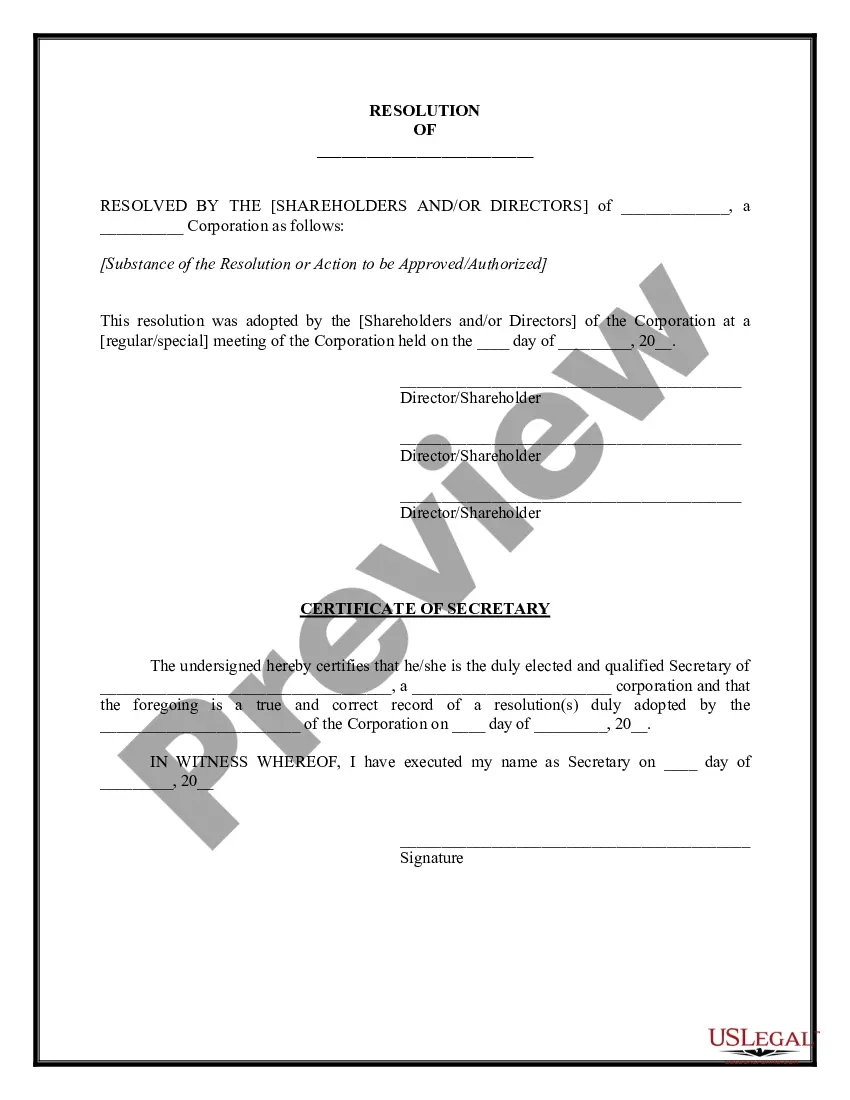
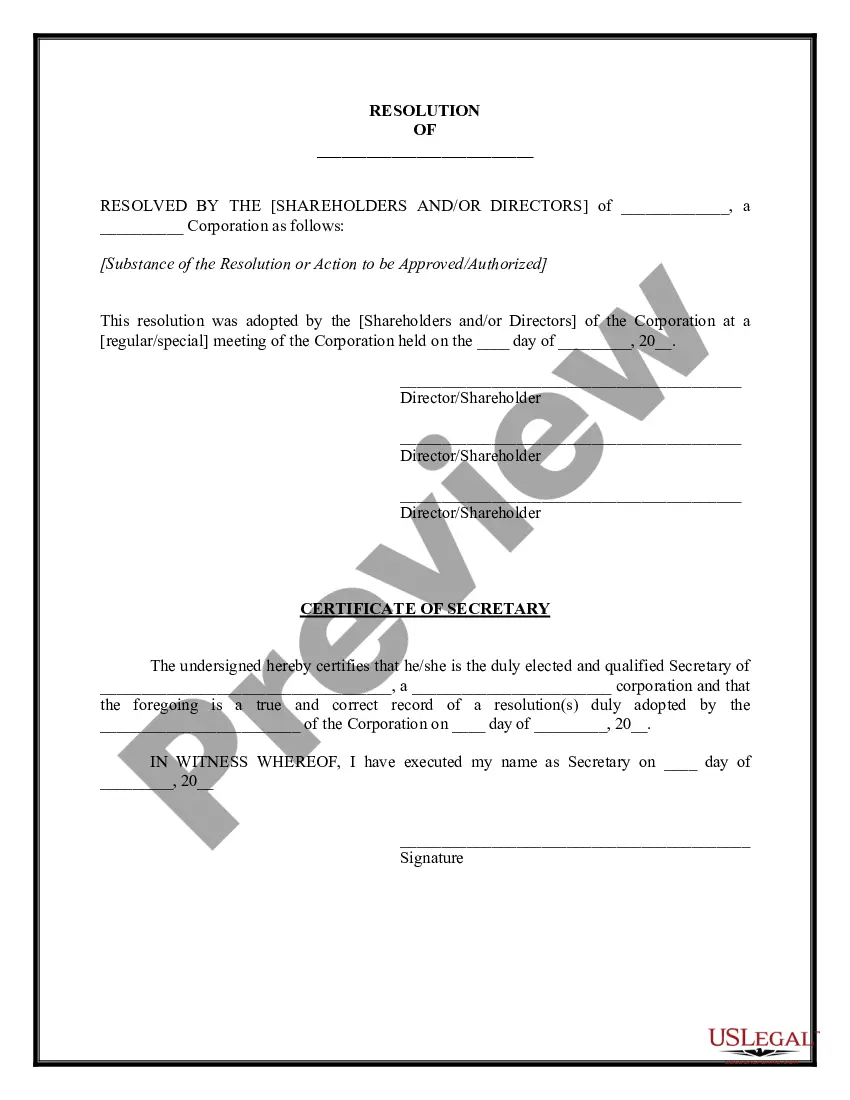
Non Profit Corporate Resolution Example With Signature In Broward
Description
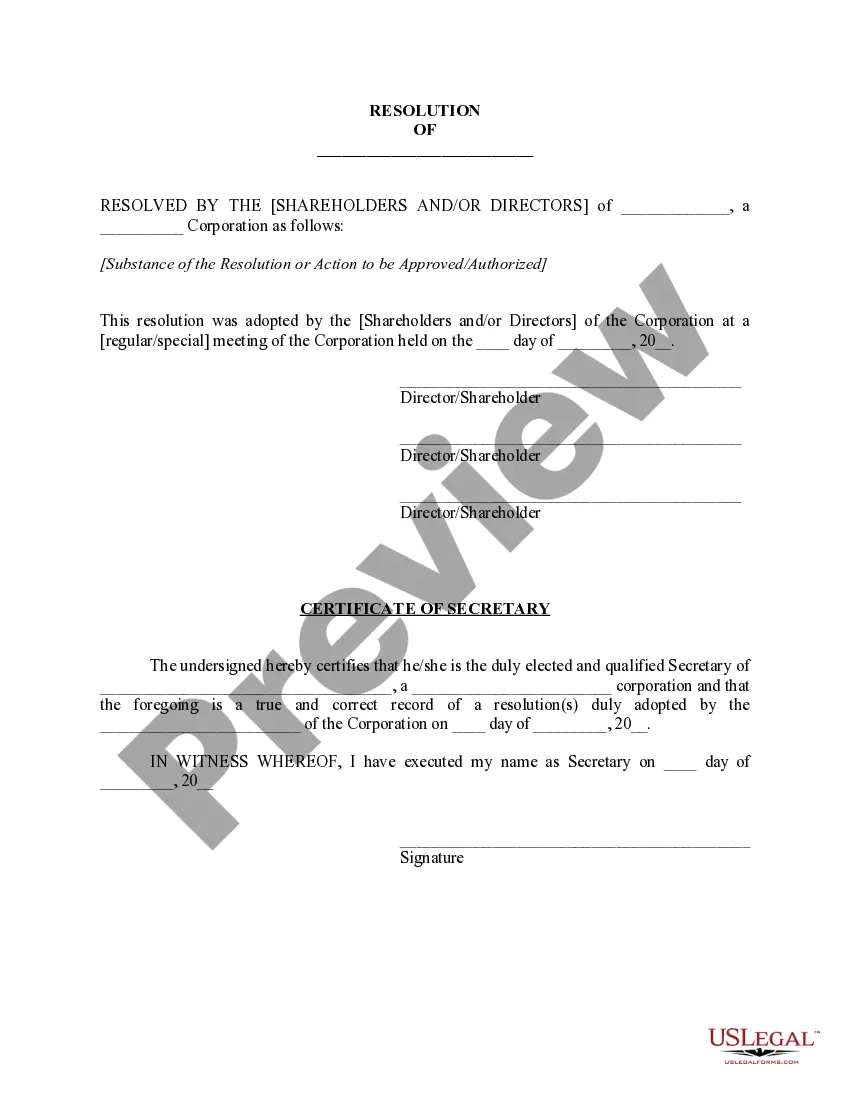
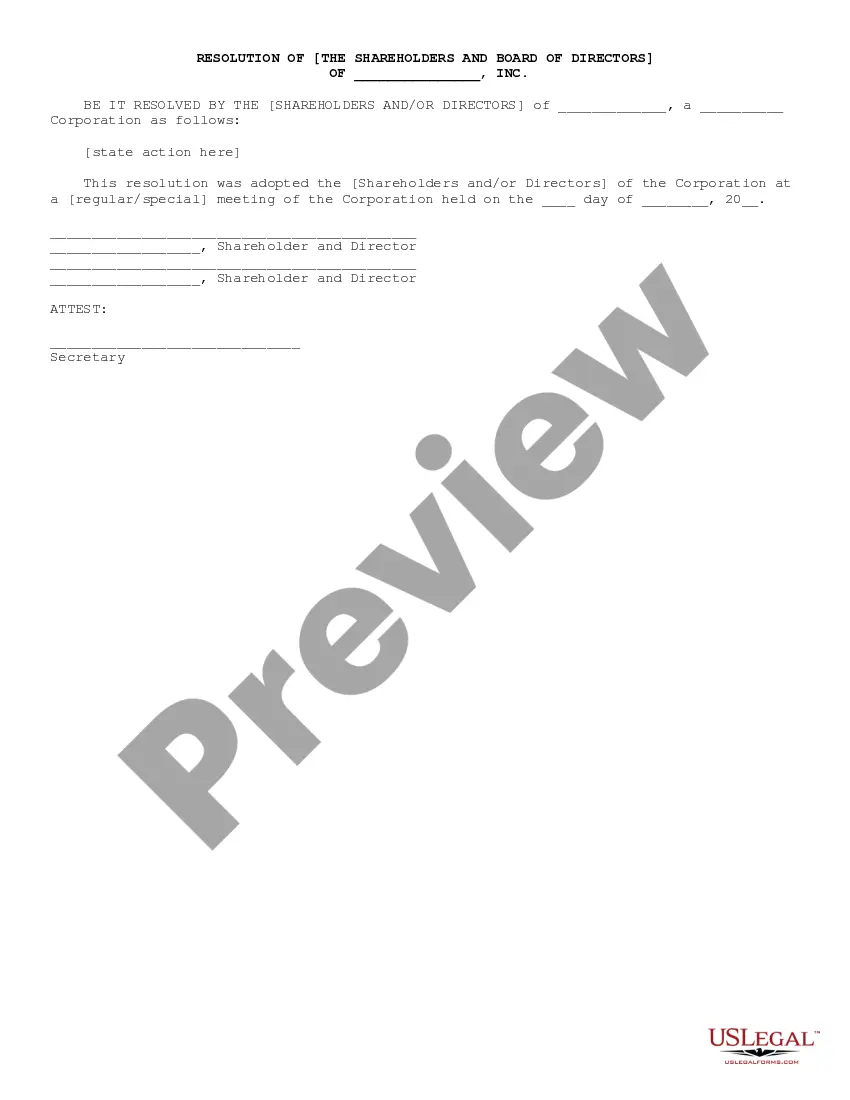
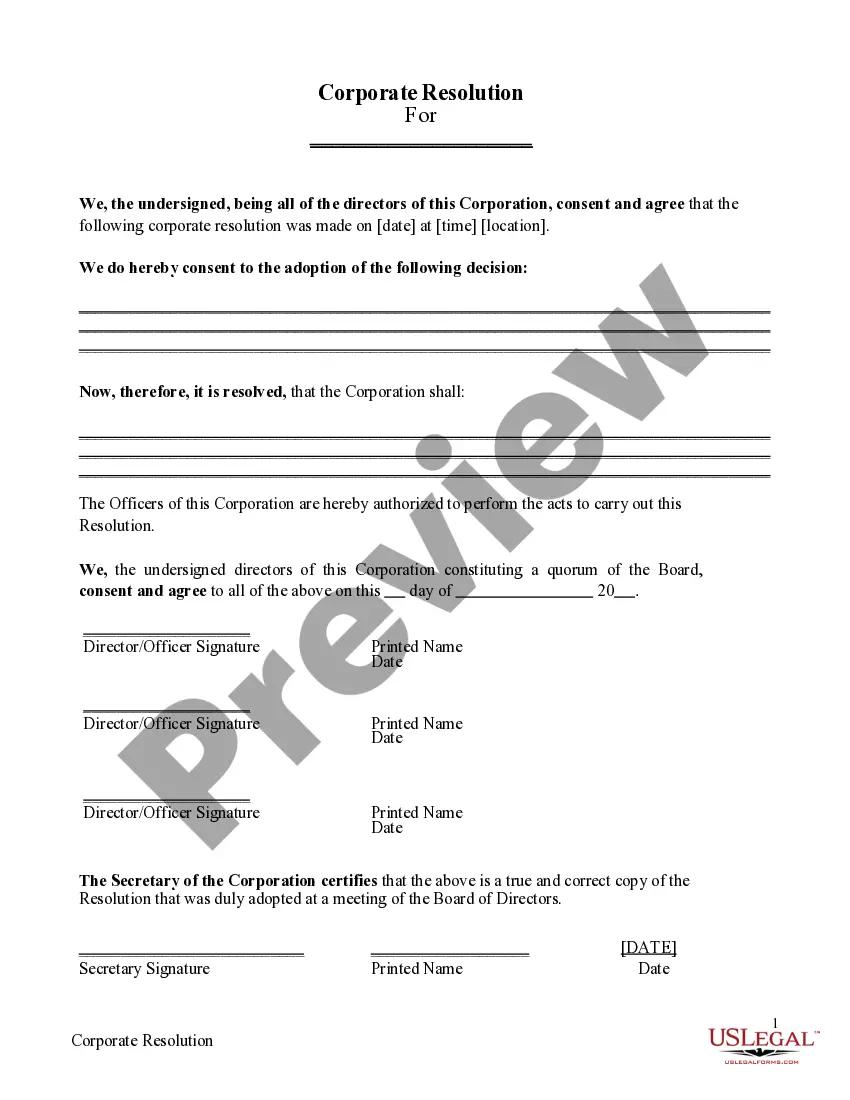
Get your form ready online
Our built-in tools help you complete, sign, share, and store your documents in one place.
Make edits, fill in missing information, and update formatting in US Legal Forms—just like you would in MS Word.
Download a copy, print it, send it by email, or mail it via USPS—whatever works best for your next step.
Sign and collect signatures with our SignNow integration. Send to multiple recipients, set reminders, and more. Go Premium to unlock E-Sign.
If this form requires notarization, complete it online through a secure video call—no need to meet a notary in person or wait for an appointment.
We protect your documents and personal data by following strict security and privacy standards.

Make edits, fill in missing information, and update formatting in US Legal Forms—just like you would in MS Word.

Download a copy, print it, send it by email, or mail it via USPS—whatever works best for your next step.

Sign and collect signatures with our SignNow integration. Send to multiple recipients, set reminders, and more. Go Premium to unlock E-Sign.

If this form requires notarization, complete it online through a secure video call—no need to meet a notary in person or wait for an appointment.

We protect your documents and personal data by following strict security and privacy standards.
Looking for another form?



Form popularity
FAQ
In most cases, resolutions are approved by a vote during a board meeting and are recorded in the meeting minutes, which are then signed by the board secretary or an authorized officer.
A written resolution is a formal decision made by shareholders without the need for a physical meeting. It allows shareholders to vote on company matters by indicating their agreement in writing, typically through signing a document or responding to an email.
Before a Corporate Resolution can receive the State Apostille, it must be signed and notarized. The Board's designated signer must physically appear before a Notary Public. Once notarized, the document can then be mailed to us for processing.
How to write a board resolution Put the date and resolution number at the top. Give the resolution a title that relates to the decision. Use formal language. Continue writing out each critical statement. Wrap up the heart of the resolution in the last statement.
The corporate resolution for signing authority is a specific corporate resolution that authorizes specific corporate officers with the legal standing to sign contracts on behalf of the corporation.
The corporate resolution must include the signature of the corporate officer and the corporate seal or the articles of incorporation.
The resolution is approved when the majority of the board members vote “yes.” Provide a section for the board president's signature. The resolution is not complete without the board president's signature and the date they signed it. Some boards provide room for all the board's officers to sign resolutions.
“RESOLVED FURTHER THAT, any one of the above officials of the Company/Bank/Cooperative Society/Trust/legal entity, be and is hereby authorized to do all such acts, deeds, things, sign all such papers, documents, power of attorneys, indemnities, correspondence and to do and perform all such acts, deeds and things and ...
These resolutions formally record any major corporate decision so that they can then be filed with the company's official records. Corporate resolutions for signing are particular resolutions that clarify and define which corporate officers have the legal standing to sign contracts on behalf of the corporation.
Examples of corporate resolutions include the adoption of new bylaws, the approval of changes in the board members, determining what board members have access to certain finances, such as bank accounts, deciding upon mergers and acquisitions, and deciding executive compensation.