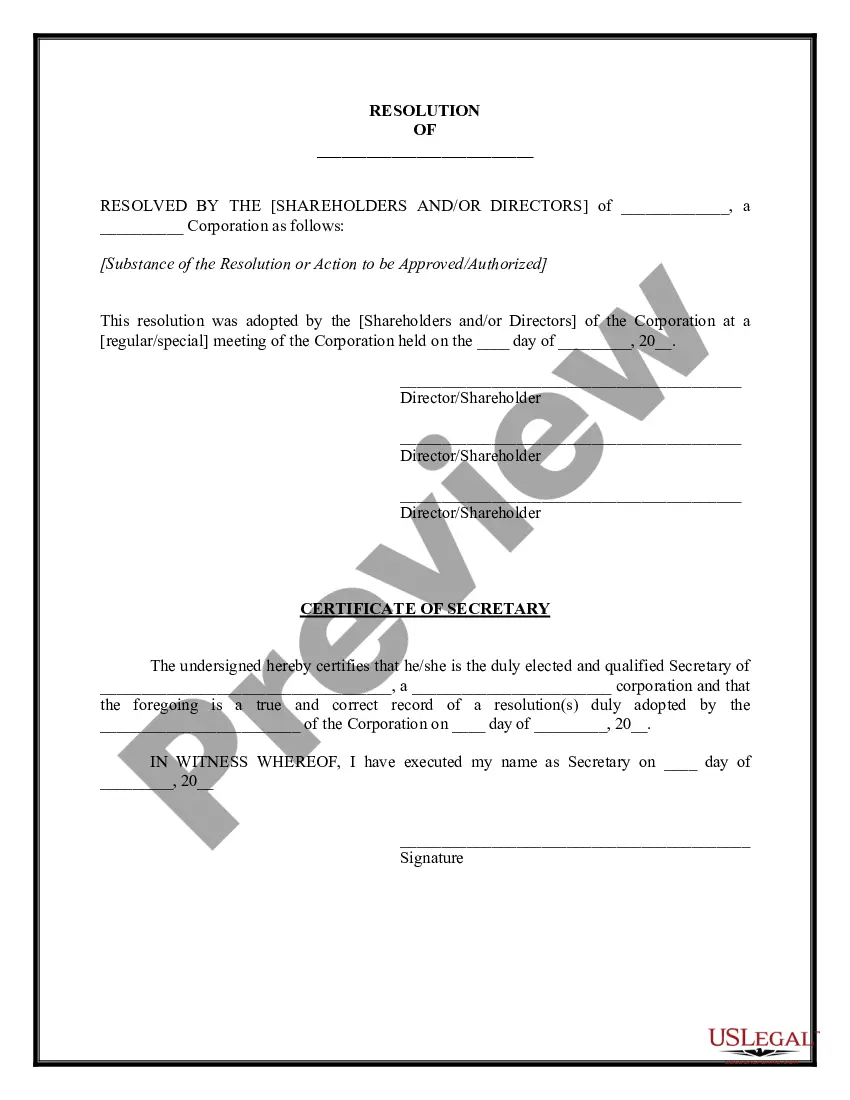
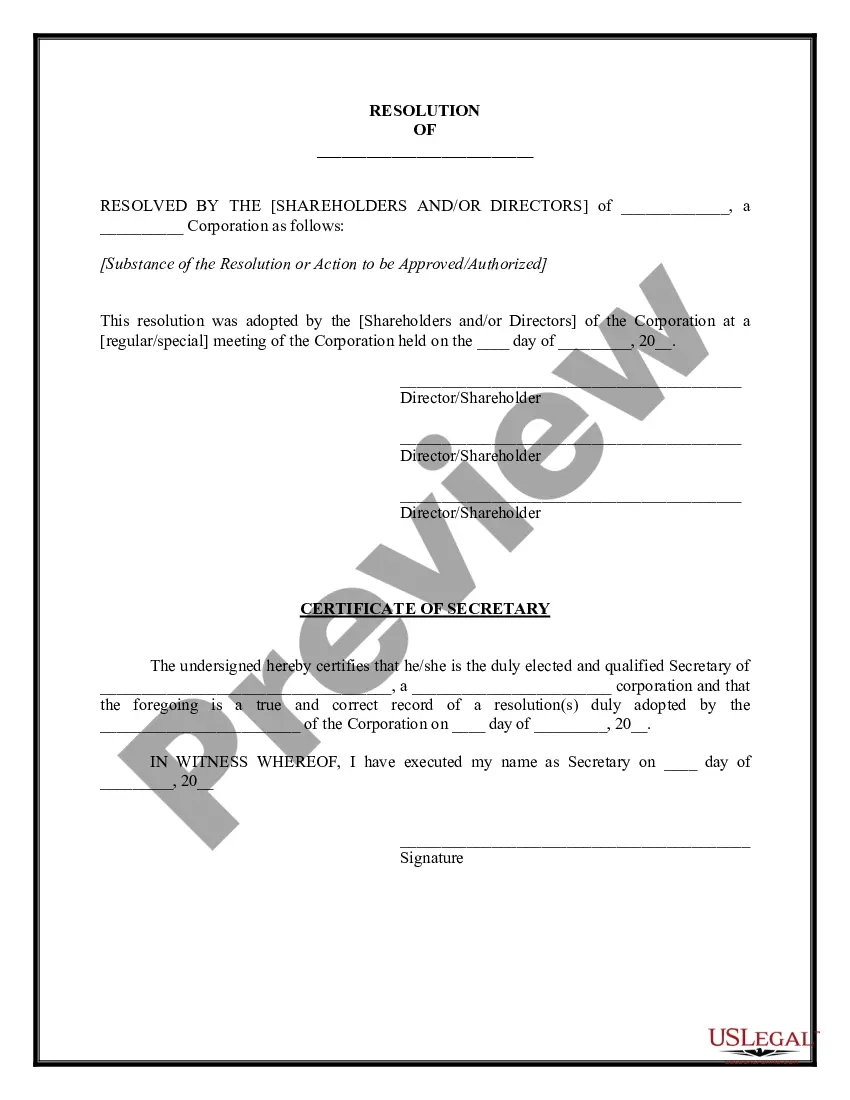
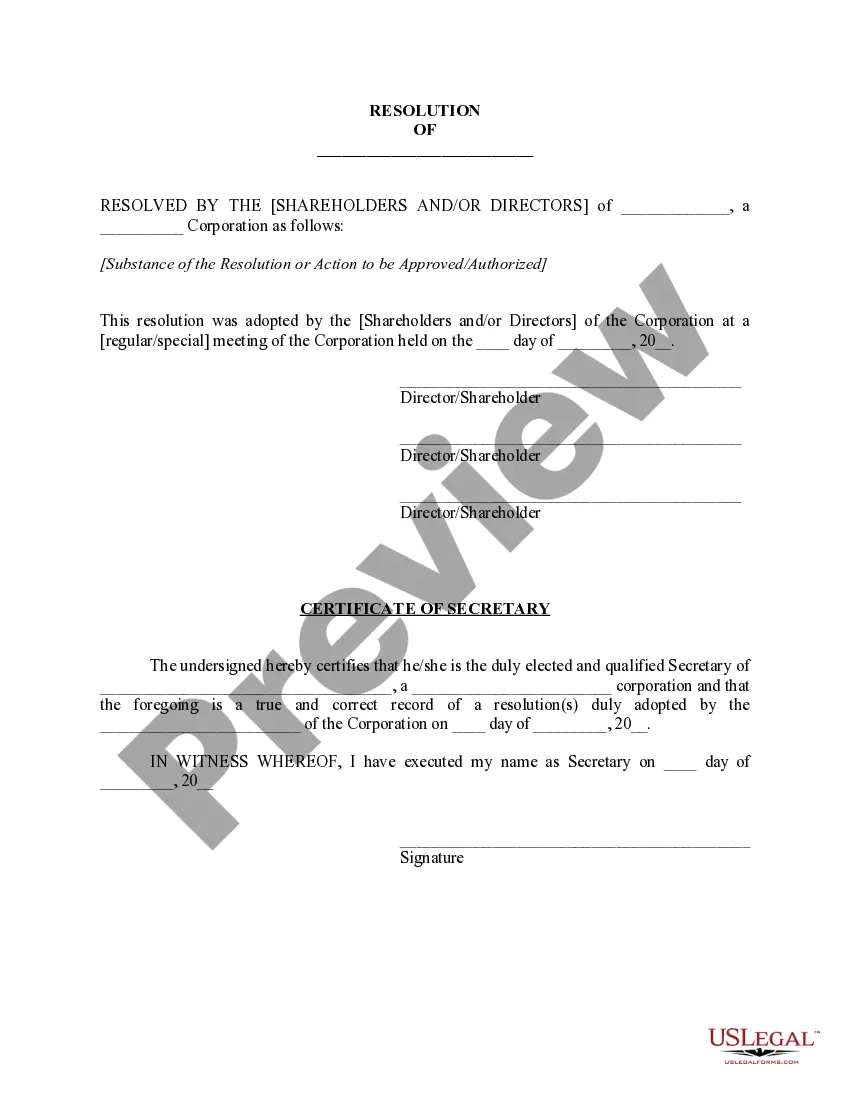
Corporate Resolution Signing Without Meeting In Middlesex
Description
Get your form ready online
Our built-in tools help you complete, sign, share, and store your documents in one place.
Make edits, fill in missing information, and update formatting in US Legal Forms—just like you would in MS Word.
Download a copy, print it, send it by email, or mail it via USPS—whatever works best for your next step.
Sign and collect signatures with our SignNow integration. Send to multiple recipients, set reminders, and more. Go Premium to unlock E-Sign.
If this form requires notarization, complete it online through a secure video call—no need to meet a notary in person or wait for an appointment.
We protect your documents and personal data by following strict security and privacy standards.

Make edits, fill in missing information, and update formatting in US Legal Forms—just like you would in MS Word.

Download a copy, print it, send it by email, or mail it via USPS—whatever works best for your next step.

Sign and collect signatures with our SignNow integration. Send to multiple recipients, set reminders, and more. Go Premium to unlock E-Sign.

If this form requires notarization, complete it online through a secure video call—no need to meet a notary in person or wait for an appointment.

We protect your documents and personal data by following strict security and privacy standards.
Looking for another form?



Form popularity
FAQ
What is "Consent to Action Without Meeting"? Consent to Action Without Meeting is a written document describing an action that has been authorized by the board of directors of a corporation.
It is used to expedite the decision-making process by eliminating the need for a vote when it's highly likely that everyone agrees on a particular issue. Unanimous written consent can be helpful when boards need to make a quick decision on routine procedural issues or non-controversial vendor contracts.
Fortunately, most state laws and corporate bylaws allow the board to act through a teleconference or through a unanimous written board action in lieu of meeting in person.
Guidelines for Valid Corporate Resolutions. The certification must bear an original signature by an officer of the corporation, (preferably the secretary), and this signature must be someone other than the person who signed the RFP, RFQ, RFI, etc.
Taking an action without a meeting is conducting a vote without holding a meeting, such as by return ballot or by petition. If the vote passes, then the action (the subject of the vote) was taken without a meeting. In today's world, taking action without a meeting is an important and often-used tool.
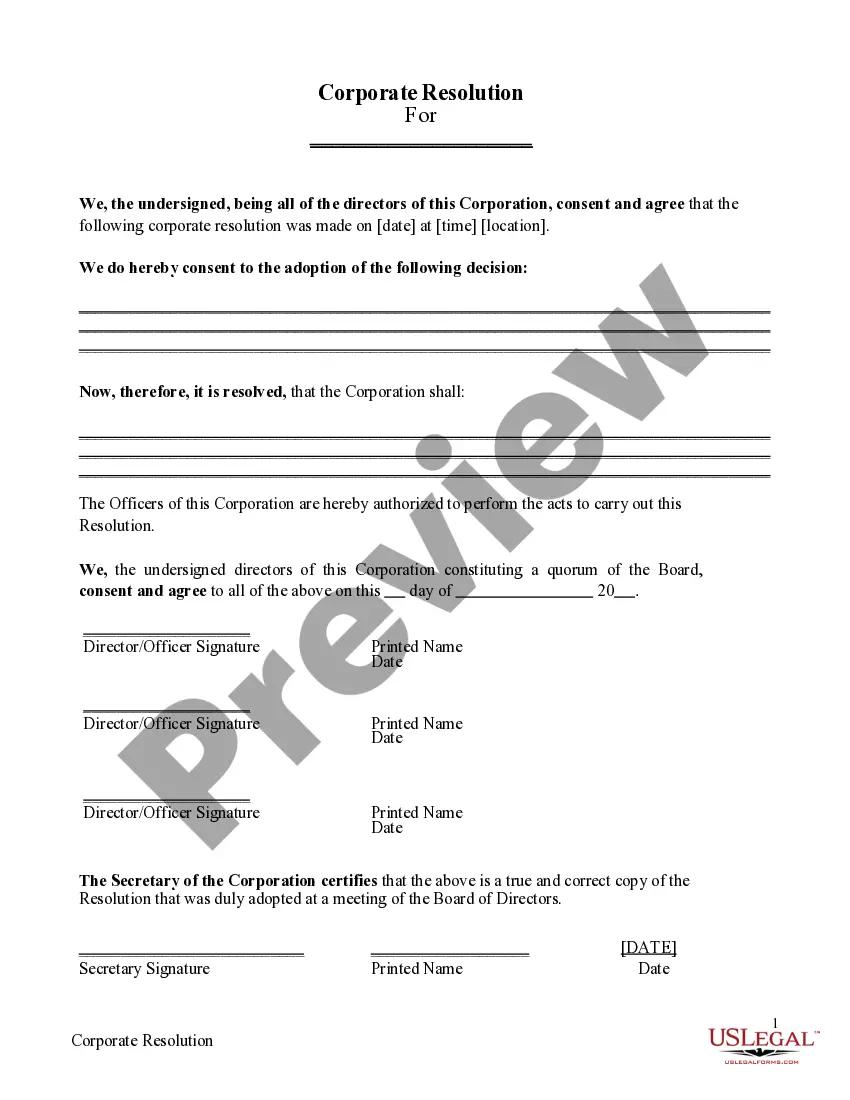
Resolutions can be passed by directors without holding a directors' meeting. These are called circulating resolutions. Check the rule book to see how this can be done. All directors entitled to vote on the resolution must sign a statement that says they are in favour of the resolution set out in the document.
A Shareholders' Consent to Action Without Meeting, or a consent resolution, is a written statement that describes and validates a course of action taken by the shareholders of a particular corporation without a meeting having to take place between directors and/or shareholders.
The corporate resolution for signing authority is a specific corporate resolution that authorizes specific corporate officers with the legal standing to sign contracts on behalf of the corporation.
This permission is typically designated by the board of directors or based on an employee's role, with the signatory's name recorded in official company records. In some cases, multiple authorized signatories may be required to jointly sign documents to ensure compliance with legal obligations and proper oversight.
For example, the Director of Human Resources may be given the authority to enter into employment contracts with employees. Or the Director of Sales may have the authority to sign sales contracts.