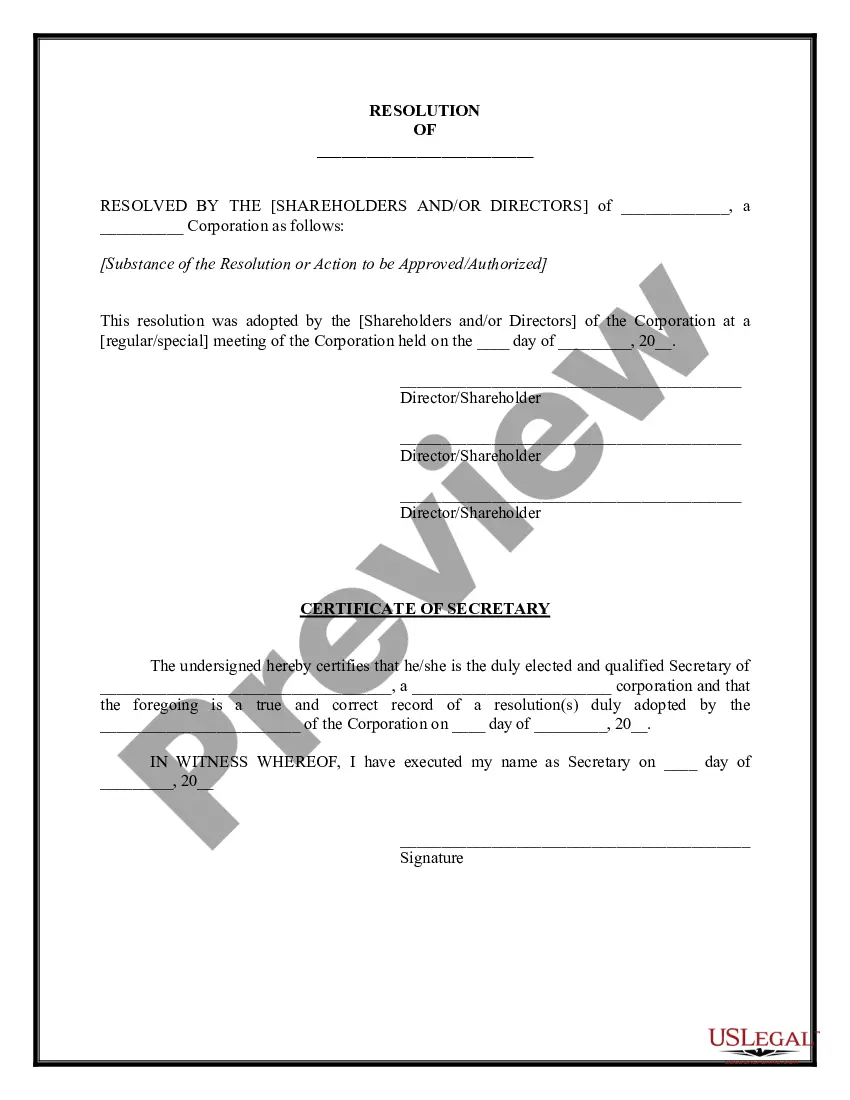
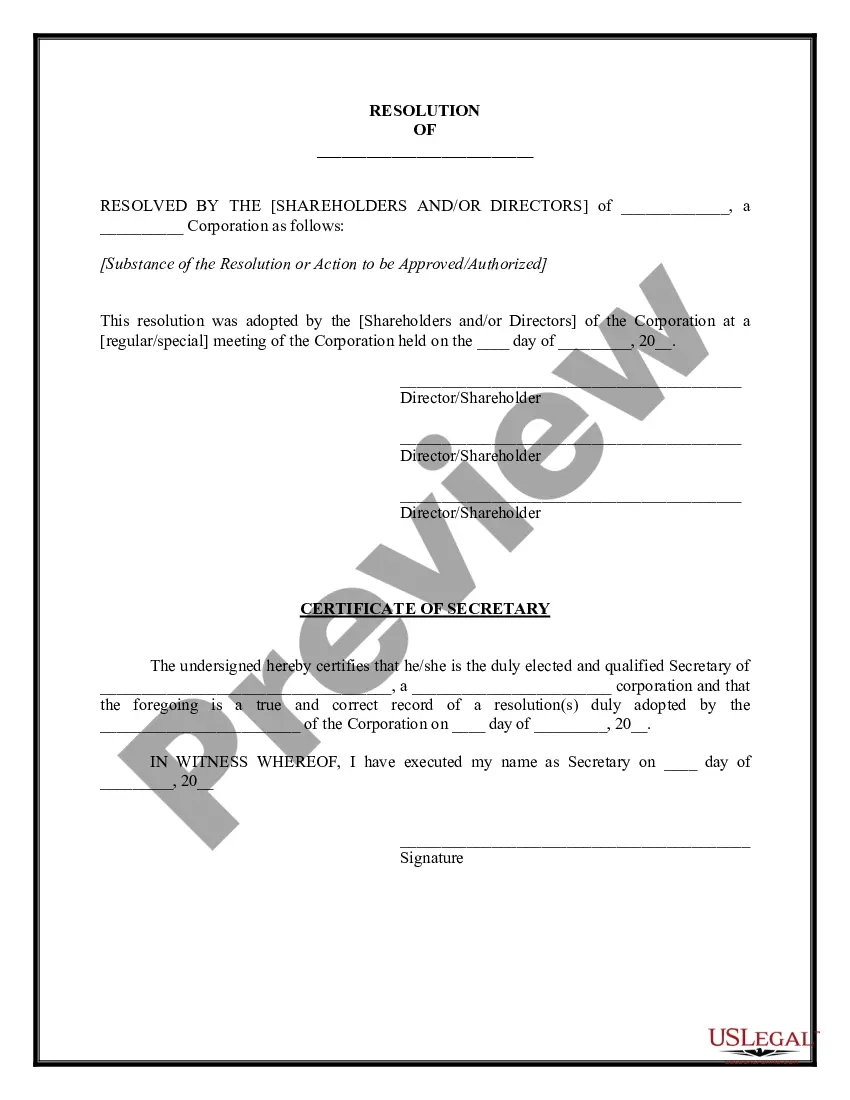
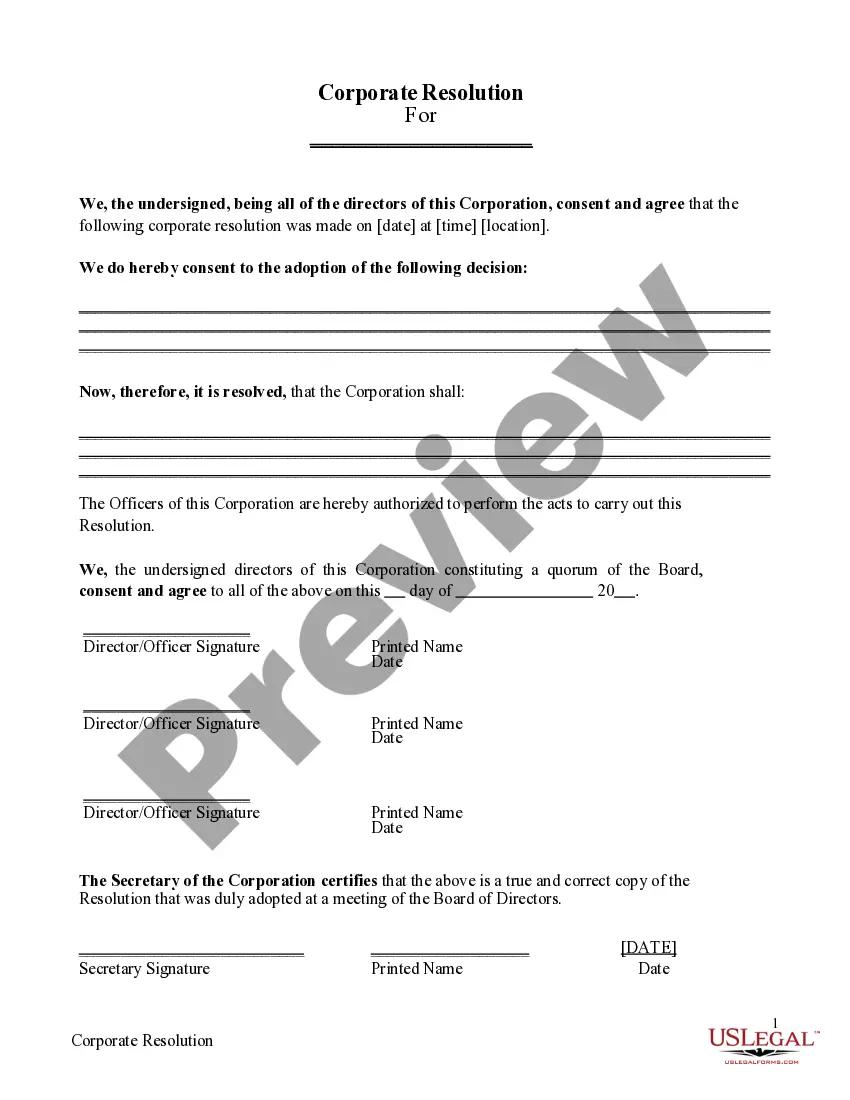
Corporate Resolution Signing Without Meeting In Fulton
Description
Get your form ready online
Our built-in tools help you complete, sign, share, and store your documents in one place.
Make edits, fill in missing information, and update formatting in US Legal Forms—just like you would in MS Word.
Download a copy, print it, send it by email, or mail it via USPS—whatever works best for your next step.
Sign and collect signatures with our SignNow integration. Send to multiple recipients, set reminders, and more. Go Premium to unlock E-Sign.
If this form requires notarization, complete it online through a secure video call—no need to meet a notary in person or wait for an appointment.
We protect your documents and personal data by following strict security and privacy standards.

Make edits, fill in missing information, and update formatting in US Legal Forms—just like you would in MS Word.

Download a copy, print it, send it by email, or mail it via USPS—whatever works best for your next step.

Sign and collect signatures with our SignNow integration. Send to multiple recipients, set reminders, and more. Go Premium to unlock E-Sign.

If this form requires notarization, complete it online through a secure video call—no need to meet a notary in person or wait for an appointment.

We protect your documents and personal data by following strict security and privacy standards.
Looking for another form?










Form popularity
FAQ
Company directors are authorised signatories and companies might require at least two directors to sign for a valid execution. Employees with a certain position in the company might also be impliedly authorised to sign documents on the company's behalf in order to streamline the execution of contracts.
The governing body of the corporation (usually its board of directors) Must meet on a specified date. At which time, officers decide to specifically authorize (the “resolution”) A specific person by name and title. To sign a specific contract.
A certified copy of that section of the corporate by-laws which authorizes the signatory to execute contracts on behalf of and bind the corporation, along with certification that the person signing the contract in fact holds the office in question.
Because corporate resolutions are subject to state laws, it's vital that they are legally compliant. You can get started creating your corporate resolution with the help of a qualified attorney. A legal professional can ensure that you include all the necessary components and let you know if you need to make revisions.
General Signing Authority: For example: This letter hereby authorizes Name to sign and execute all contracts, legal documents, and agreements on behalf of Company Name in relation to specific matters/transactions effective from date.
Guidelines for Valid Corporate Resolutions. The certification must bear an original signature by an officer of the corporation, (preferably the secretary), and this signature must be someone other than the person who signed the RFP, RFQ, RFI, etc.
A Shareholders' Consent to Action Without Meeting, or a consent resolution, is a written statement that describes and validates a course of action taken by the shareholders of a particular corporation without a meeting having to take place between directors and/or shareholders.
A copy of a resolution of the governing body or minutes of a regular meeting showing approval of the agreement or an ordinance approving the agreement and authorizing a named person to sign the agreement may be used as adequate proof of authority.
A resolution is a formal way in which a company can note decisions that are made at a meeting of company members. There are two types of resolutions: ordinary and special. Under the Corporations Act 2001, most of the decisions that affect a company need to be made by a resolution.
Corporate signing authority resolutions specify who has the legal authority to bind the corporation through contracts. Individuals with the authority to sign can create legally binding contracts such as employment contracts, real estate transactions, and other important agreements.