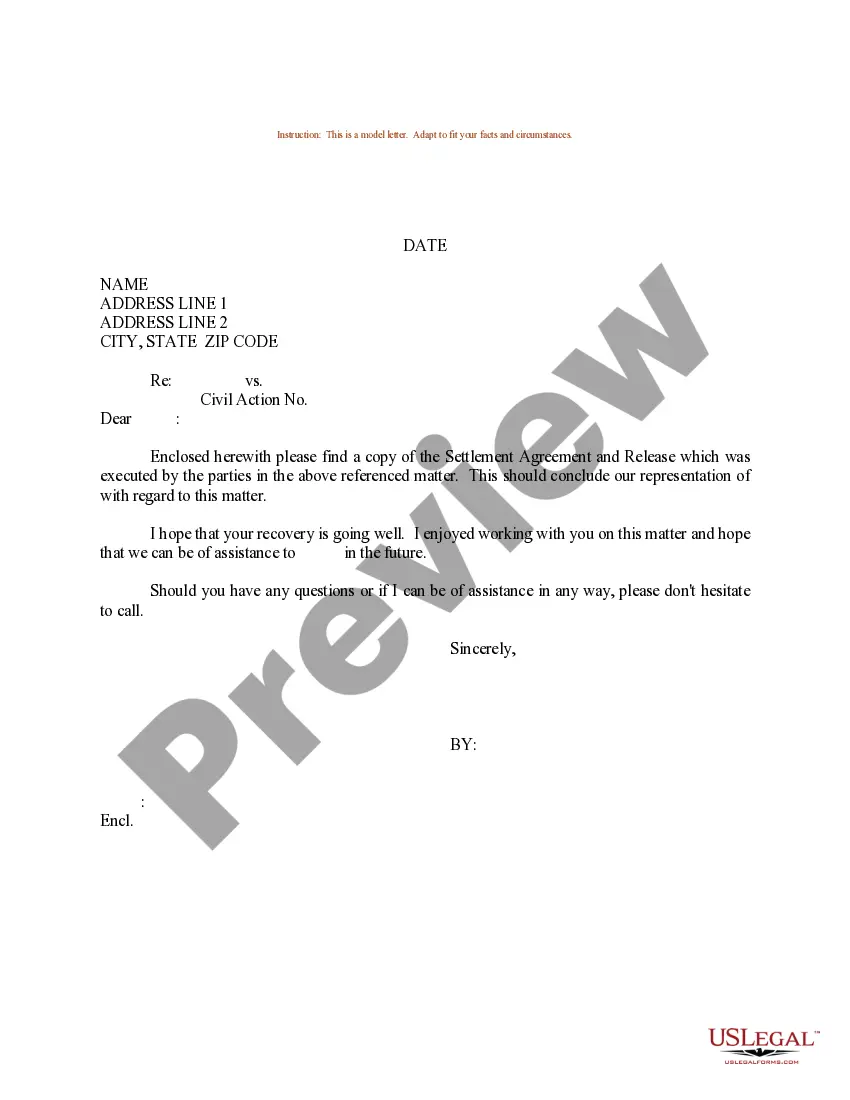
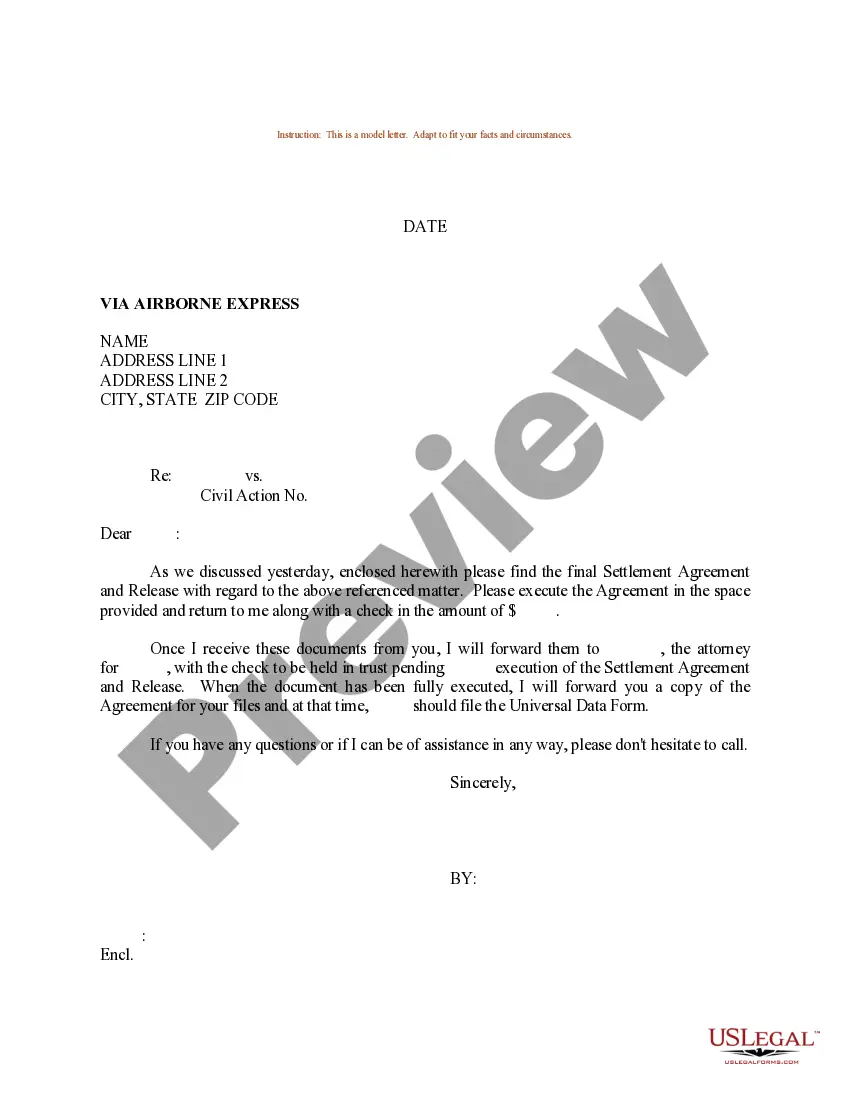
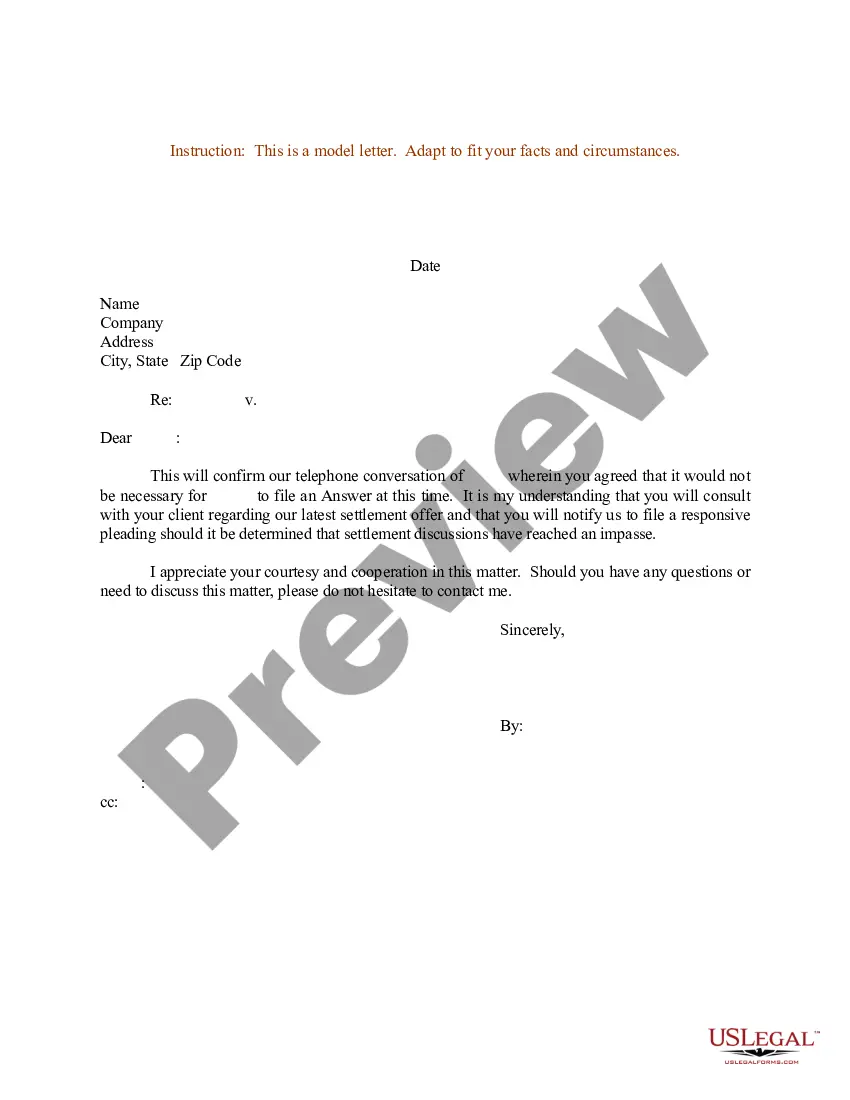
Confirmation Of Settlement Letter Without Insurance In Palm Beach
Description


Get your form ready online
Our built-in tools help you complete, sign, share, and store your documents in one place.
Make edits, fill in missing information, and update formatting in US Legal Forms—just like you would in MS Word.
Download a copy, print it, send it by email, or mail it via USPS—whatever works best for your next step.
Sign and collect signatures with our SignNow integration. Send to multiple recipients, set reminders, and more. Go Premium to unlock E-Sign.
If this form requires notarization, complete it online through a secure video call—no need to meet a notary in person or wait for an appointment.
We protect your documents and personal data by following strict security and privacy standards.

Make edits, fill in missing information, and update formatting in US Legal Forms—just like you would in MS Word.

Download a copy, print it, send it by email, or mail it via USPS—whatever works best for your next step.

Sign and collect signatures with our SignNow integration. Send to multiple recipients, set reminders, and more. Go Premium to unlock E-Sign.

If this form requires notarization, complete it online through a secure video call—no need to meet a notary in person or wait for an appointment.

We protect your documents and personal data by following strict security and privacy standards.
Looking for another form?


Form popularity
FAQ
State the settlement offer you are willing to accept and the reasons why. You can repeat the position you stated in the first demand letter. Your attorney can advise you on whether you should stick with the amount stated in your first demand letter or if you should present a counteroffer.
How to write a compensation letter The date and the recipient's contact information. A formal salutation. An introductory statement. List of compensation items. The date compensation becomes available. Exceptions and additional compensation details. Closing statement and salutation. Your name and contact details.
7 Tips for Writing a Demand Letter to the Insurance Company Detail Your Version of Events. Gather & Organize Your Expenses. Calculate Anticipated Expenses. Detail the Negative Impact the Accident Has Had on Your Life. Discuss Your Road to Recovery. Include a Fair and Reasonable Demand Amount.
Example of a Claim Settlement Letter We are writing to inform you that we have completed our evaluation of your claim filed under policy number Policy Number regarding Brief Description of the Claim. We are pleased to offer a settlement amount of Settlement Amount.
Your letter should clearly: State that the offer you received is unacceptable. Refute any statements in the adjustor's letter that are inaccurate and damaging to your claim. Re-state an acceptable figure. Explain why your counteroffer is appropriate, including the reasons behind your general damage demands.
A reasonable settlement offer is one that includes medical expenses, lost wages, pain and suffering, and property damage. While it varies from case to case, an experienced personal injury lawyers can help you find a reasonable amount for your case.
Sample demand letter for a personal injury case Dear Name of adjuster, This constitutes a formal settlement letter requesting you provide fair compensation to me, your name, for injuries and damages I incurred due to the incident on date of incident at location of incident.
7 Tips for Writing a Demand Letter to the Insurance Company Detail Your Version of Events. Gather & Organize Your Expenses. Calculate Anticipated Expenses. Detail the Negative Impact the Accident Has Had on Your Life. Discuss Your Road to Recovery. Include a Fair and Reasonable Demand Amount.
After you've agreed to settle your Florida personal injury claim, you might be eager to receive your settlement check. On average, it typically takes about 2 days to six weeks for the check to arrive after both parties sign the settlement agreement. However, the timeline can change.
Demand Letter Components Facts of the case. An outline of what happened. Statement of the issue. A brief description of the problem. Demand. The dollar amount or action necessary to resolve the case. Response deadline. The date by which the recipient must respond. Noncompliance consequences.