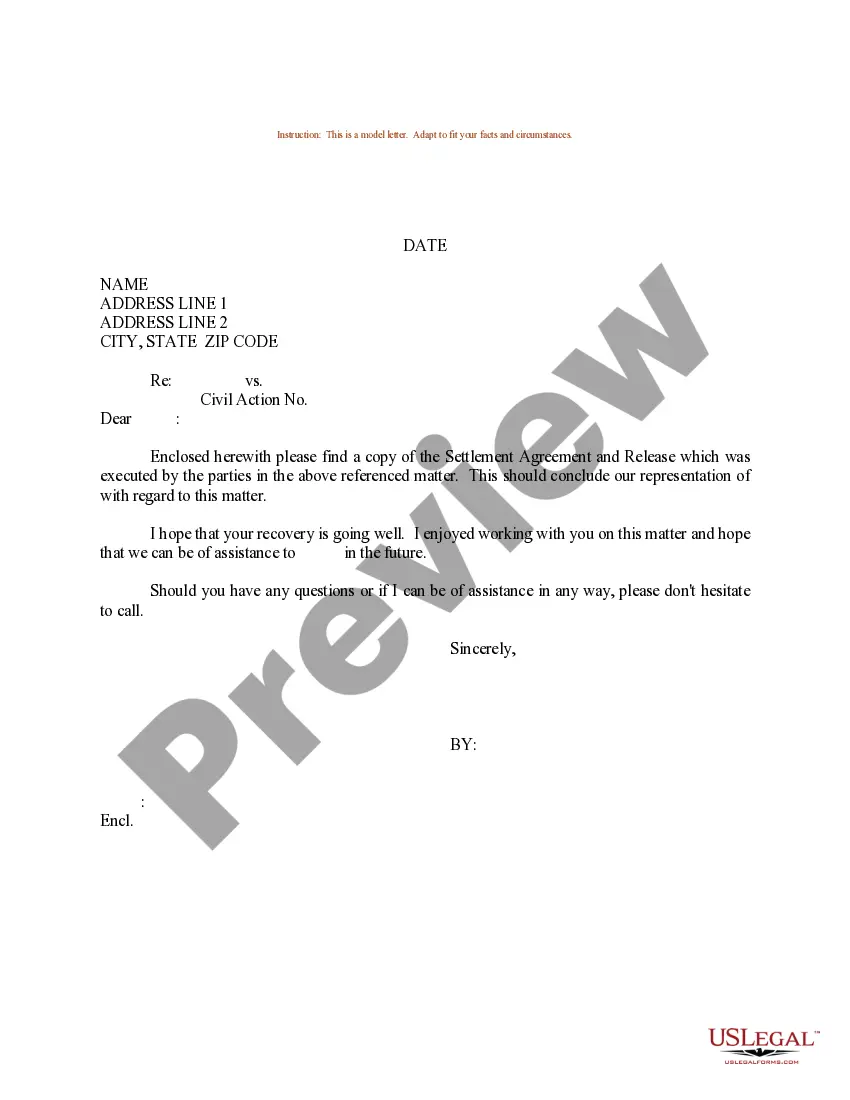
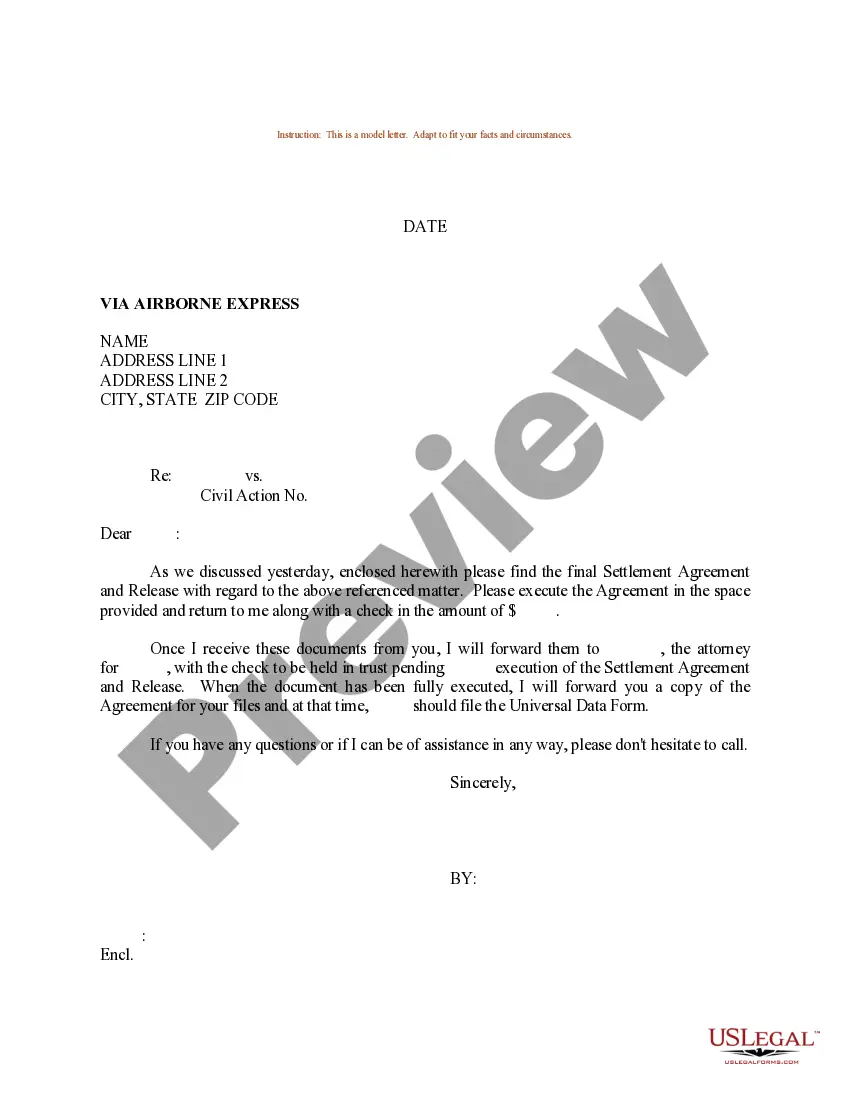
Confirmation Of Settlement Letter With Payment In Ohio
Description


Get your form ready online
Our built-in tools help you complete, sign, share, and store your documents in one place.
Make edits, fill in missing information, and update formatting in US Legal Forms—just like you would in MS Word.
Download a copy, print it, send it by email, or mail it via USPS—whatever works best for your next step.
Sign and collect signatures with our SignNow integration. Send to multiple recipients, set reminders, and more. Go Premium to unlock E-Sign.
If this form requires notarization, complete it online through a secure video call—no need to meet a notary in person or wait for an appointment.
We protect your documents and personal data by following strict security and privacy standards.

Make edits, fill in missing information, and update formatting in US Legal Forms—just like you would in MS Word.

Download a copy, print it, send it by email, or mail it via USPS—whatever works best for your next step.

Sign and collect signatures with our SignNow integration. Send to multiple recipients, set reminders, and more. Go Premium to unlock E-Sign.

If this form requires notarization, complete it online through a secure video call—no need to meet a notary in person or wait for an appointment.

We protect your documents and personal data by following strict security and privacy standards.
Looking for another form?
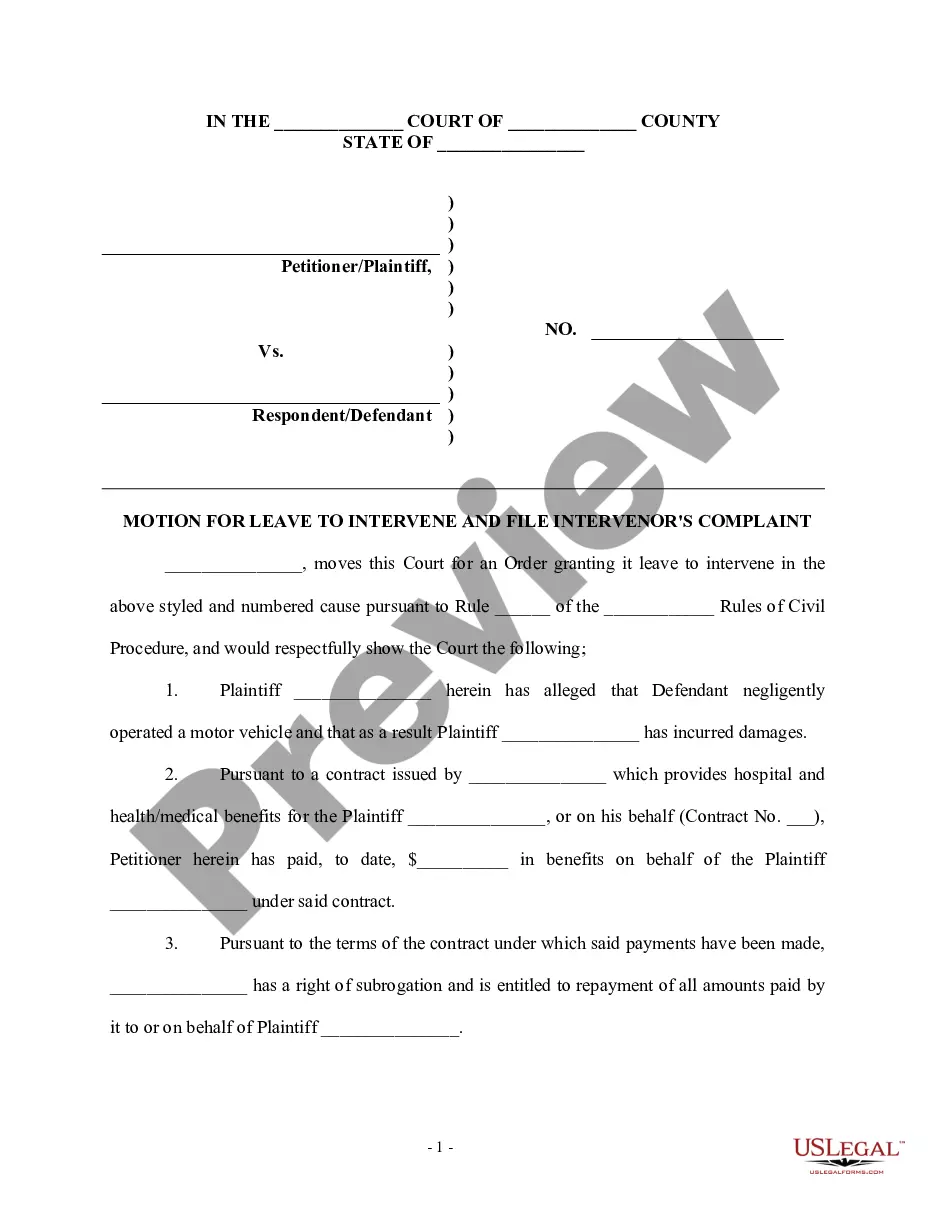

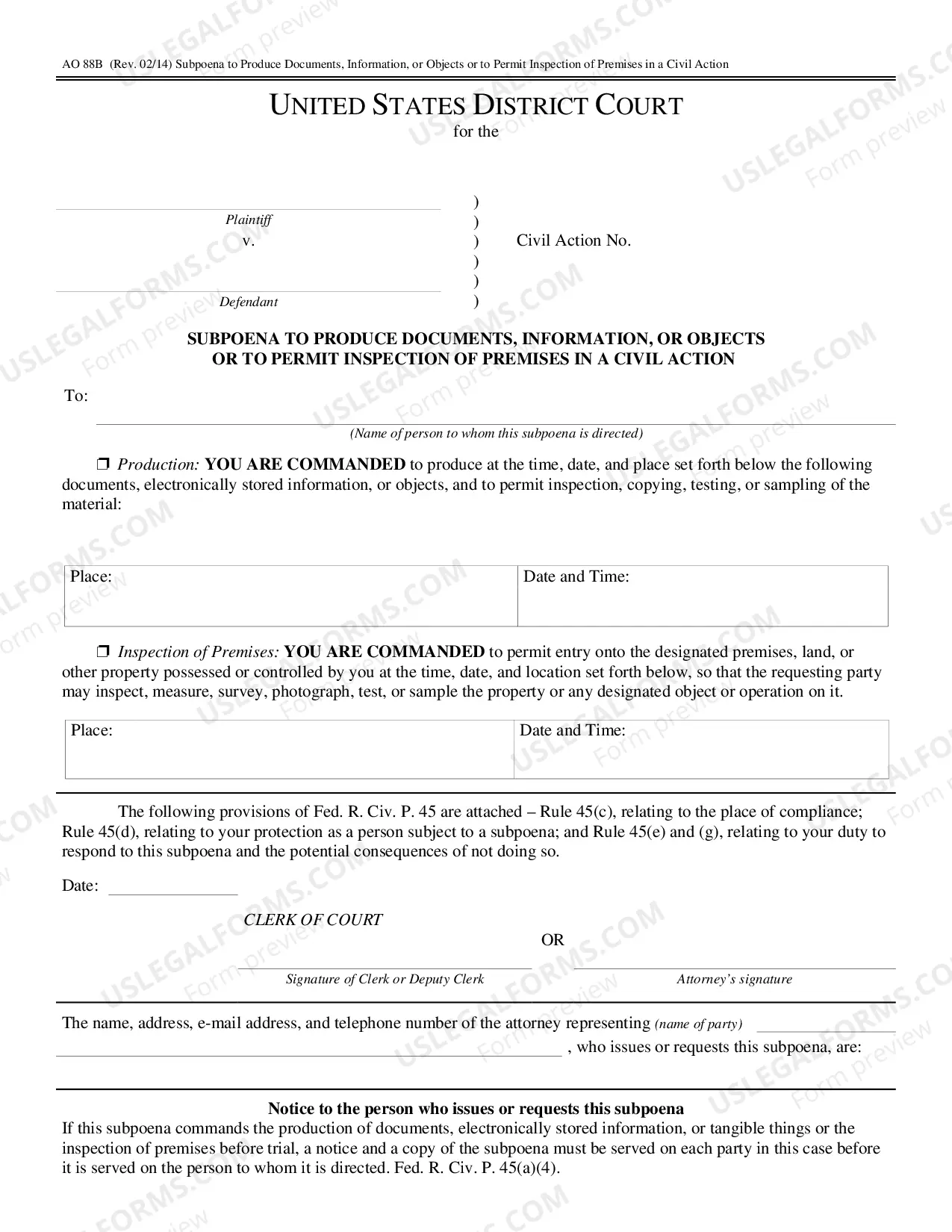

Form popularity
FAQ
The first step of a civil lawsuit involves the plaintiff filing a 'complaint,' a legal document that outlines the basics of the case. The complaint accuses the defendant of wrongdoing and attempts to lay out the case. The complaint is then filed with the court.
To obtain your Ohio Certificate of Authority, you will submit an Application for Certificate of Authority, along with required certificates or certified copies from your home state. You will need to appoint a registered agent in order for your filing to be approved.
Except for motions made during a hearing or during trial, motions are required to be in writing. They must also be filed in court and served on the opposing party's attorney (or the party if not represented by counsel). If the motion is contested, the opposing attorneys will also file papers opposing the motion.
The decedent must have resided in Ohio at the time of death, and the affidavit must be filed in the probate court of the county where the decedent lived. The required documentation includes the completed affidavit form, a copy of the decedent's death certificate, and a list of assets.
If you want to file a motion, the process is generally something like this: You write your motion. You file your motion with the court clerk. The court clerk inserts the date and time your motion will be heard by the judge. You “serve” (mail) your motion to the other side.
Except for motions made during a hearing or during trial, motions are required to be in writing. They must also be filed in court and served on the opposing party's attorney (or the party if not represented by counsel). If the motion is contested, the opposing attorneys will also file papers opposing the motion.
Steps Check if the court has blank motion forms. Some courts have "check the boxes" or "fill in the blank" motion forms. Create your caption. Title your motion. Draft the introductory paragraph to the body of the motion. Request relief. Lay out the applicable facts. Make your legal argument. Insert a signature block.
It would be best to formally accept the settlement offer in writing before it is legally binding and valid. This means you can change your mind and continue renegotiating if you discover the insurance company is attempting to settle your claim for less than you deserve.
Dear Mr./Ms. Adjuster: Pursuant to our phone conversation on insert date, please accept this letter as confirmation that we have agreed to settle, in full, my above-referenced claim for personal injuries for the amount of: Agreed to Final Settlement Amount. Thank you for your prompt attention to this matter.
Be as neutral and matter-of-fact as possible. If the insurance company made any error in its assessment of your claim, you should be clear when addressing that in your written communication. State the settlement offer you are willing to accept and the reasons why.