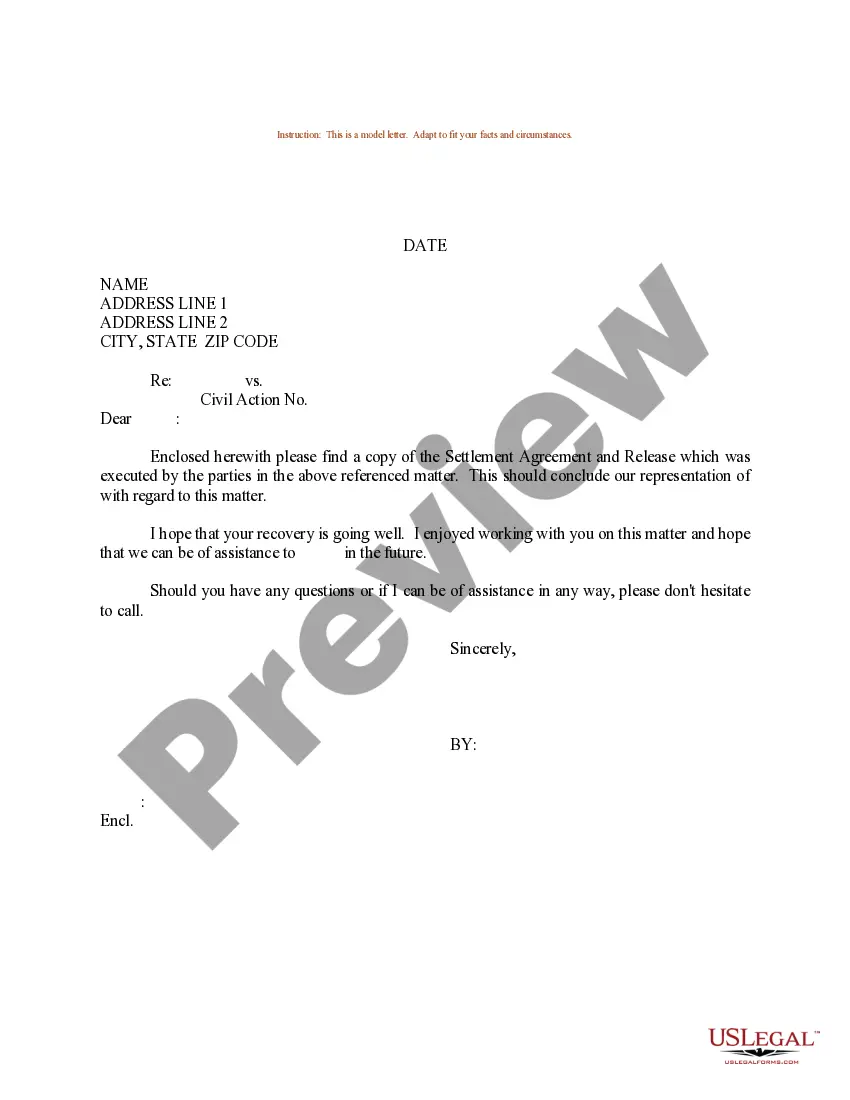
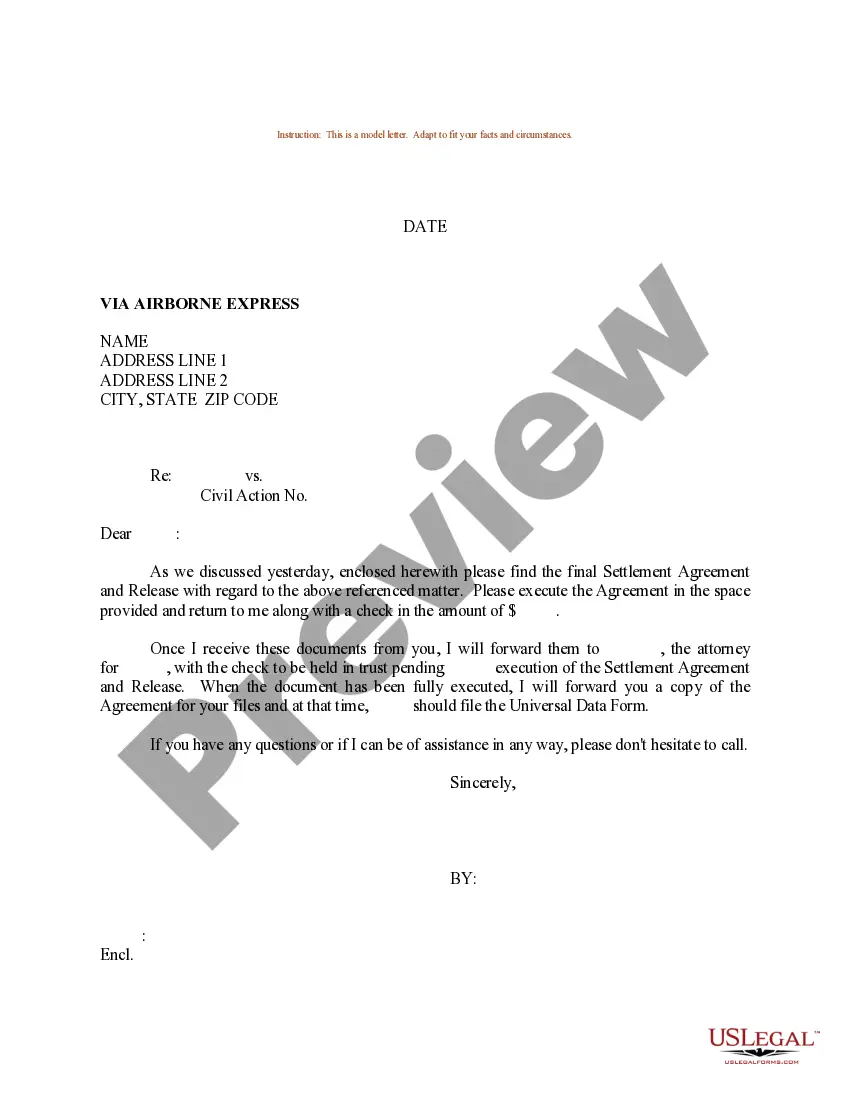
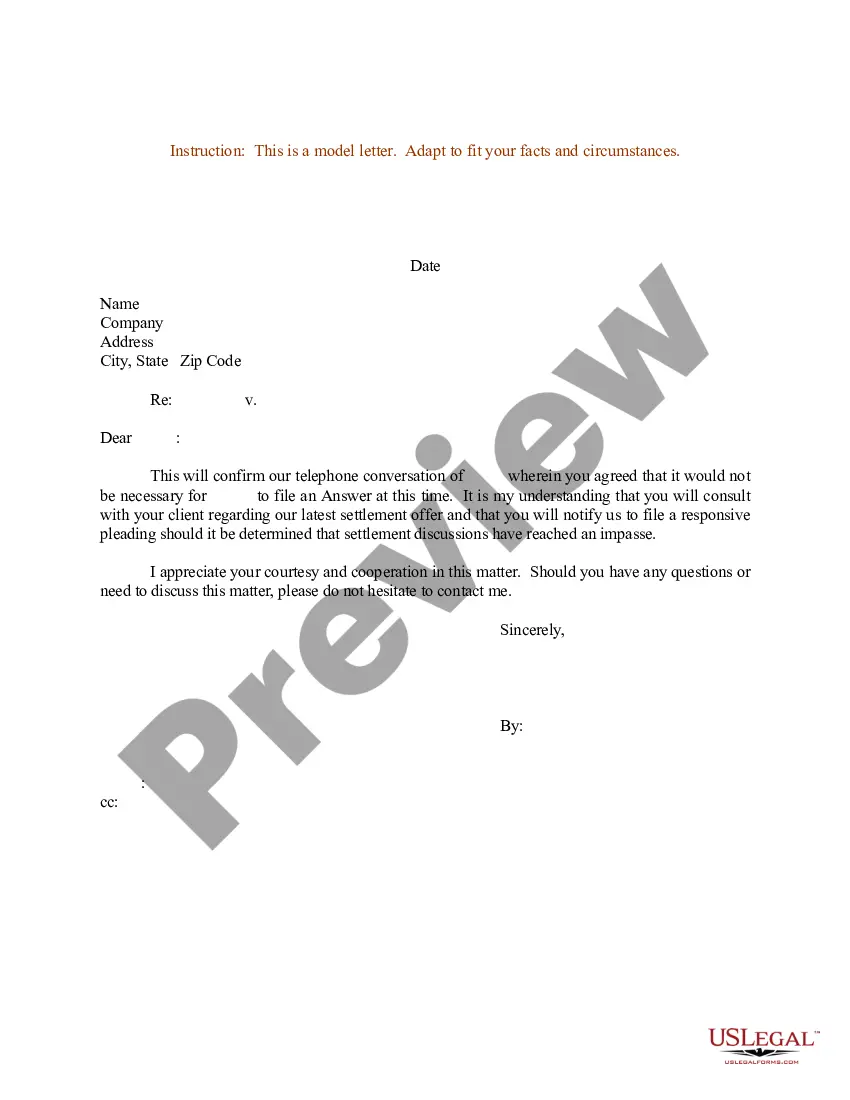
Confirmation Of Settlement Letter Format In Ohio
Description


Get your form ready online
Our built-in tools help you complete, sign, share, and store your documents in one place.
Make edits, fill in missing information, and update formatting in US Legal Forms—just like you would in MS Word.
Download a copy, print it, send it by email, or mail it via USPS—whatever works best for your next step.
Sign and collect signatures with our SignNow integration. Send to multiple recipients, set reminders, and more. Go Premium to unlock E-Sign.
If this form requires notarization, complete it online through a secure video call—no need to meet a notary in person or wait for an appointment.
We protect your documents and personal data by following strict security and privacy standards.

Make edits, fill in missing information, and update formatting in US Legal Forms—just like you would in MS Word.

Download a copy, print it, send it by email, or mail it via USPS—whatever works best for your next step.

Sign and collect signatures with our SignNow integration. Send to multiple recipients, set reminders, and more. Go Premium to unlock E-Sign.

If this form requires notarization, complete it online through a secure video call—no need to meet a notary in person or wait for an appointment.

We protect your documents and personal data by following strict security and privacy standards.
Looking for another form?








Form popularity
FAQ
(B)(1) Every administrator and executor, within six months after appointment, shall render a final and distributive account of the administrator's or executor's administration of the estate unless one or more of the following circumstances apply: (a) An Ohio estate tax return must be filed for the estate.
Upon the death of a resident of this state who dies intestate, letters of administration of the decedent's estate shall be granted by the probate court of the county in which the decedent was a resident at the time of death.
To obtain your Ohio Certificate of Authority, you will submit an Application for Certificate of Authority, along with required certificates or certified copies from your home state. You will need to appoint a registered agent in order for your filing to be approved.
To probate a will in Ohio, take the following steps: Step 1: Find and File the Decedent's Will. Step 2: Order Decedent's Death Certificate. Step 3: Petition for Probate. Step 4: The Probate Is Opened and Letters of Authority Are Issued. Step 5: Administration, Creditors, and Inventory of the Estate.
A Letter of Authority refers to the document (or Letter) that grants the personal representative authority to act on behalf of the estate of the person that died. Probate refers to the court procedure by which a decedent's estate gets administered after death.
The letter of authority (J170) must be obtained from the Office of the Master of the High Court or a Magistrates Court and can take up to 120 days to be issued. It is usually valid for up to 12 months.
Treat the following as a set of general guidelines: Gather complete information before you start writing. Describe your injuries and medical treatment. List your medical expenses, lost wages, and non-economic damages. Make a settlement demand. Include a deadline for legal action if you want to, but don't bluff.
Dear Mr./Ms. Adjuster: Pursuant to our phone conversation on insert date, please accept this letter as confirmation that we have agreed to settle, in full, my above-referenced claim for personal injuries for the amount of: Agreed to Final Settlement Amount. Thank you for your prompt attention to this matter.
Rule 33 - Interrogatories to Parties (A) Availability; procedures for use. Any party, without leave of court, may serve upon any other party up to forty written interrogatories to be answered by the party served.
The decedent must have resided in Ohio at the time of death, and the affidavit must be filed in the probate court of the county where the decedent lived. The required documentation includes the completed affidavit form, a copy of the decedent's death certificate, and a list of assets.