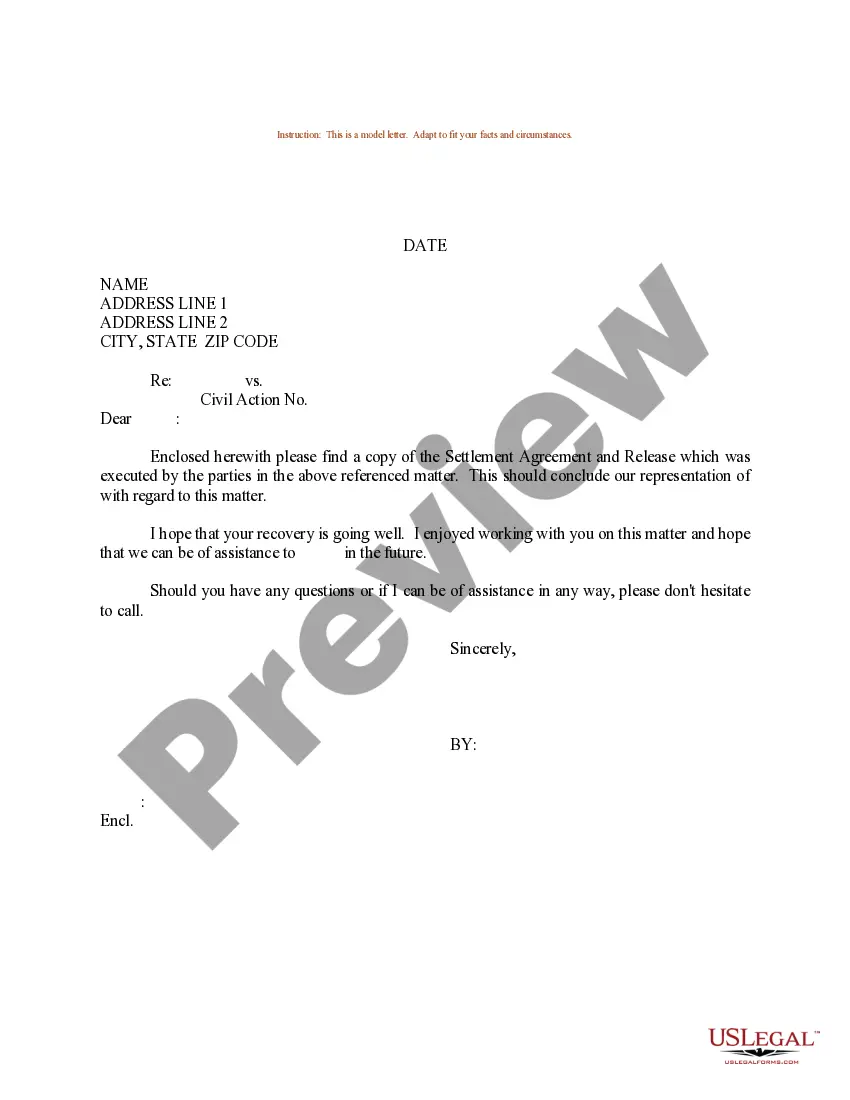
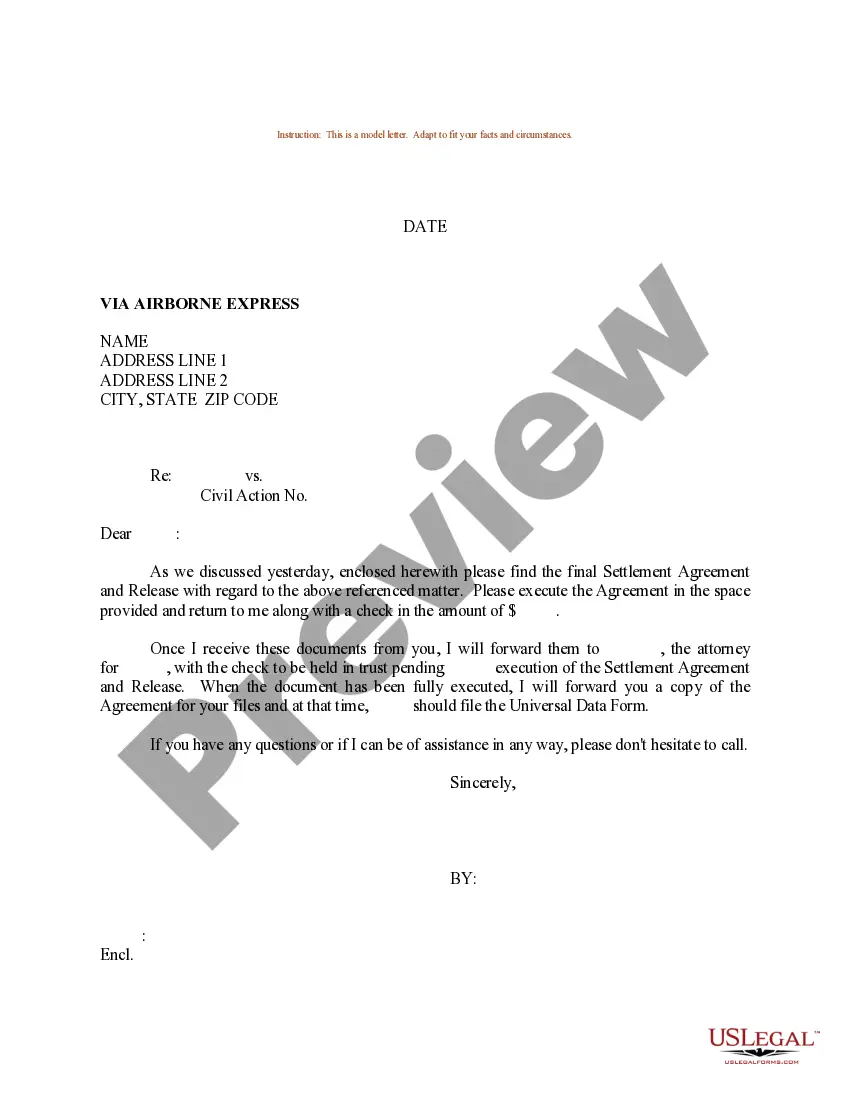
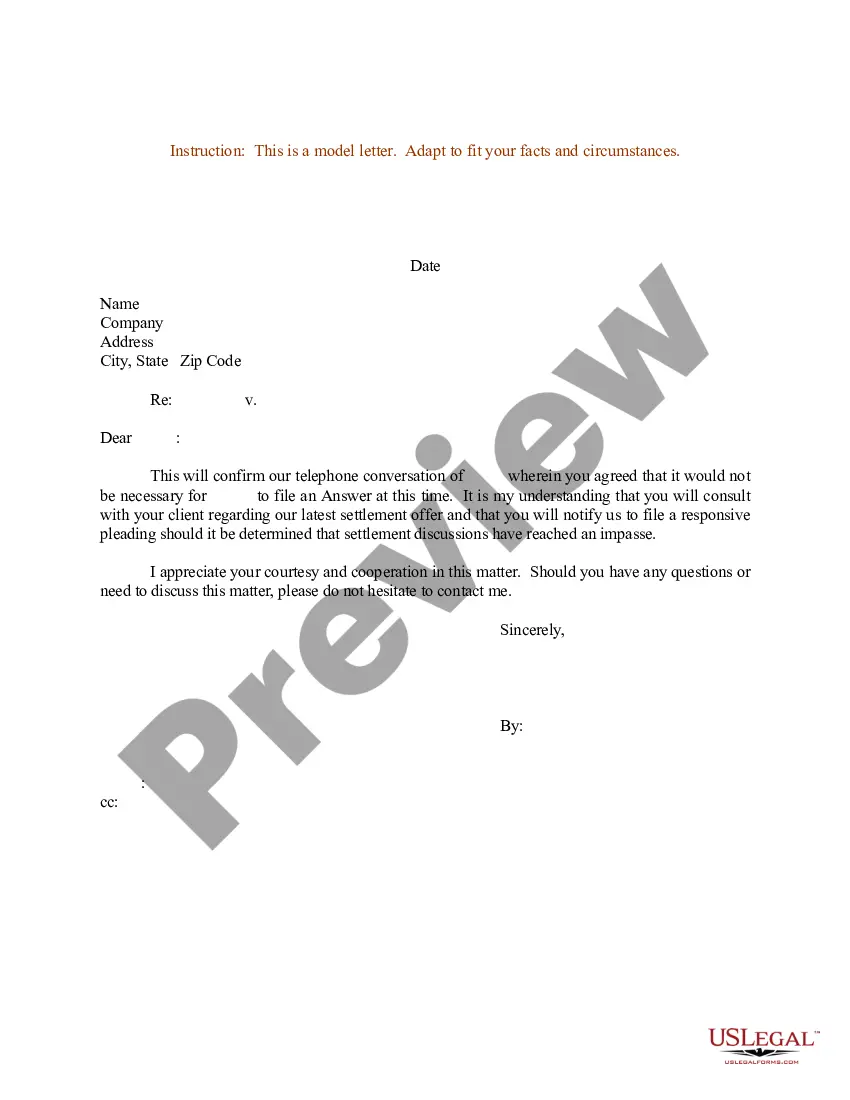
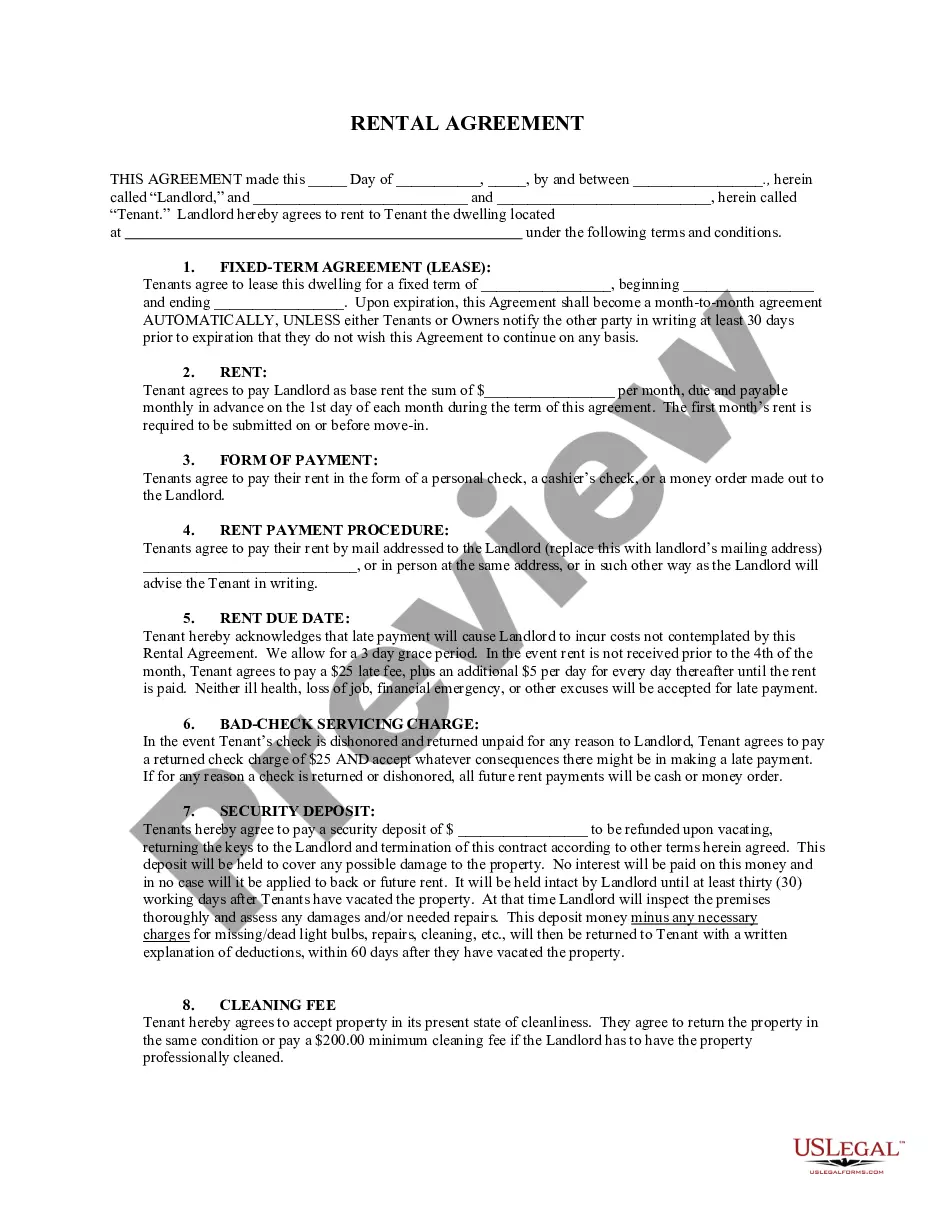
Confirmation Of Settlement Letter Format In Massachusetts
Description


Get your form ready online
Our built-in tools help you complete, sign, share, and store your documents in one place.
Make edits, fill in missing information, and update formatting in US Legal Forms—just like you would in MS Word.
Download a copy, print it, send it by email, or mail it via USPS—whatever works best for your next step.
Sign and collect signatures with our SignNow integration. Send to multiple recipients, set reminders, and more. Go Premium to unlock E-Sign.
If this form requires notarization, complete it online through a secure video call—no need to meet a notary in person or wait for an appointment.
We protect your documents and personal data by following strict security and privacy standards.

Make edits, fill in missing information, and update formatting in US Legal Forms—just like you would in MS Word.

Download a copy, print it, send it by email, or mail it via USPS—whatever works best for your next step.

Sign and collect signatures with our SignNow integration. Send to multiple recipients, set reminders, and more. Go Premium to unlock E-Sign.

If this form requires notarization, complete it online through a secure video call—no need to meet a notary in person or wait for an appointment.

We protect your documents and personal data by following strict security and privacy standards.
Looking for another form?


Form popularity
FAQ
To sue someone in Massachusetts, you have to file a complaint with the clerk of the court. A complaint is not a specific form. It is a document that contains a short statement of the facts showing your claim and why you are entitled to relief and a demand for judgment granting that relief.
State law requires you to send the business a letter 30 days before filing a claim in court. The letter must outline your complaint, the harm you suffered, and how you want the problem resolved. This is called a 30 Day Demand Letter.
Filing a Chapter 93A Complaint in Massachusetts Be sent to the business at least thirty (30) days prior to the filing of an actual lawsuit; State that the claimant is a "consumer" - someone who engages in commerce for primarily personal, family, or household purposes; Identify the claimant's full name and address;
The demand letter must be sent at least thirty days before you file your lawsuit with the Chapter 93A claim. The demand letter must identify the person or entity making the claim of unfair or deceptive practices. The demand letter must reasonably describe the alleged unfair or deceptive practice.
An action brought to enforce the provisions of this Act shall be barred unless commenced within four years after the cause of action accrued.
If service is made by mail, then proof of service must include a signed receipt or other evidence of successful personal delivery to the defendant that will satisfy the court where the case is filed.
Treat the following as a set of general guidelines: Gather complete information before you start writing. Describe your injuries and medical treatment. List your medical expenses, lost wages, and non-economic damages. Make a settlement demand. Include a deadline for legal action if you want to, but don't bluff.
Example of a Claim Settlement Letter We are writing to inform you that we have completed our evaluation of your claim filed under policy number Policy Number regarding Brief Description of the Claim. We are pleased to offer a settlement amount of Settlement Amount.
A variety of factors can affect what a reasonable settlement offer might be, including the following: Whether the injured plaintiff is partially liable. The extent and severity of the victim's injuries. The past and future likely costs of treatment. Whether the plaintiff is likely to fully recover or has fully ...
I We amWe are we are making this offer on the clear understanding that, if you accept it, neither you nor any associate company will take any other action to collect or enforce this debt in any way and that I We we will be released from any liability.