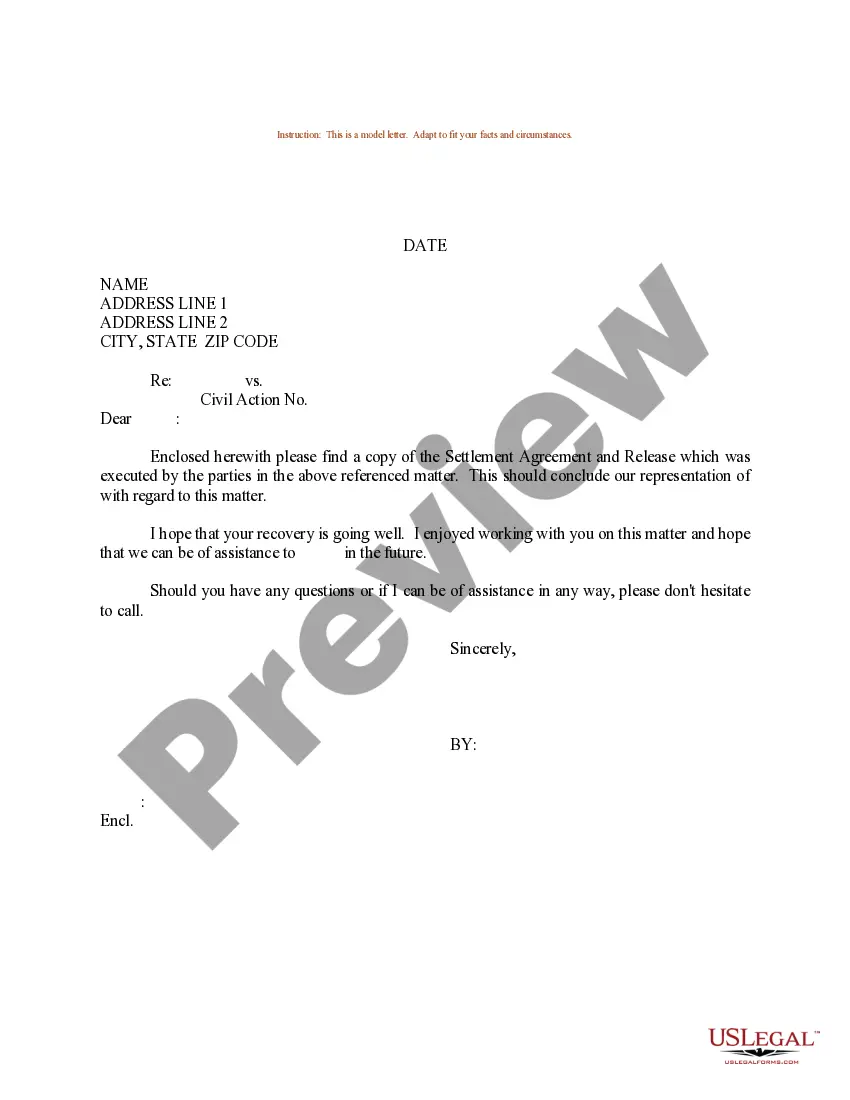
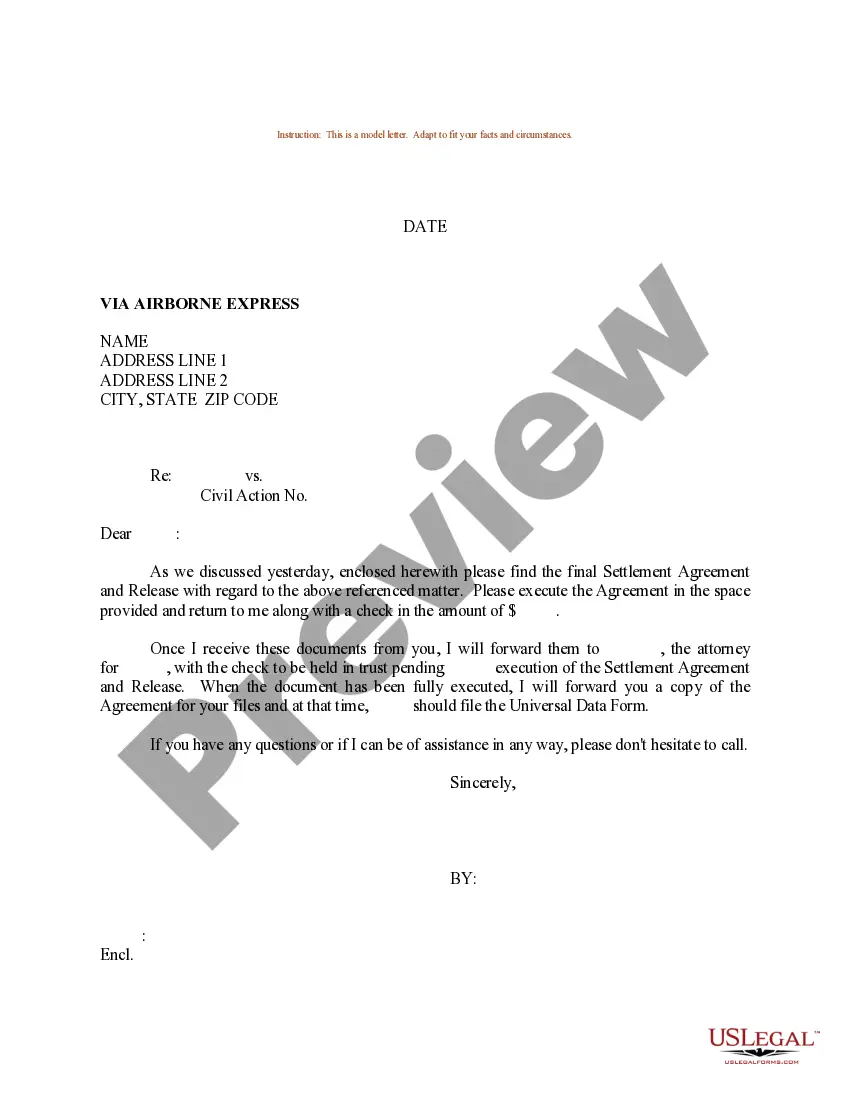
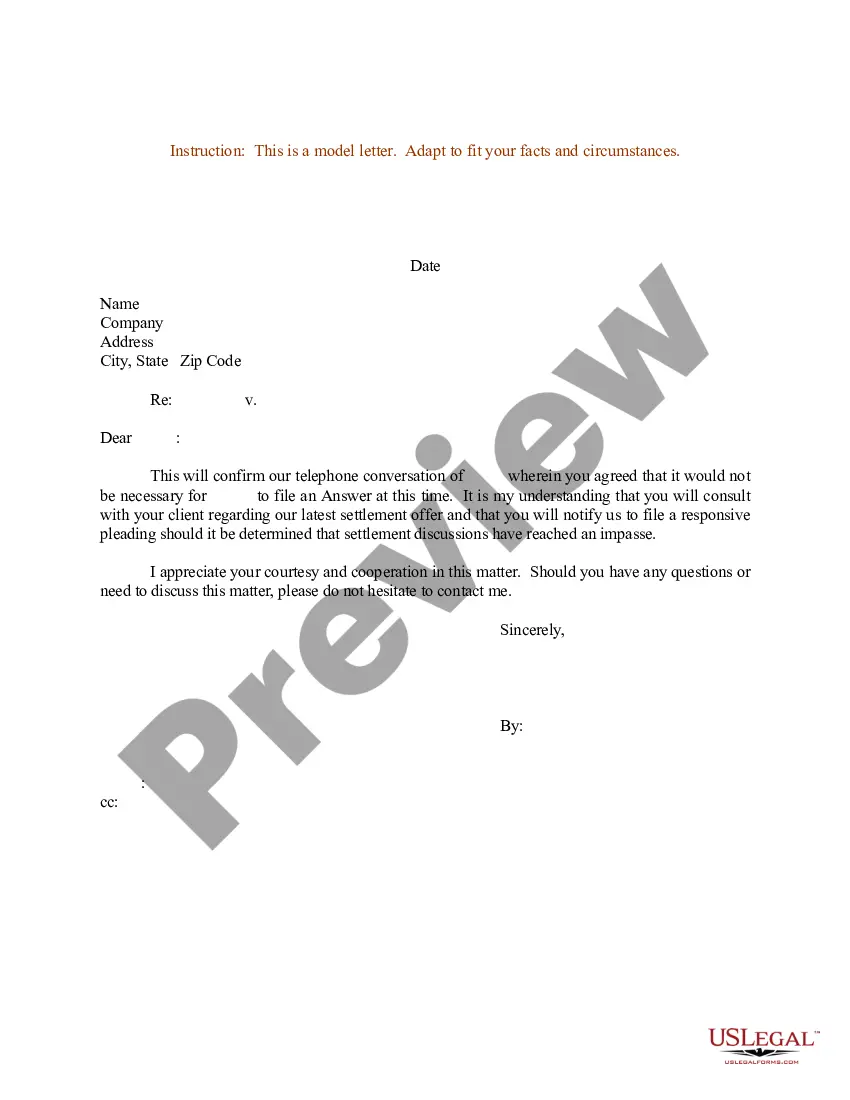
Settlement Confirmation Letter Without Prejudice In Maricopa
Description


Get your form ready online
Our built-in tools help you complete, sign, share, and store your documents in one place.
Make edits, fill in missing information, and update formatting in US Legal Forms—just like you would in MS Word.
Download a copy, print it, send it by email, or mail it via USPS—whatever works best for your next step.
Sign and collect signatures with our SignNow integration. Send to multiple recipients, set reminders, and more. Go Premium to unlock E-Sign.
If this form requires notarization, complete it online through a secure video call—no need to meet a notary in person or wait for an appointment.
We protect your documents and personal data by following strict security and privacy standards.

Make edits, fill in missing information, and update formatting in US Legal Forms—just like you would in MS Word.

Download a copy, print it, send it by email, or mail it via USPS—whatever works best for your next step.

Sign and collect signatures with our SignNow integration. Send to multiple recipients, set reminders, and more. Go Premium to unlock E-Sign.

If this form requires notarization, complete it online through a secure video call—no need to meet a notary in person or wait for an appointment.

We protect your documents and personal data by following strict security and privacy standards.
Looking for another form?






Form popularity
FAQ
Dismissals can be either with prejudice (cannot be re-filed) or without prejudice (can be re-filed). Dismissal of a petition can occur during the advisory or adjudication stages. It is possible for a petition to be dismissed due to a lack of evidence during either of these hearings.
Whereas a case that is dismissed “with prejudice” is dismissed permanently, a case that is dismissed “without prejudice” is only dismissed temporarily. This temporary dismissal means that the plaintiff is allowed to re-file charges, alter the claim, or bring the case to another court.
Whereas a case that is dismissed “with prejudice” is dismissed permanently, a case that is dismissed “without prejudice” is only dismissed temporarily. This temporary dismissal means that the plaintiff is allowed to re-file charges, alter the claim, or bring the case to another court.
Prejudice is usually a high sanction by the court. If the court dismisses the case with prejudice, it means the plaintiff will be barred from bringing this claim ever again. Thus, court will only issue a dismissal with prejudice in certain situations.
You Can Appeal a Dismissal With Prejudice A dismissal with prejudice means that the case has been dismissed permanently and cannot be brought back to the same court. It is, in effect, a final judgment. However, that does not prevent you from appealing to a higher court.
Within legal civil procedure, prejudice is a loss or injury, and refers specifically to a formal determination against a claimed legal right or cause of action. Thus, in a civil case, dismissal without prejudice is a dismissal that allows for re-filing of the case in the future.
What does "with prejudice" or "without prejudice" mean? With prejudice means that you can't file a new civil case against this defendant about the same issues you put in the Complaint you filed. The dismissal is final. The case is over and done with.
When a case is dismissed with prejudice, it is permanently over. A case is dismissed with prejudice when there is no reason to bring it back to court. An example would be if a judge determines a lawsuit as insignificant or the issue has been resolved.
Ing to ARCP Rule 16.1 and Maricopa County Local Rule 3.11, the Court has discretion to direct parties in any civil case to a settlement conference to facilitate settlement.
Takeaway 4: There have been rare cases where individuals have tried to sue themselves, but these are usually dismissed by the courts due to lack of legal standing.