Confirmation Of Settlement Letter Format In Collin
Description


Get your form ready online
Our built-in tools help you complete, sign, share, and store your documents in one place.
Make edits, fill in missing information, and update formatting in US Legal Forms—just like you would in MS Word.
Download a copy, print it, send it by email, or mail it via USPS—whatever works best for your next step.
Sign and collect signatures with our SignNow integration. Send to multiple recipients, set reminders, and more. Go Premium to unlock E-Sign.
If this form requires notarization, complete it online through a secure video call—no need to meet a notary in person or wait for an appointment.
We protect your documents and personal data by following strict security and privacy standards.

Make edits, fill in missing information, and update formatting in US Legal Forms—just like you would in MS Word.

Download a copy, print it, send it by email, or mail it via USPS—whatever works best for your next step.

Sign and collect signatures with our SignNow integration. Send to multiple recipients, set reminders, and more. Go Premium to unlock E-Sign.

If this form requires notarization, complete it online through a secure video call—no need to meet a notary in person or wait for an appointment.

We protect your documents and personal data by following strict security and privacy standards.
Looking for another form?








Form popularity
FAQ
The settlement should be a public record. If the court that conducted the lawsuit has an online web site- the results of the decision would be listed there. You might wish to call the clerk of the court directly to get information.
State the settlement offer you are willing to accept and the reasons why. You can repeat the position you stated in the first demand letter. Your attorney can advise you on whether you should stick with the amount stated in your first demand letter or if you should present a counteroffer.
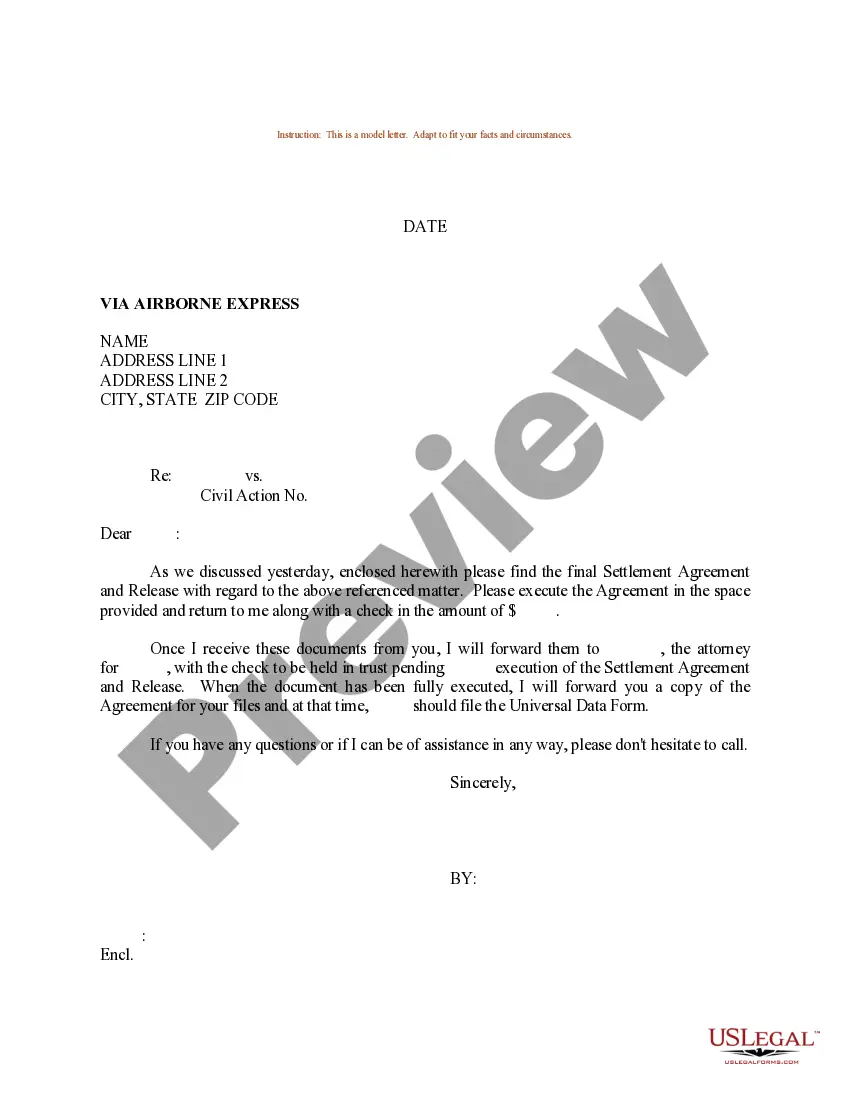
Tracking Your Settlement Check One of the best ways to track your settlement check is by reaching out to your personal injury attorney for help. Your attorney will be the middleman between the defendant and your settlement funds.
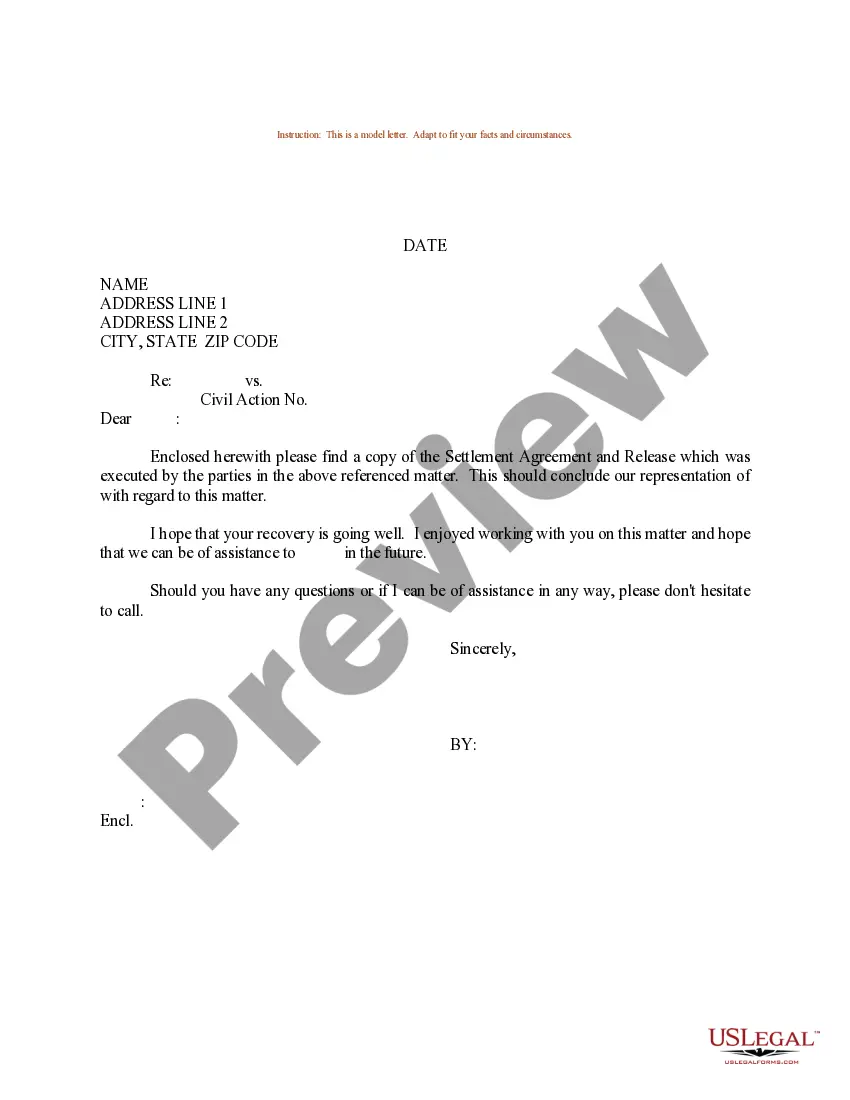
What things should be included in the Full and Final Settlement Letter? Settlement Amount: Clearly state the finalized amount to be settled. Settlement Cheque: Provide details regarding the issuance of the settlement cheque. Resignation/Termination Date: Specify the date on which the employee resigned or was terminated.
State the settlement offer you are willing to accept and the reasons why. You can repeat the position you stated in the first demand letter. Your attorney can advise you on whether you should stick with the amount stated in your first demand letter or if you should present a counteroffer.
I am writing to request a full and final settlement of my payroll. As you know, I have recently resigned from my position at the company. I formally request that you process all outstanding payments owed as soon as possible. This includes any unpaid salary or benefits due to me until my last working day.
At the outset of settlement negotiations, list all individuals and entities—both for the plaintiff and the defendant—that the agreement will cover. ✔ List all legal issues to be settled. List all claims your adversary may legally release via settlement. Verify the agreement covers these claims.
Treat the following as a set of general guidelines: Gather complete information before you start writing. Describe your injuries and medical treatment. List your medical expenses, lost wages, and non-economic damages. Make a settlement demand. Include a deadline for legal action if you want to, but don't bluff.