Termination Without Severance Pay In San Diego
Description




Form popularity
FAQ
What Is the Burden of Proof for Wrongful Termination in California? In California, the employee who was fired unfairly has the burden of proof. They have to show that being fired broke a contract, a law against discrimination, or public policy.
Your termination could be wrongful if your employer fired you: Due to discrimination. In violation of a federal or state labor law. Because you reported and refused to participate in harassment.
Wrongful termination occurs when an employer fires a worker for unlawful reasons. Common unlawful reasons for unlawful termination includes firing employees for discriminatory reasons based on age, disability or pregnancy. Employees may be able to sue former employers for wrongful termination in California.
Different Examples of Wrongful Termination This occurs when an employee is fired based on characteristics such as race, gender, age, ethnicity, religion, disability, sexual orientation, or other protected classes. Anti-discrimination laws, like Title VII of the Civil Rights Act, prohibit such actions.
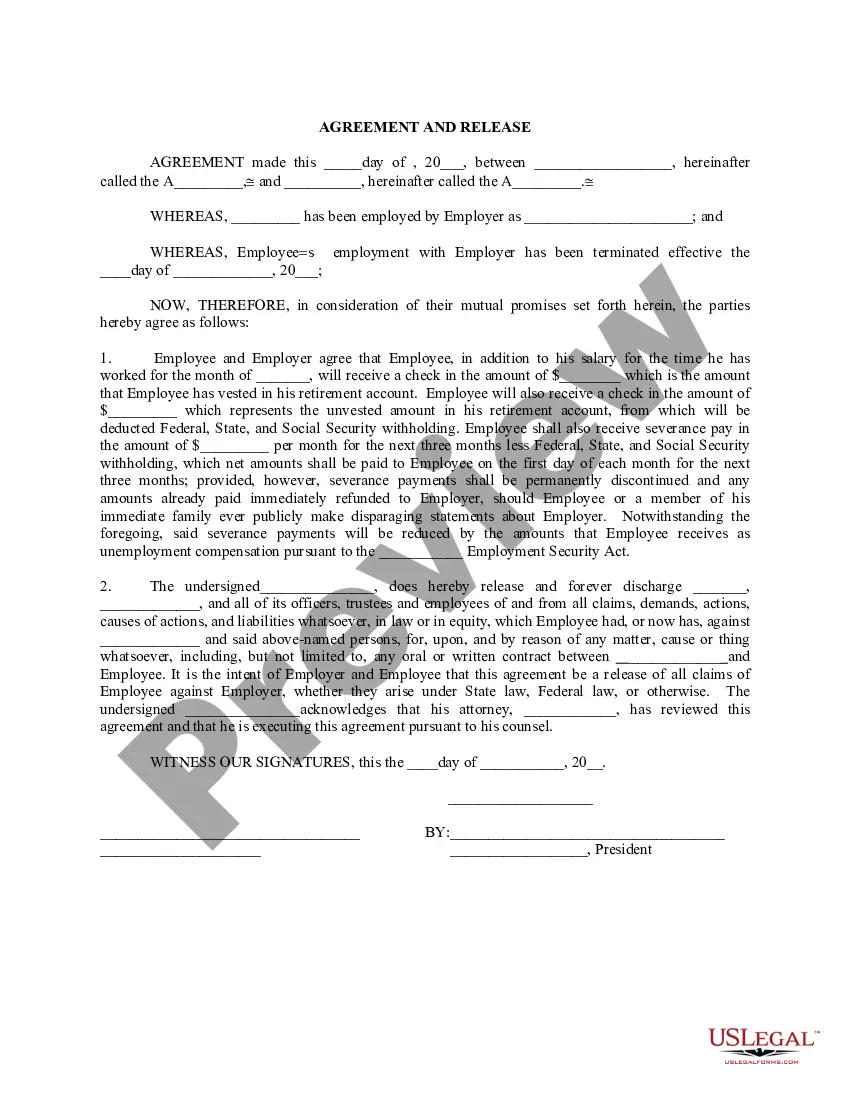
A terminated employee may be able to replace some lost income by receiving unemployment compensation. If qualified, the unemployed worker may receive compensation while searching for employment. Employees qualify for unemployment during layoffs or if they were fired without cause.
You are generally an at-will employee, if you are terminated for an unlawful reason it can be a wrongful termination, you are entitled to a final paycheck, you are entitled to a notice period before certain mass layoffs, and.
The new rule mandates that businesses inform their employees that they have at least five days to review any separation or severance arrangements.
California Labor Code Section 2808(b) requires employers to provide to employees, upon termination, notification of all continuation, disability extension and conversion coverage options under any employer-sponsored coverage for which the employee may remain eligible after employment terminates.