Termination With Severance Meaning In Sacramento
Description

Get your form ready online
Our built-in tools help you complete, sign, share, and store your documents in one place.
Make edits, fill in missing information, and update formatting in US Legal Forms—just like you would in MS Word.
Download a copy, print it, send it by email, or mail it via USPS—whatever works best for your next step.
Sign and collect signatures with our SignNow integration. Send to multiple recipients, set reminders, and more. Go Premium to unlock E-Sign.
If this form requires notarization, complete it online through a secure video call—no need to meet a notary in person or wait for an appointment.
We protect your documents and personal data by following strict security and privacy standards.

Make edits, fill in missing information, and update formatting in US Legal Forms—just like you would in MS Word.

Download a copy, print it, send it by email, or mail it via USPS—whatever works best for your next step.

Sign and collect signatures with our SignNow integration. Send to multiple recipients, set reminders, and more. Go Premium to unlock E-Sign.

If this form requires notarization, complete it online through a secure video call—no need to meet a notary in person or wait for an appointment.

We protect your documents and personal data by following strict security and privacy standards.
Looking for another form?








Form popularity
FAQ
While no mandate requires employers to provide severance under California law, SB 331, signed into law in October 2021, introduced important provisions: Time to Review: You have a minimum of five days to review the severance agreement.
A termination clause is a provision in the employment contract that defines the rights of the employee at the termination of the employment relationship. It typically determines how much notice period and severance an employee is entitled to when the termination is on a without-cause basis.
"An individual is disqualified for unemployment compensation benefits if the director finds that he or she left his or her most recent work voluntarily without good cause or that he or she has been discharged for misconduct connected with his or her most recent work."
What is the downside to severance? The downside to severance includes financial drawbacks such as loss of steady income, potential loss of benefits, and uncertainty about future job prospects, as well as the impact on retirement savings and benefits.
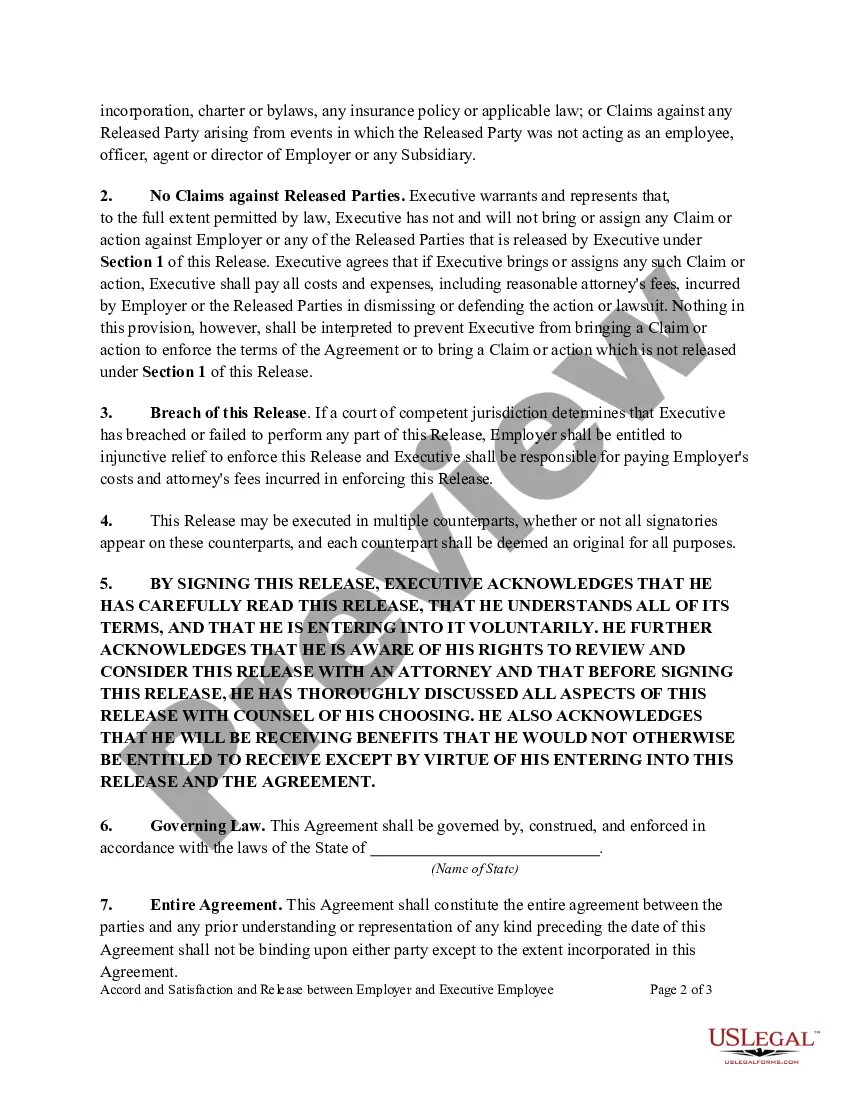
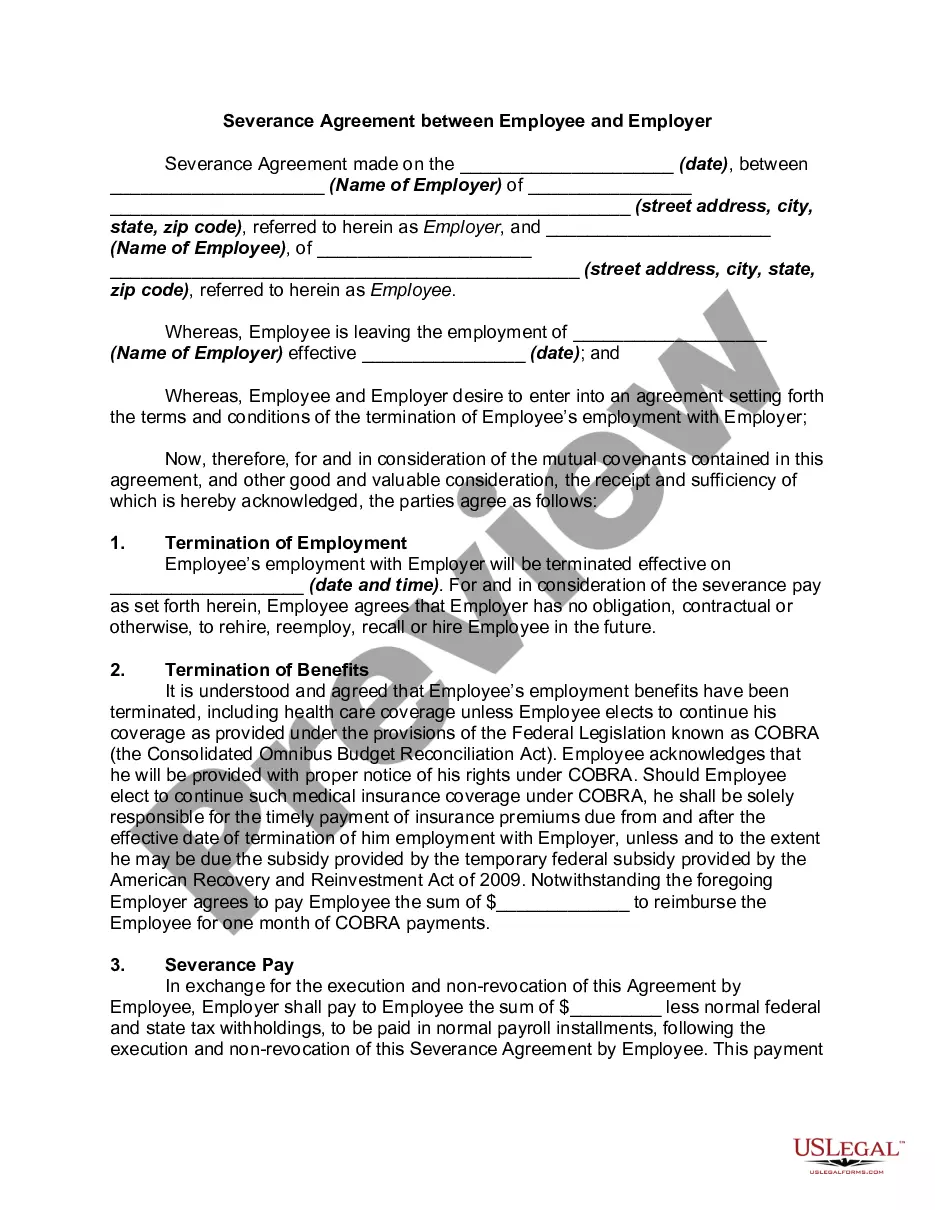
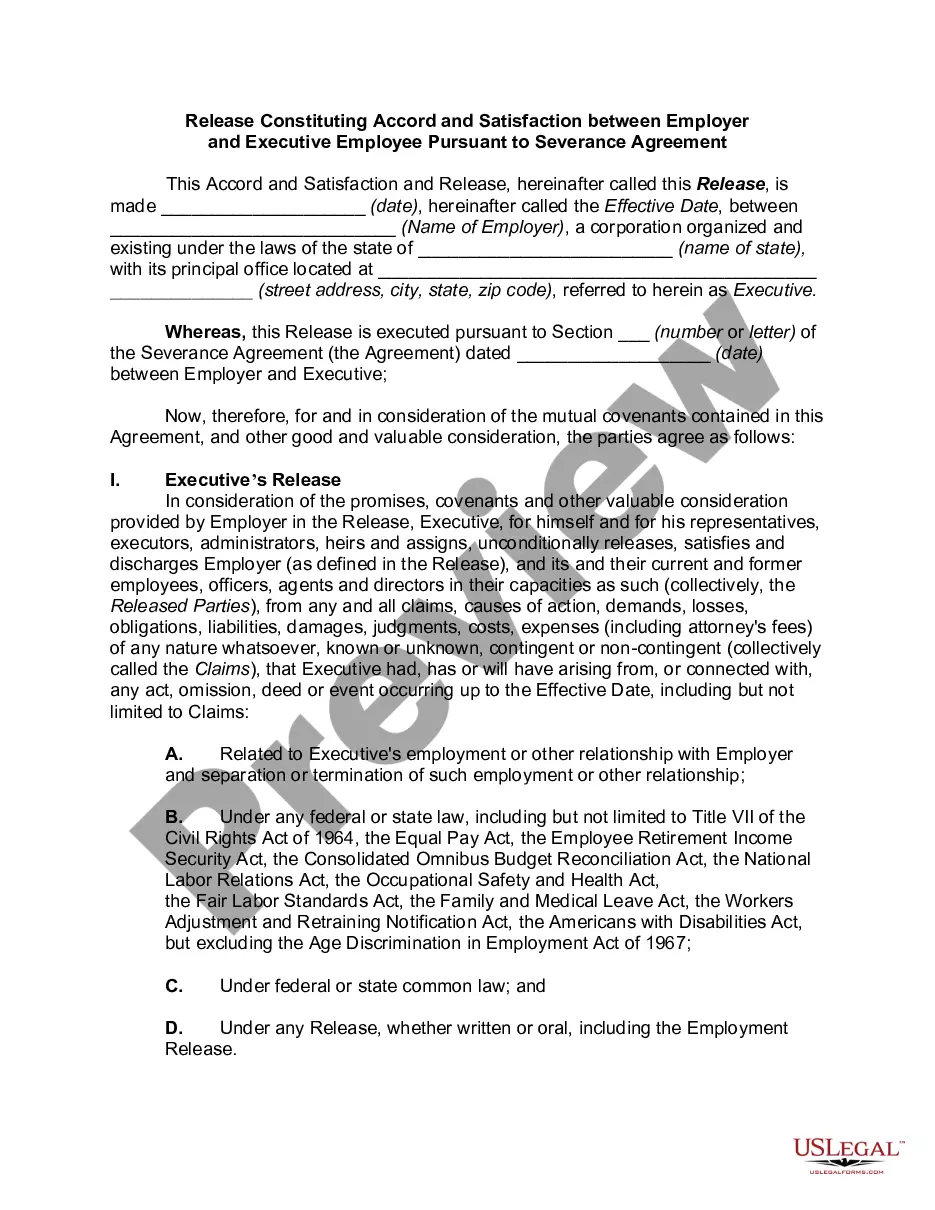
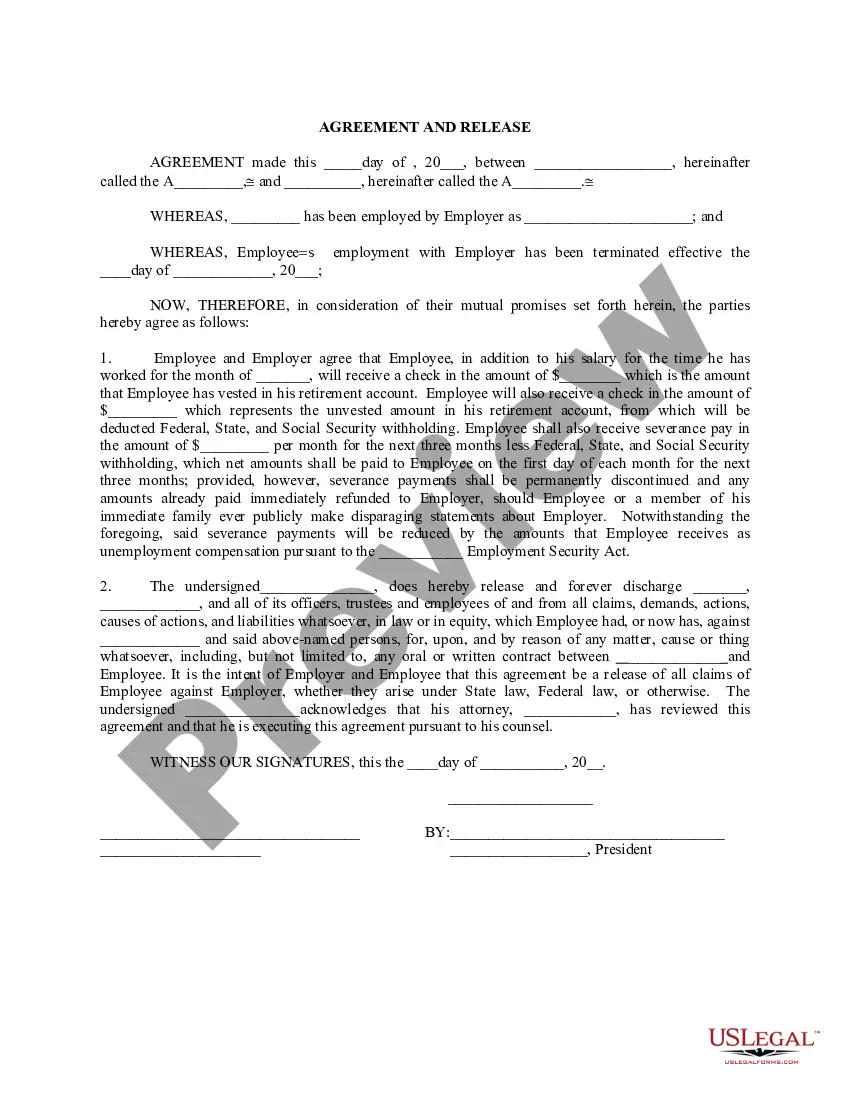
Basically, a severance agreement is a waiver or release of liability that the outgoing employee signs, protecting the business from lawsuits. These agreements are usually part of a larger severance package that includes compensation, outplacement services, and other benefits in exchange for the employee's signature.
In California, due to at-will employment, no specific notice period is required before terminating an employee. Exceptions include situations under the Worker Adjustment and Retraining Notification (WARN) Act for mass layoffs, necessitating a 60-day notice.