Employment Standards For Severance In Nevada
Description

Get your form ready online
Our built-in tools help you complete, sign, share, and store your documents in one place.
Make edits, fill in missing information, and update formatting in US Legal Forms—just like you would in MS Word.
Download a copy, print it, send it by email, or mail it via USPS—whatever works best for your next step.
Sign and collect signatures with our SignNow integration. Send to multiple recipients, set reminders, and more. Go Premium to unlock E-Sign.
If this form requires notarization, complete it online through a secure video call—no need to meet a notary in person or wait for an appointment.
We protect your documents and personal data by following strict security and privacy standards.

Make edits, fill in missing information, and update formatting in US Legal Forms—just like you would in MS Word.

Download a copy, print it, send it by email, or mail it via USPS—whatever works best for your next step.

Sign and collect signatures with our SignNow integration. Send to multiple recipients, set reminders, and more. Go Premium to unlock E-Sign.

If this form requires notarization, complete it online through a secure video call—no need to meet a notary in person or wait for an appointment.

We protect your documents and personal data by following strict security and privacy standards.
Looking for another form?





Form popularity
FAQ
Nevada's 4/10 rule allows employees to work four 10-hour shifts in a week without triggering daily overtime. To use this arrangement, both the employer and employee must agree in writing. This written agreement clearly outlines the schedule and ensures compliance with Nevada's overtime laws.
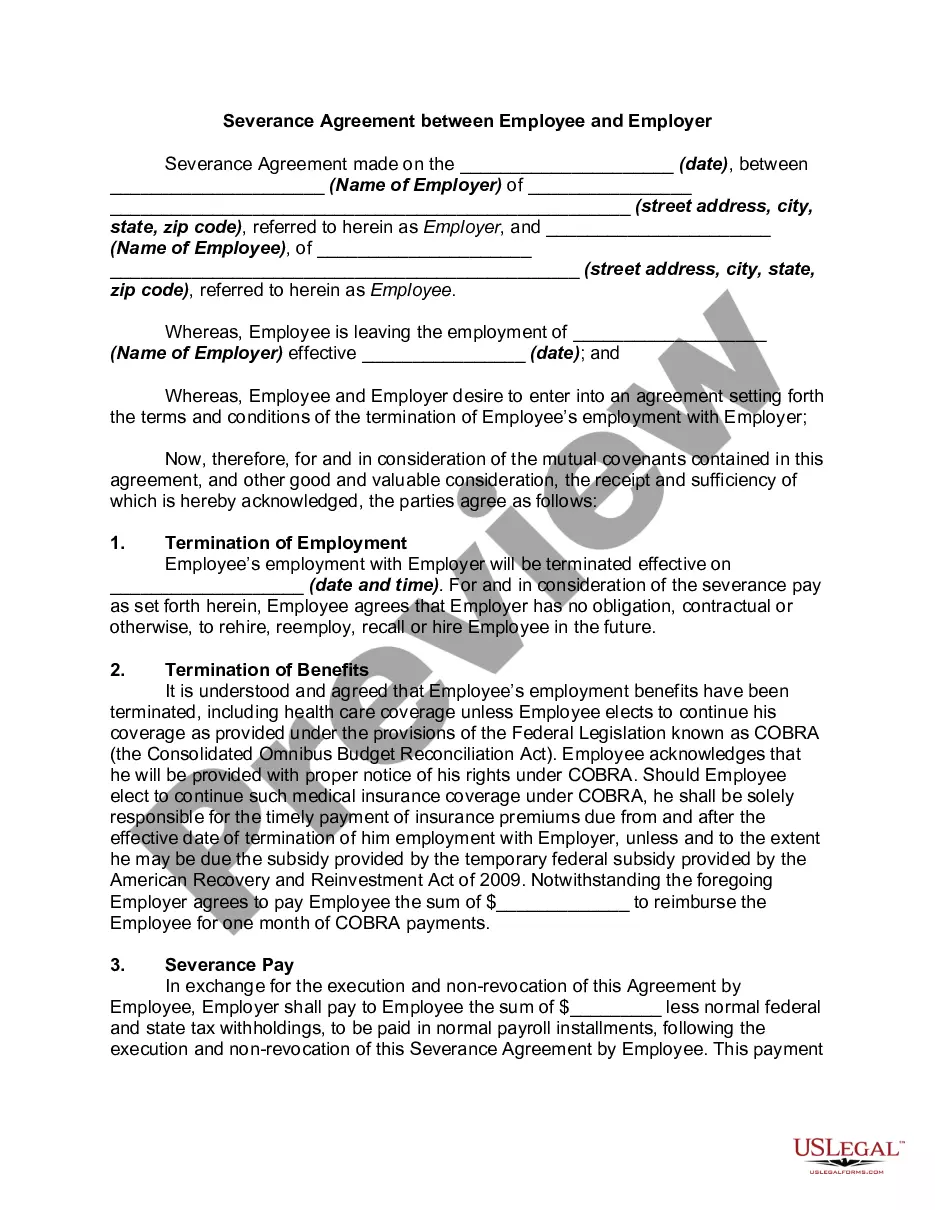
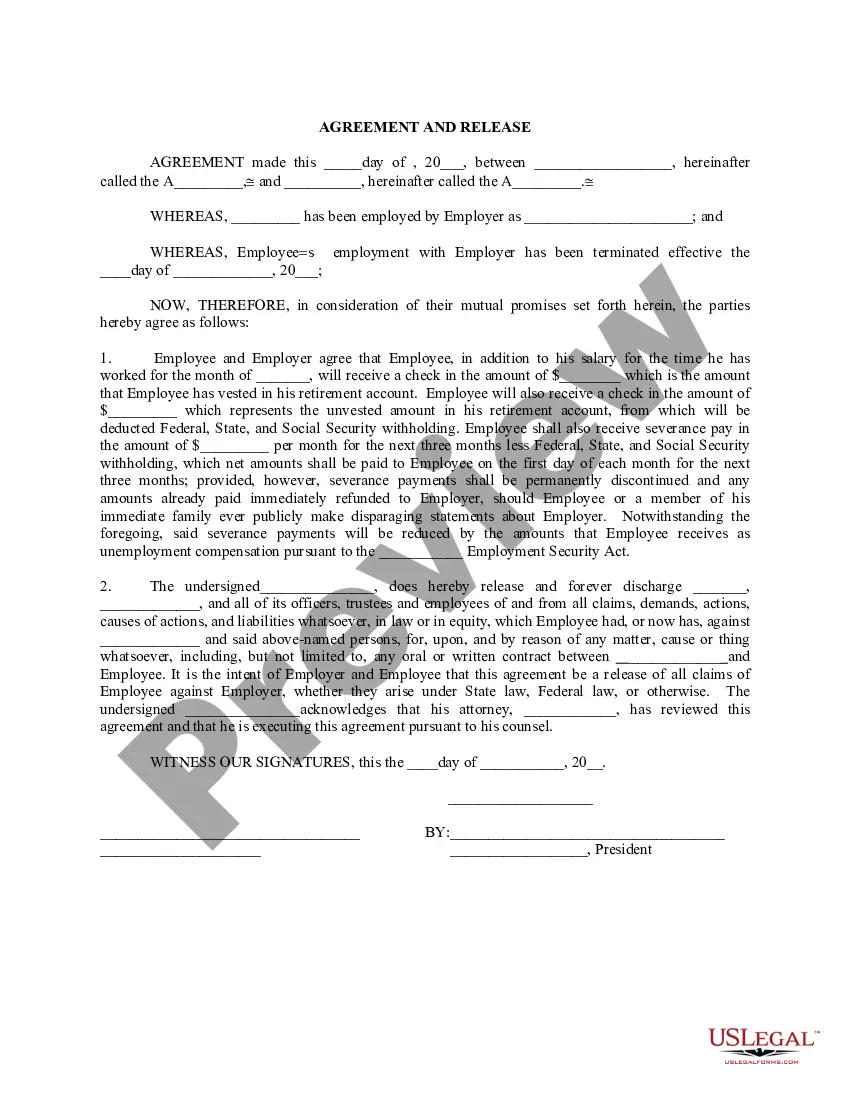
How to Structure a Severance Agreement Determine Eligibility: Decide which employees will be offered a severance agreement based on company policy or specific circumstances. Consult Legal Counsel: Work with an attorney to draft the agreement to ensure compliance with federal and state laws.
Most termination clauses are an agreement between the employer and the employee that in the event the employer elects to dismiss the employee without cause, the employee will only receive what they are entitled to under the Employment Standards Code.
The following is a list of some common reasons for denial: Voluntarily leaving work without good cause. Being discharged for misconduct connected with work. Not being able to work or available for work. Refusing an offer of suitable work. Knowingly making false statements to obtain benefit payments.
While you are not required to let your employee know, in writing, that they have been or will be terminated, you do need to give them some unemployment info, and a written record could save you from having to scramble later.
However, note that Nevada has a notice requirement: all employees must be provided Notice NUCS 4139 – Information for the Unemployed Worker upon separation.
Is a Letter of Termination Required? For the most part, the Federal Labor Standards Act (FLSA) doesn't require organizations to provide letters of termination. The exceptions are when employees are part of a union, a collective bargaining agreement, or certain mass layoffs or corporate closures.
Service letters: Employers must furnish service letters to any former employees who worked for at least 60 days and who request the letters in writing. The letter must state the reasons why the employees left or were fired.
How to ask for a severance package Review your company's documents. You can typically find details of the company's policy regarding severance packages in a couple of places. Make note of your accomplishments. Stay professional. Negotiate severance during your job offer. Agree to an exit interview.
Be Direct but Tactful: Clearly articulate your reasons for initiating the discussion about a severance package. Whether it's due to a layoff, impending company restructuring, or personal reasons, be transparent about your motivations without placing blame or becoming confrontational.