Termination With Severance Meaning In Montgomery
Description







Form popularity
FAQ
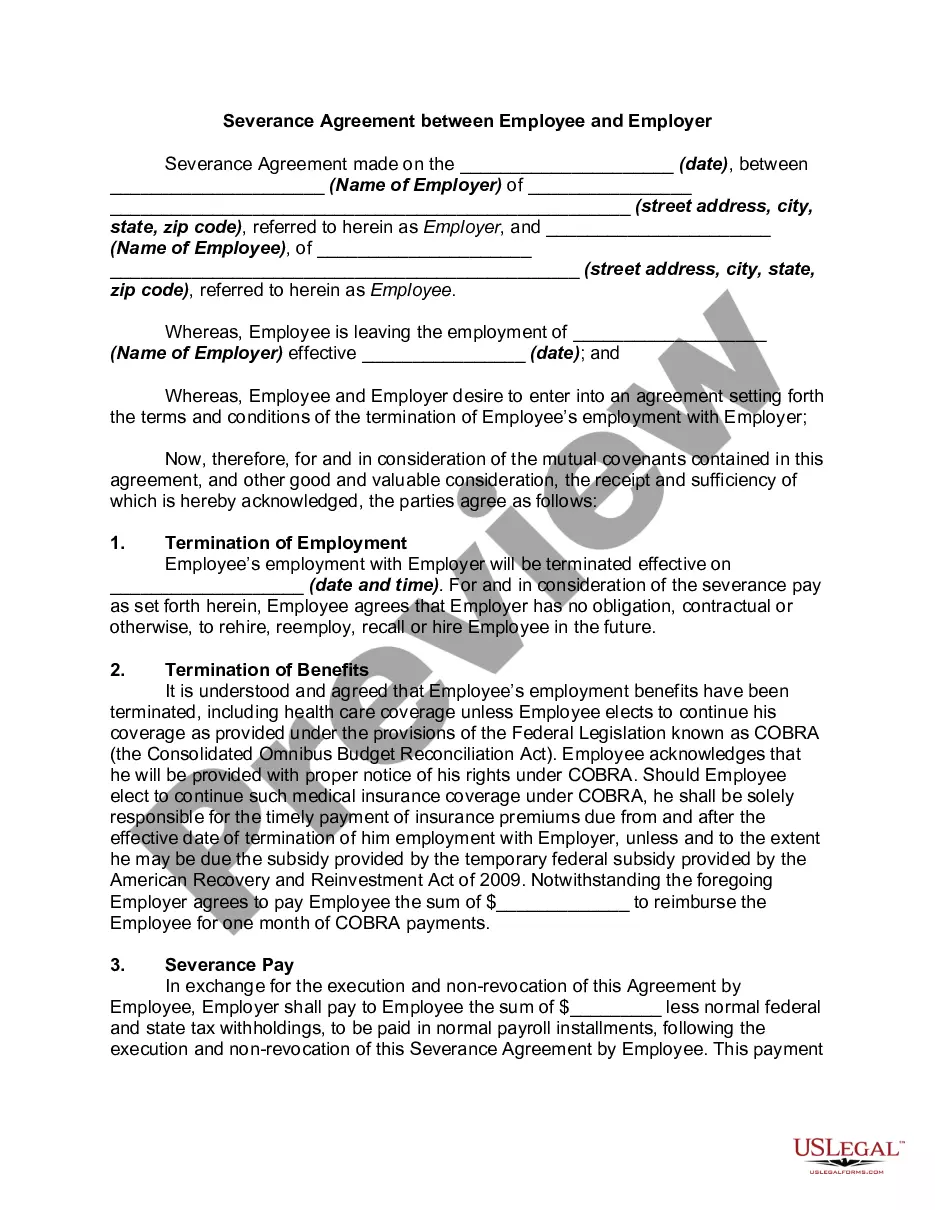
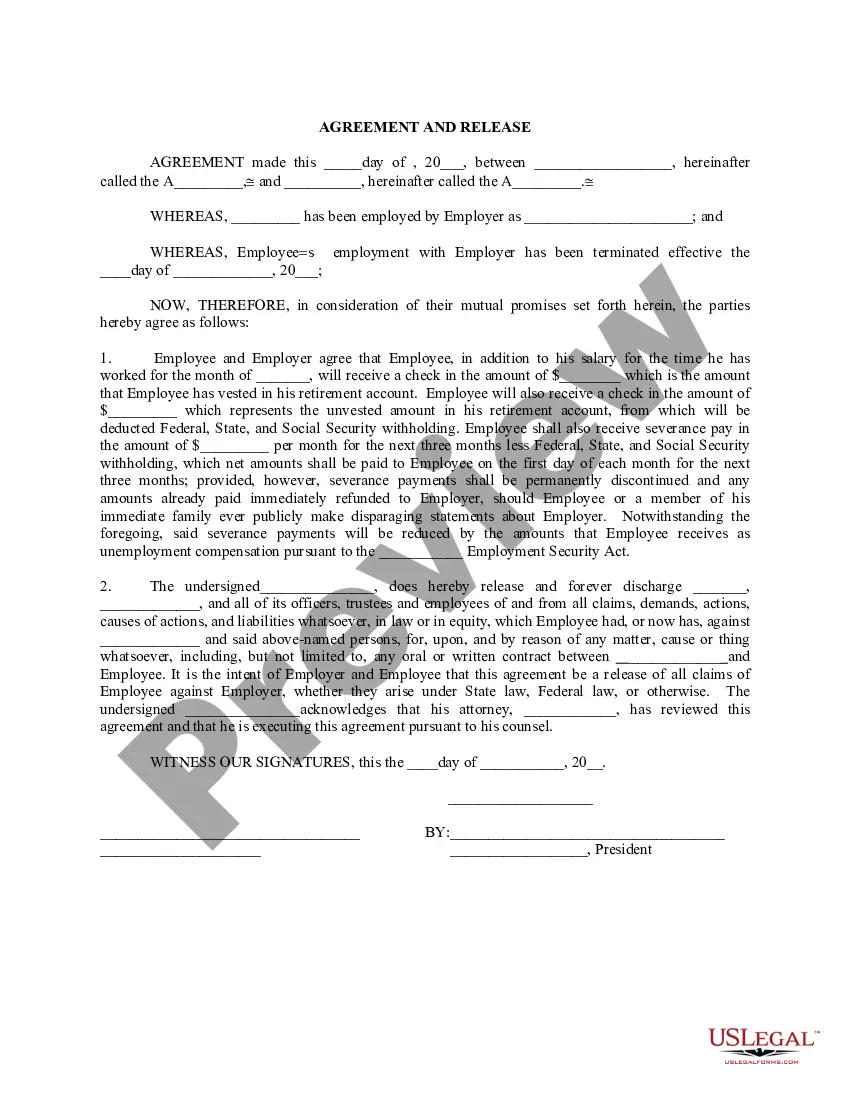
A termination clause is a provision in the employment contract that defines the rights of the employee at the termination of the employment relationship. It typically determines how much notice period and severance an employee is entitled to when the termination is on a without-cause basis.
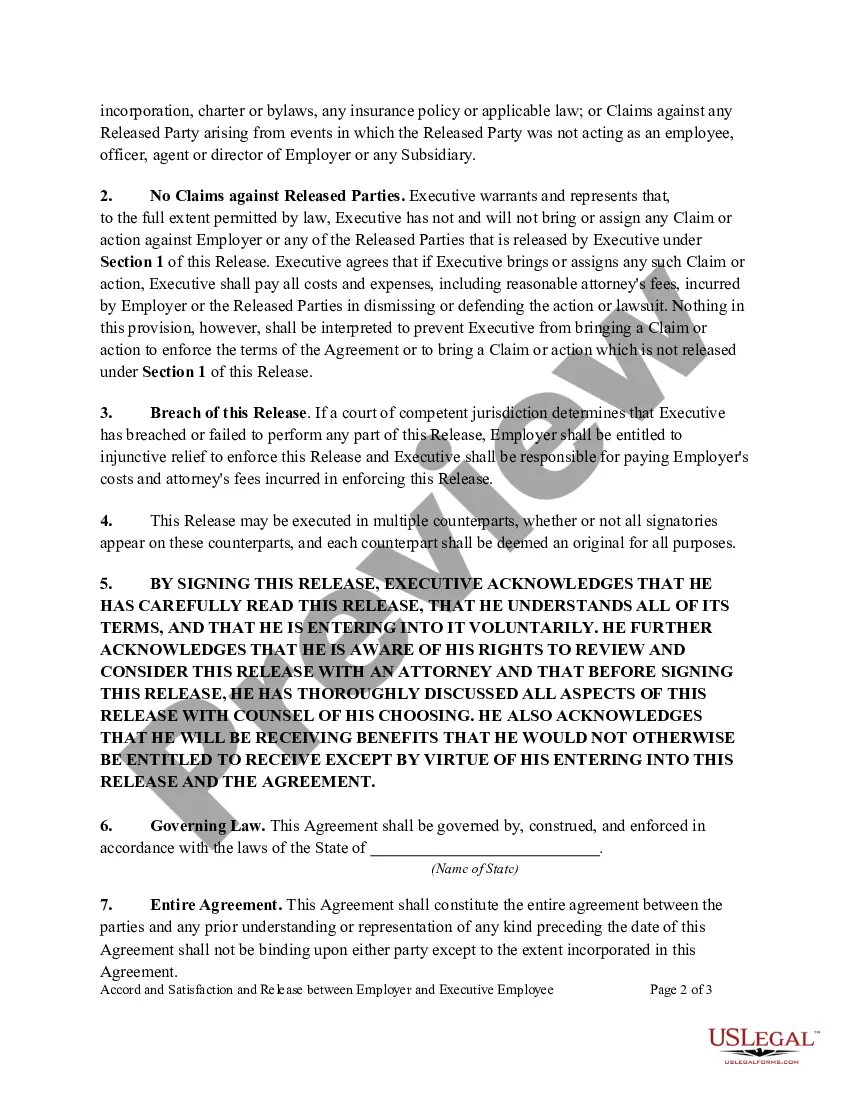
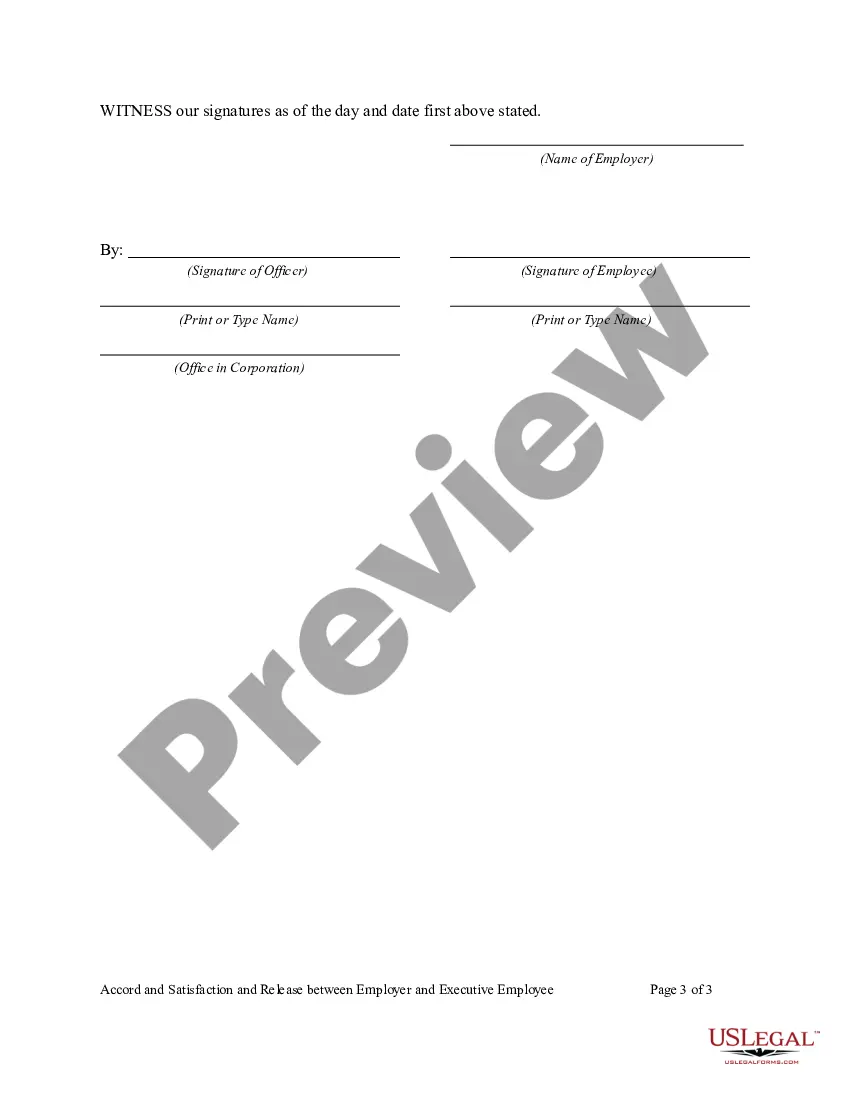
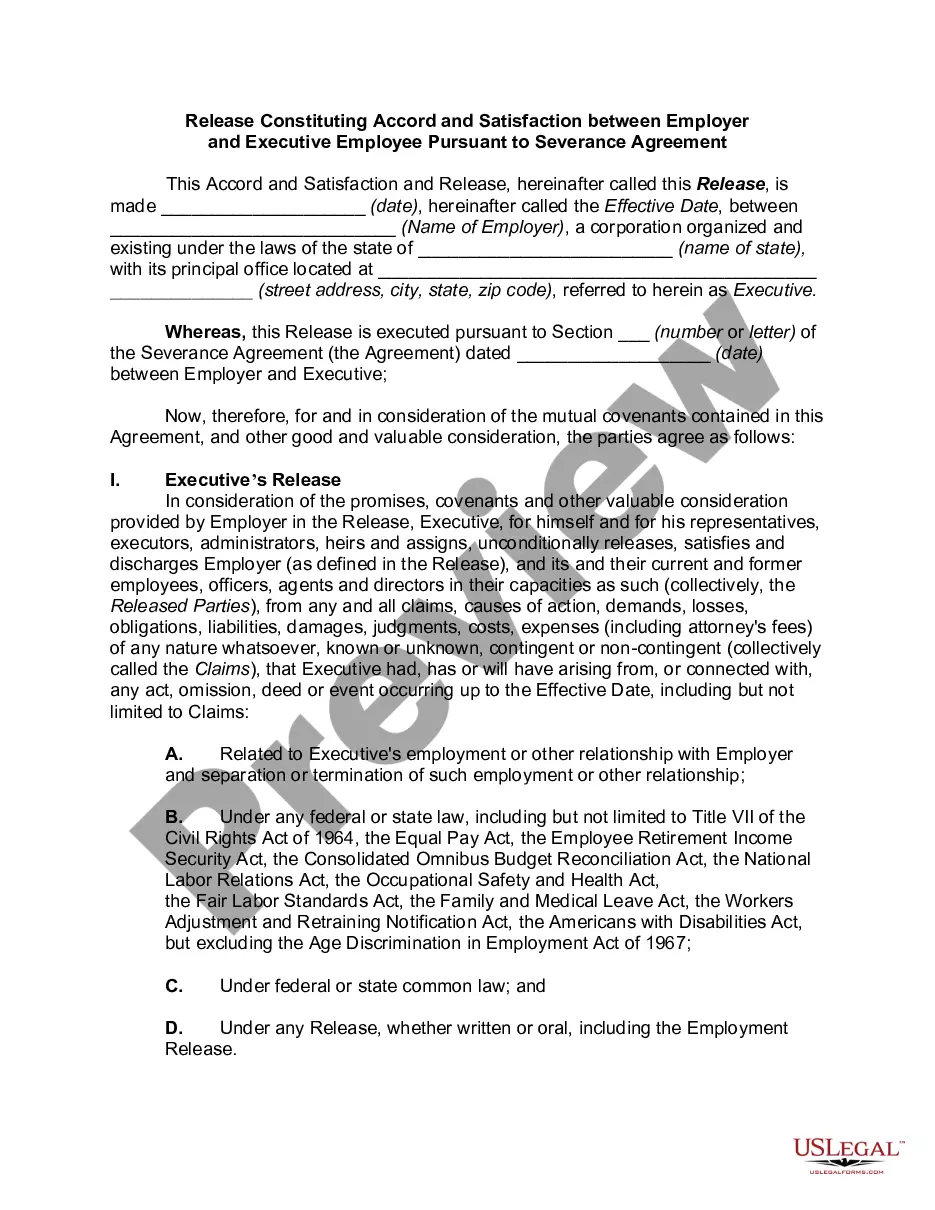
Basically, a severance agreement is a waiver or release of liability that the outgoing employee signs, protecting the business from lawsuits. These agreements are usually part of a larger severance package that includes compensation, outplacement services, and other benefits in exchange for the employee's signature.
What is the downside to severance? The downside to severance includes financial drawbacks such as loss of steady income, potential loss of benefits, and uncertainty about future job prospects, as well as the impact on retirement savings and benefits.
Here are some tips to help you negotiate your severance package: Meet with your employer or human resources (HR) representative. Contact an employment law attorney. Make a list of terms you can negotiate. Present your case to your employer. Determine whether to sign the severance agreement.