Termination With Severance In Miami-Dade
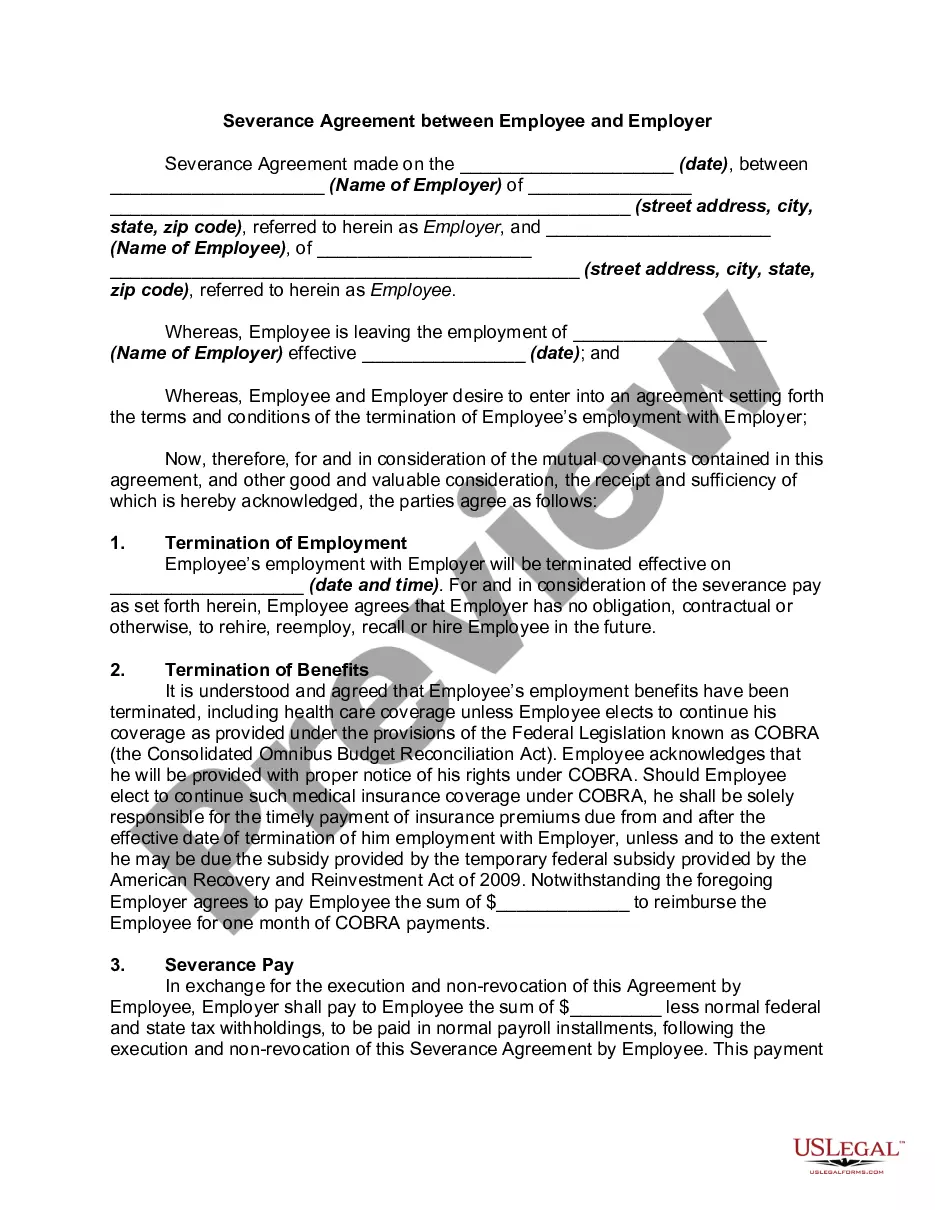
Description

Form popularity
FAQ
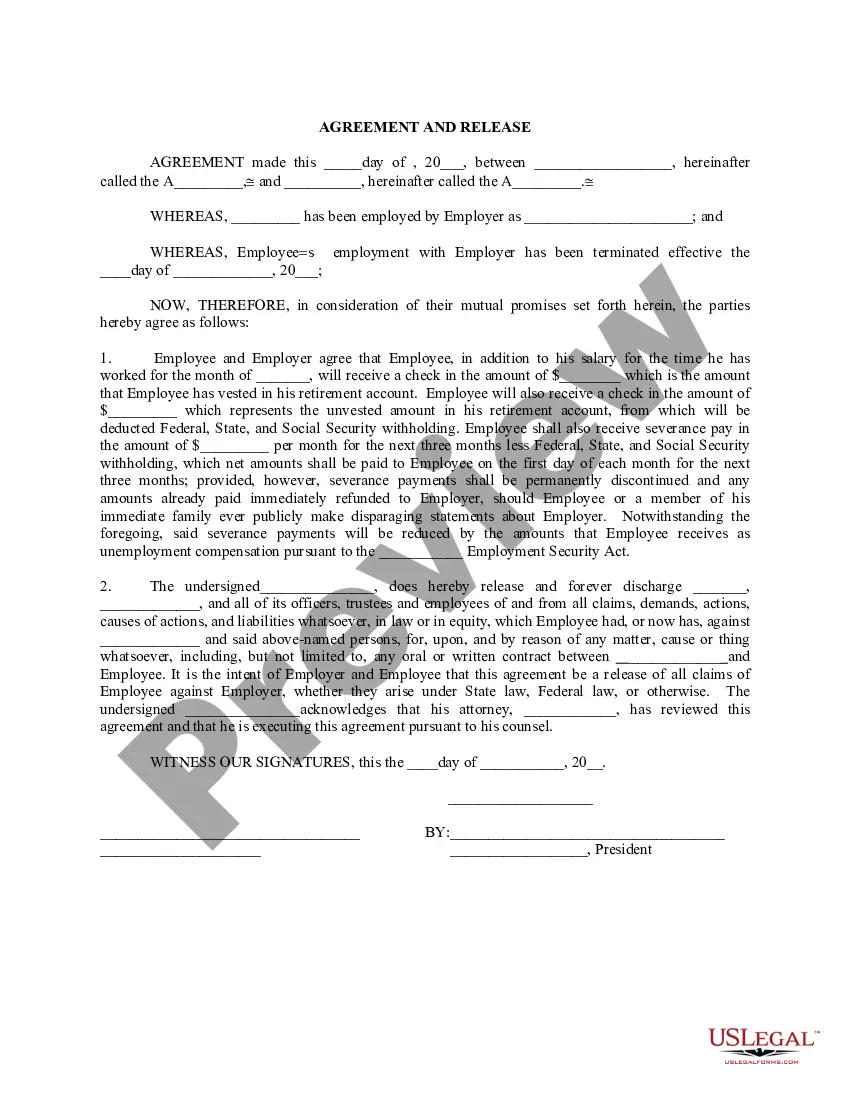
Most termination clauses are an agreement between the employer and the employee that in the event the employer elects to dismiss the employee without cause, the employee will only receive what they are entitled to under the Employment Standards Code.
What is the downside to severance? The downside to severance includes financial drawbacks such as loss of steady income, potential loss of benefits, and uncertainty about future job prospects, as well as the impact on retirement savings and benefits.
A severance clause aims to ensure that a contract will survive the deletion of an unenforceable provision. For example, where a court later deems that a particular provision of a contract is no longer, or was never, enforceable, this deletion would not invalidate or deem unenforceable the entire contract.
Most termination clauses are an agreement between the employer and the employee that in the event the employer elects to dismiss the employee without cause, the employee will only receive what they are entitled to under the Employment Standards Code.
In Brazil, employments are at will, meaning that any party may terminate the employment agreement without cause upon the mandatory prior notice and payment of the severance. It is not necessary to mention any reason for termination, except if it is a termination with cause.
Generally speaking, employees who are fired are not offered a severance package—particularly when they are fired for misconduct. However, some fired employees are offered a severance package in the hope that they will “go away” after receiving the package.
In Florida, which is an at-will employment state, an employer can fire you for any reason or no reason at all, as long as it's not illegal (e.g., discrimination). Florida law does not require employers to provide a reason for termination.