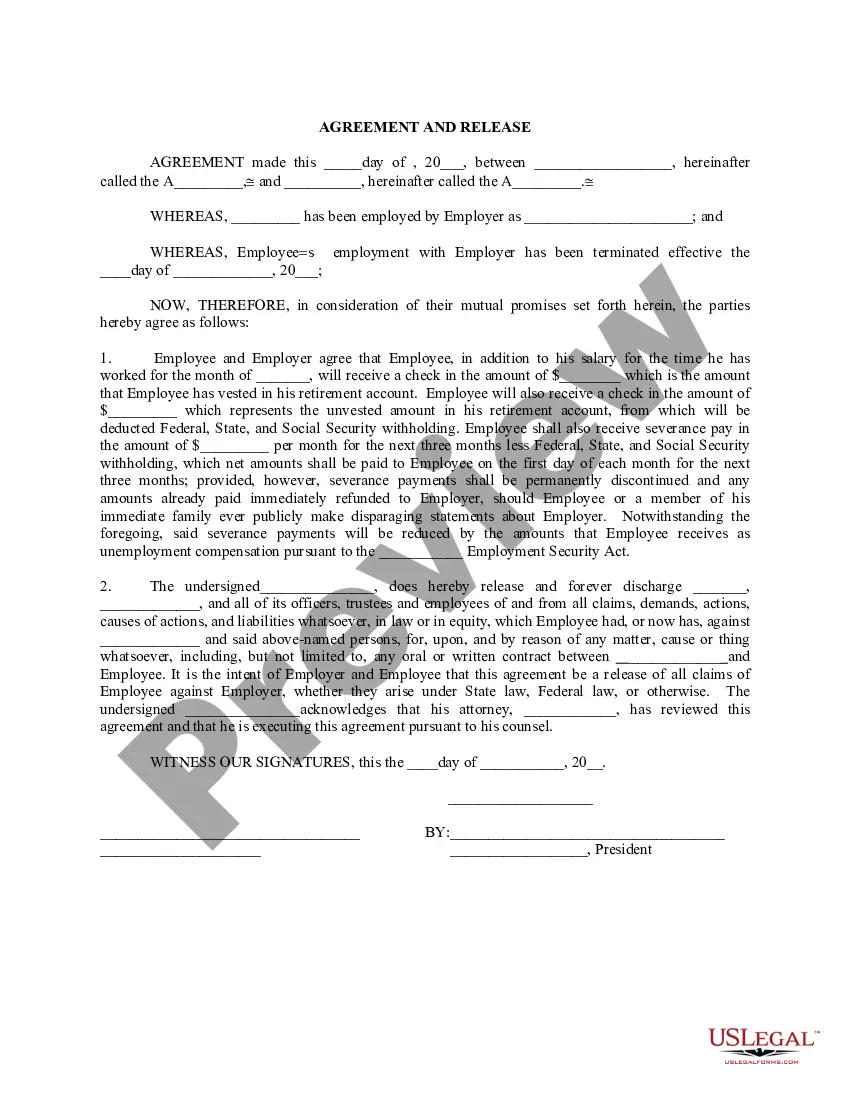
Employer Pay Severance In Massachusetts
Description

Get your form ready online
Our built-in tools help you complete, sign, share, and store your documents in one place.
Make edits, fill in missing information, and update formatting in US Legal Forms—just like you would in MS Word.
Download a copy, print it, send it by email, or mail it via USPS—whatever works best for your next step.
Sign and collect signatures with our SignNow integration. Send to multiple recipients, set reminders, and more. Go Premium to unlock E-Sign.
If this form requires notarization, complete it online through a secure video call—no need to meet a notary in person or wait for an appointment.
We protect your documents and personal data by following strict security and privacy standards.

Make edits, fill in missing information, and update formatting in US Legal Forms—just like you would in MS Word.

Download a copy, print it, send it by email, or mail it via USPS—whatever works best for your next step.

Sign and collect signatures with our SignNow integration. Send to multiple recipients, set reminders, and more. Go Premium to unlock E-Sign.

If this form requires notarization, complete it online through a secure video call—no need to meet a notary in person or wait for an appointment.

We protect your documents and personal data by following strict security and privacy standards.
Looking for another form?





Form popularity
FAQ
In California, severance agreements are legally binding contracts. Depending on how the agreement is structured, signing it may not always be in your best interests. Learn what to consider before signing your severance package and how a California employment law attorney can help you protect your rights.
Unemployment Insurance Notice: Massachusetts employers should provide terminated employees with detailed information about unemployment insurance benefits and how to access them.
All you can do is ask. They'll probably say no but you're bound by the companies severance policy/program but legally it's not a required benefit. BUT keep in mind the company wants you to sign that agreement at the end of the day so you could get more. You could try and use trigger words during your conversation.
Experts advise informing the terminated employee face to face. The conversation should be brief and factual, with no suggestion of any opportunity to revisit your decision. Explain the employee's next steps with regard to the final paycheck, benefits, and collecting personal belongings – and then say goodbye.
Although it seems almost impossible to believe, employers in Massachusetts, or in any other employee-at-will state, can fire any employee at any time for any reason — or even for no reason at all. An employer can terminate any employee, with or without notice.
Notice of termination While written notice is not necessarily needed, the information must be communicated to the worker clearly and effectively. The minimum notice period is typically outlined in the employee's contract and may vary depending on the termination and the employee's length of service.
Under California law, employers must provide notice to employees before termination. For employees who have been employed for less than one year, the notice period is at least 90 days. For employees who have been employed for more than one year, the notice period is at least 60 days.
Extension of Benefits Under Rule of 70 To be eligible to retire, you must be at least age 55 with 10 years of service or age 65. Years of service for the “Rule of 70” eligibility purposes, means total years of employment from date of hire to date of termination.
Eligibility for Retiree Health and Life Insurance Benefits Rule of 70: the employee's age plus years of continuous, full-time service equal 70 or more, and the employee is at least age 55, with at least ten years of continuous, full-time service.