Installment Contract For Deed In San Bernardino
Description

Get your form ready online
Our built-in tools help you complete, sign, share, and store your documents in one place.
Make edits, fill in missing information, and update formatting in US Legal Forms—just like you would in MS Word.
Download a copy, print it, send it by email, or mail it via USPS—whatever works best for your next step.
Sign and collect signatures with our SignNow integration. Send to multiple recipients, set reminders, and more. Go Premium to unlock E-Sign.
If this form requires notarization, complete it online through a secure video call—no need to meet a notary in person or wait for an appointment.
We protect your documents and personal data by following strict security and privacy standards.

Make edits, fill in missing information, and update formatting in US Legal Forms—just like you would in MS Word.

Download a copy, print it, send it by email, or mail it via USPS—whatever works best for your next step.

Sign and collect signatures with our SignNow integration. Send to multiple recipients, set reminders, and more. Go Premium to unlock E-Sign.

If this form requires notarization, complete it online through a secure video call—no need to meet a notary in person or wait for an appointment.

We protect your documents and personal data by following strict security and privacy standards.
Looking for another form?










Form popularity
FAQ
Buyers under a contract for deed can lose their home abruptly. With a traditional mortgage, if you fall behind in your payments, the lender generally has to wait before starting foreclosure. With a contract for deed, the seller can often start eviction right away.
When exploring ways to buy or sell property in your California real estate portfolio, the contract for deed is often a consideration, particularly when buyers are facing challenges with traditional financing methods. This approach simplifies the buying process, avoiding the need for mortgage lenders.
Interest rates in contract for deed arrangements can vary depending on the negotiations between the buyer and seller, as well as prevailing market conditions. Typically, interest rates in contract for deed agreements range between 4% and 18%.
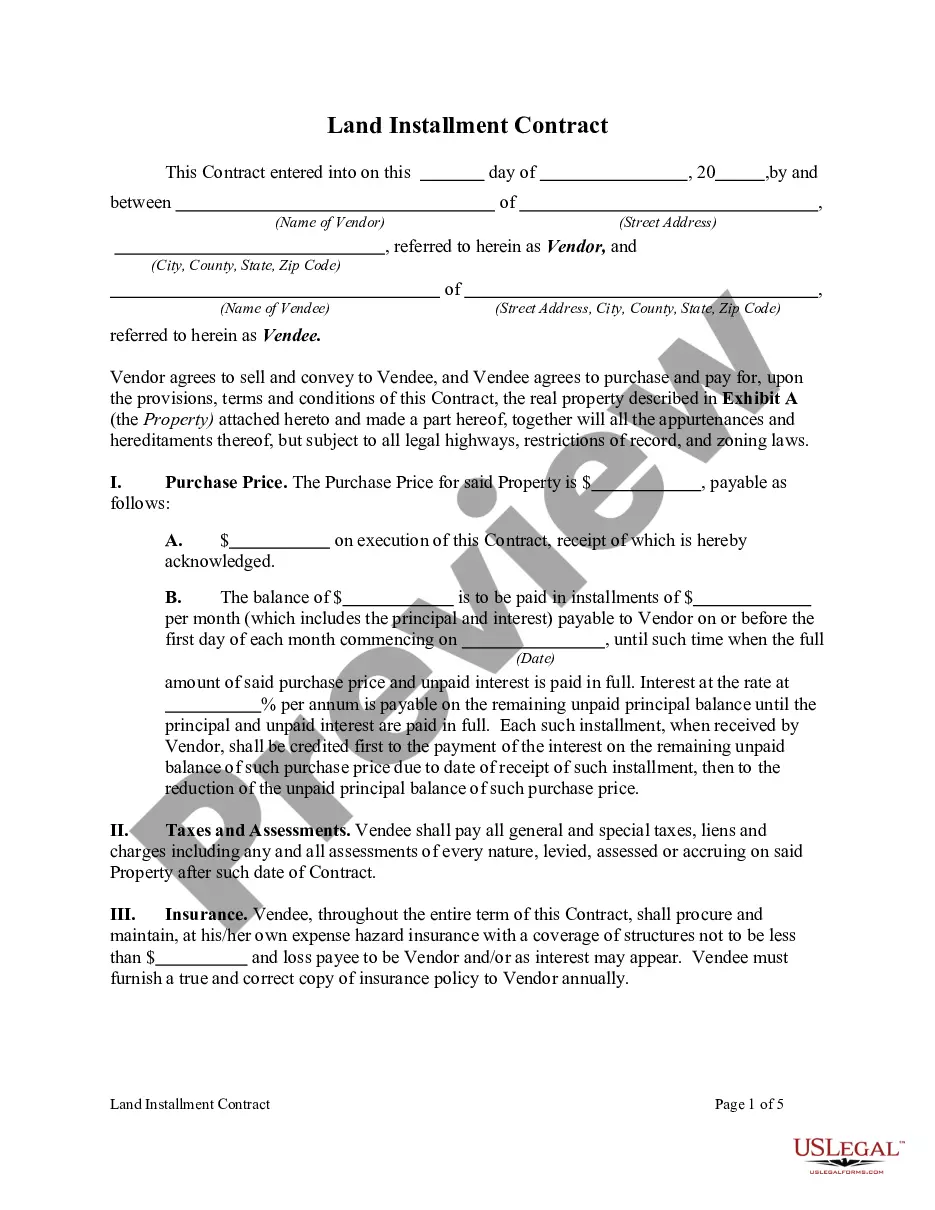
A contract for deed is a type of seller financing, where the seller agrees to give possession of the property to the buyer immediately. The buyer makes payments directly to the seller, usually monthly, over a period of time agreed upon by both parties and established within the contract.
You can sell a property with a land contract at any time. However, selling a home on a land contract while having an underlying contract may violate the agreement.
Following this step-by-step checklist will mean that you can write your contract with confidence: Know your parties. Agree on the terms. Set clear boundaries. Spell out the consequences. Specify how you will resolve disputes. Cover confidentiality. Check the legality of the contract. Open it up to negotiation.
The main advantage of this type of transaction involves avoiding the usual costs associated with obtaining financing from a bank or other lender, such as closing costs and fees. However, it is easy for a contract for deed to go poorly and end up hurting the homebuyer financially.
