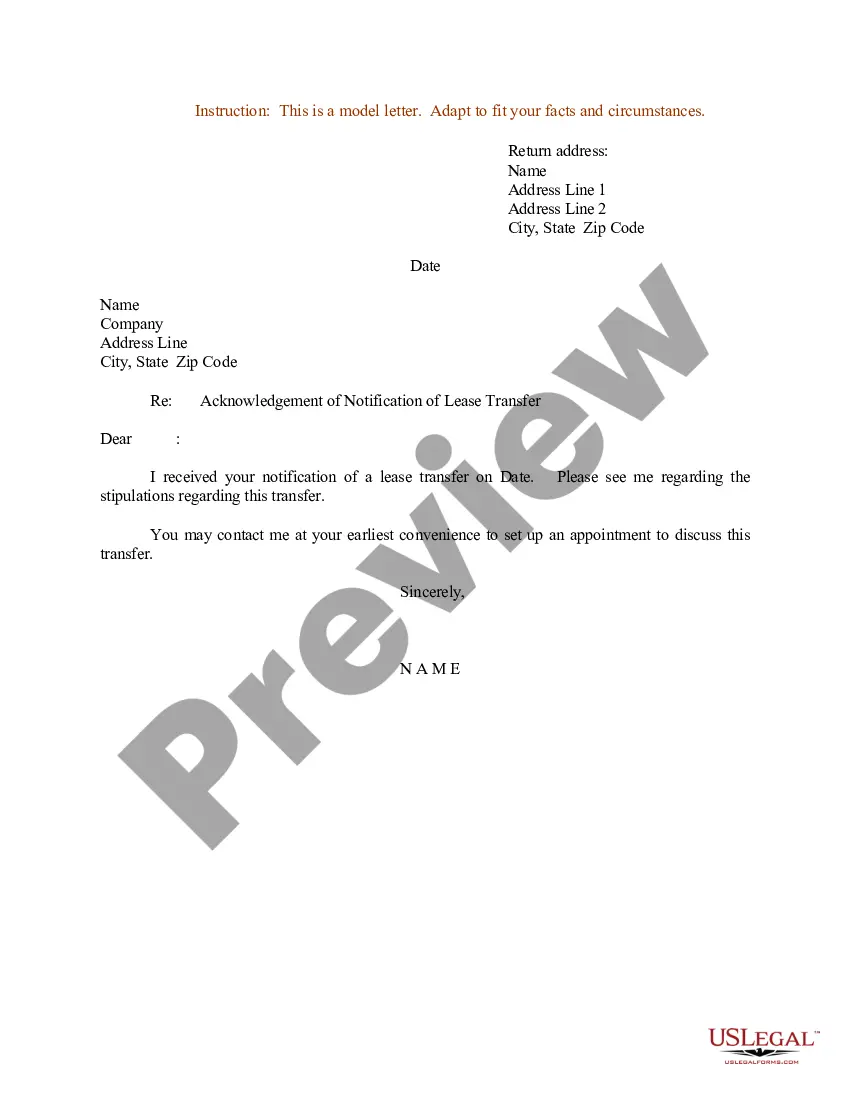
Letter Notification Transfer Within Same Company In Sacramento
Description



Get your form ready online
Our built-in tools help you complete, sign, share, and store your documents in one place.
Make edits, fill in missing information, and update formatting in US Legal Forms—just like you would in MS Word.
Download a copy, print it, send it by email, or mail it via USPS—whatever works best for your next step.
Sign and collect signatures with our SignNow integration. Send to multiple recipients, set reminders, and more. Go Premium to unlock E-Sign.
If this form requires notarization, complete it online through a secure video call—no need to meet a notary in person or wait for an appointment.
We protect your documents and personal data by following strict security and privacy standards.

Make edits, fill in missing information, and update formatting in US Legal Forms—just like you would in MS Word.

Download a copy, print it, send it by email, or mail it via USPS—whatever works best for your next step.

Sign and collect signatures with our SignNow integration. Send to multiple recipients, set reminders, and more. Go Premium to unlock E-Sign.

If this form requires notarization, complete it online through a secure video call—no need to meet a notary in person or wait for an appointment.

We protect your documents and personal data by following strict security and privacy standards.
Looking for another form?







Form popularity
FAQ
Write the body of the letter Begin your letter by stating the reason for your request. Clearly explain why you are seeking a transfer and provide supporting details to strengthen your case. You can also respectfully ask for your supervisor's help in securing a position at a different location.
If you need to request a transfer in writing, write a letter highlighting why you're making the request. Start with a professional letter sample or template, and tailor it to fit your own circumstances. Use your letter to explain what you can offer the company at the new location.
Prepare Your Talking Points: Outline your reasons for requesting the transfer, focusing on the benefits for both you and the company. Be positive and frame the transfer as a way to contribute more effectively to the organization. Schedule a One-on-One: Ask your manager for a meeting to discuss your career development.
In a candid one-on-one with your manager, lay out your motivation for requesting a transfer, whether that be a desire for career growth, new job duties, or an overall career change. Express how your transfer stems from the work experience or challenges you are seeking and not any negatives in your current situation.
I am writing to request consideration for a transfer from Current Position & Team at Company Name to Future Role at the Team / New Office Location. I would like to transfer positions due to Enter reasons for requesting a transfer.
Tips for writing an internal transfer resignation letter Be gracious: Consider thanking your supervisor for the opportunity they gave you, and include a detail or two about what you've learned from them. Be direct: This letter is a formal notice, so try to be straightforward about the most important details.
1. Steps For Writing A Transfer Request Letter 1.1 Start with a clear subject line. 1.3 Begin with a polite and professional greeting. 1.4 State your request clearly and concisely. 1.5 Explain your reasons for requesting the transfer. 1.6 Highlight your qualifications and achievements. 1.7 Show your commitment to the company.
In a candid one-on-one with your manager, lay out your motivation for requesting a transfer, whether that be a desire for career growth, new job duties, or an overall career change. Express how your transfer stems from the work experience or challenges you are seeking and not any negatives in your current situation.
How to write a request letter for a transfer Indicate contact details. At the top of the document, write your contact details. Begin with a formal salutation. Write the body of the letter. End the letter with a conclusion. Proofread your request letter. Add your resume.
How to write a transfer letter in 5 steps Address the right person. Begin by addressing the appropriate individual, typically your immediate supervisor or HR manager. State your intent clearly. Find the right job for you. Provide a justifiable reason. Highlight your contributions. Close professionally.