Sublease Form Leases With Zero Down
Description

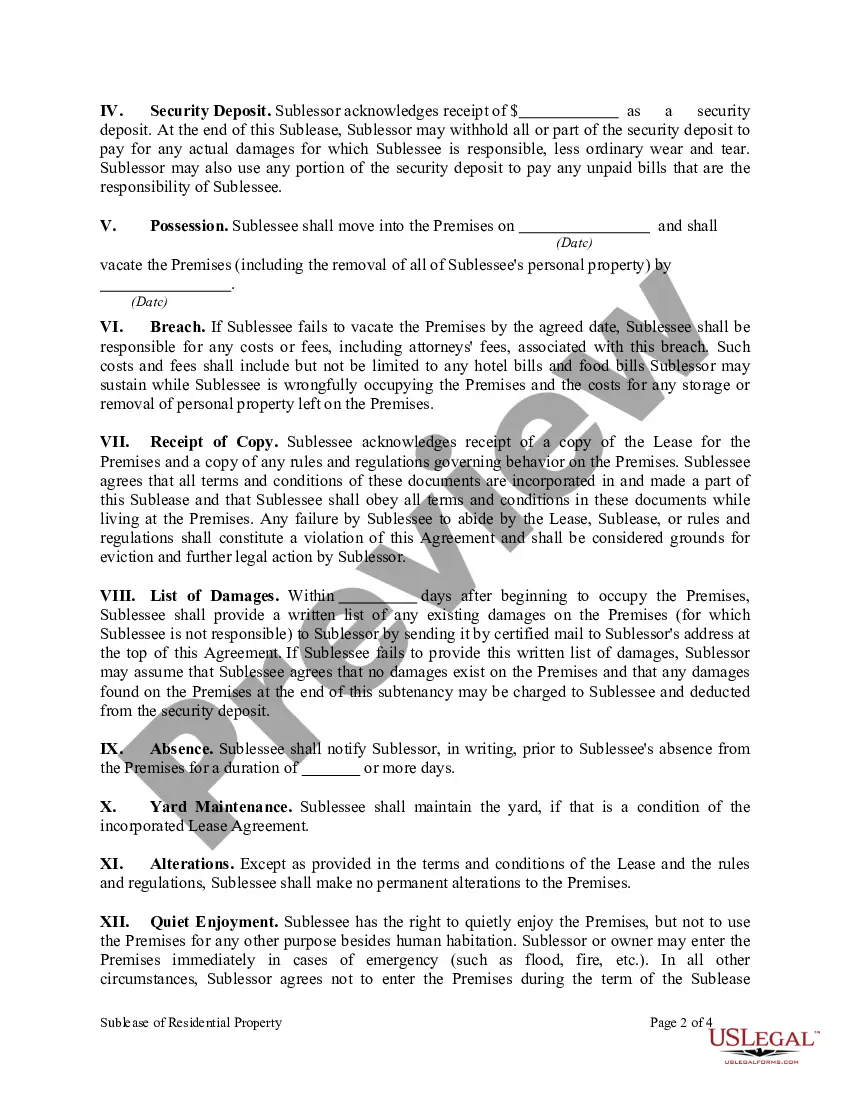
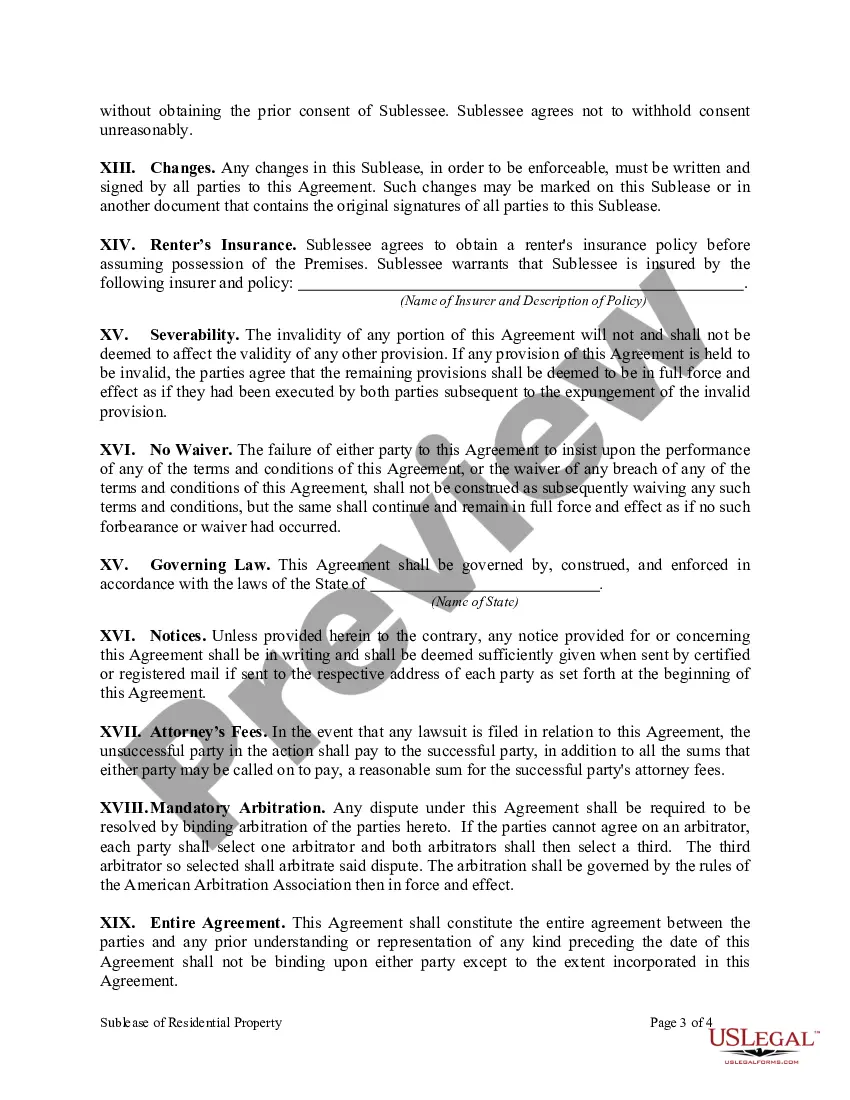
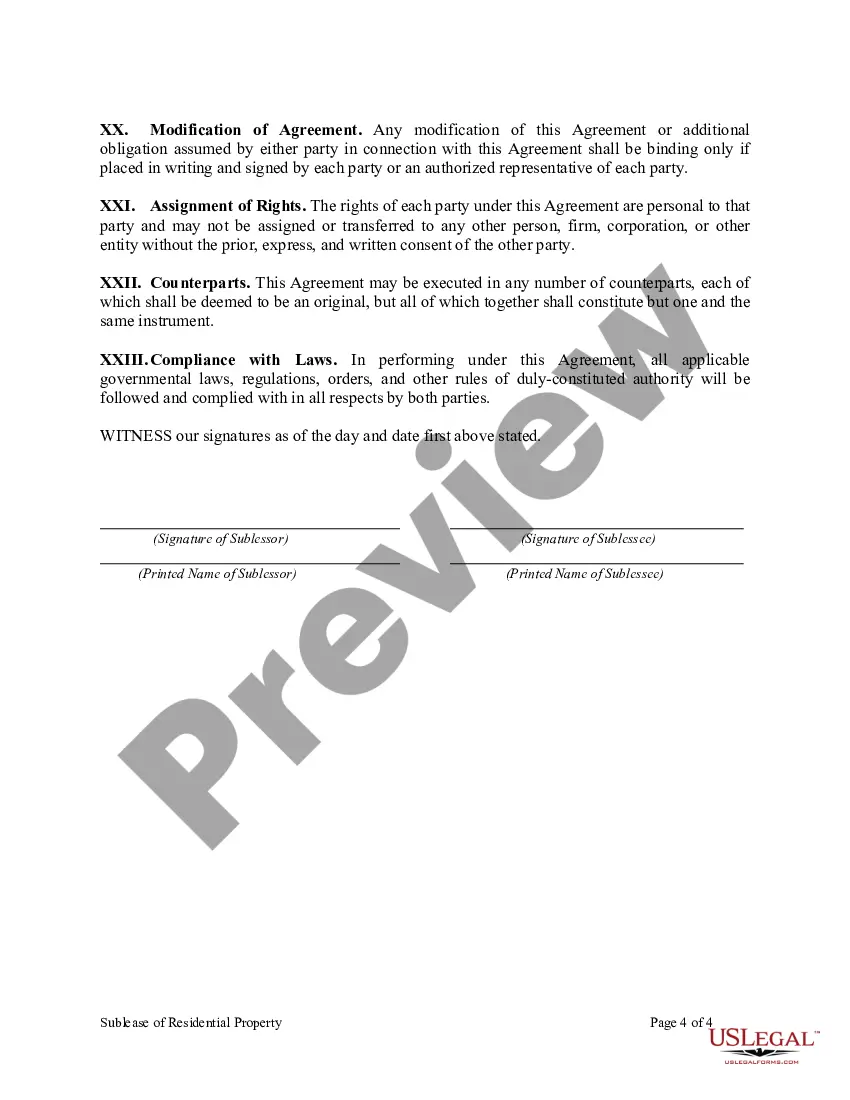




How to fill out Sublease Of Residential Property?
Whether for professional reasons or personal matters, everyone must deal with legal circumstances at some stage in their life.
Filling out legal documents necessitates meticulous attention, beginning with choosing the correct form variant. For example, if you select an incorrect version of a Sublease Form Leases With Zero Down, it will be rejected upon submission.
With a comprehensive US Legal Forms library available, there is no need to waste time searching for the appropriate template online. Utilize the library’s user-friendly navigation to find the suitable template for any circumstance.
- Locate the template you require by using the search bar or browsing the catalog.
- Review the form’s details to ensure it corresponds to your situation, jurisdiction, and area.
- Click on the form’s preview to inspect it.
- If it is the wrong form, return to the search feature to locate the Sublease Form Leases With Zero Down sample you need.
- Obtain the document if it suits your requirements.
- If you possess a US Legal Forms account, simply click Log in to access files you have previously saved in My documents.
- If you do not have an account yet, you can download the form by clicking Buy now.
- Choose the appropriate pricing option.
- Fill in the account registration form.
- Select your payment method: either use a credit card or PayPal account.
- Choose the desired file format and download the Sublease Form Leases With Zero Down.
- Once it is saved, you can complete the form using editing software or print it and finish it manually.
Form popularity
FAQ
Under the Fair and Accurate Credit Transactions Act (FACTA), an amendment to the FCRA passed in 2003, consumers are able to receive a free copy of their consumer report from each credit reporting agency once a year.
The 609 Dispute Letter theory is if you ask the credit bureaus for information they clearly cannot produce as part of your dispute letter, like the original signed copies of your credit applications or the cashed checks used for bill payment, then they would have to remove the disputed item because it's unverifiable.
Lending Act and the Fair Debt Collection Practices Act. Congress substantively amended the FCRA upon the passage of the Fair and Accurate Credit Transactions Act of 2003 (FACT Act).
It gives consumers the right to one free credit report a year from the credit reporting agencies, and consumers may also purchase, for a reasonable fee, a credit score along with information about how the credit score is calculated.
? You have the right to know what is in your file. In addition, all consumers are entitled to one free disclosure every 12 months upon request from each nationwide credit bureau and from nationwide specialty consumer reporting agencies. See .consumerfinance.gov/learnmore for additional information.
The Act (Title VI of the Consumer Credit Protection Act) protects information collected by consumer reporting agencies such as credit bureaus, medical information companies and tenant screening services. Information in a consumer report cannot be provided to anyone who does not have a purpose specified in the Act.
Comprehensive amendments to the FCRA were made in the Consumer Credit Reporting Reform Act of 1996 (P.L. 104-208).
? You have the right to know what is in your file. In addition, all consumers are entitled to one free disclosure every 12 months upon request from each nationwide credit bureau and from nationwide specialty consumer reporting agencies. See .consumerfinance.gov/learnmore for additional information.