Difference Between Sublet And Sublease In Riverside
Description


Get your form ready online
Our built-in tools help you complete, sign, share, and store your documents in one place.
Make edits, fill in missing information, and update formatting in US Legal Forms—just like you would in MS Word.
Download a copy, print it, send it by email, or mail it via USPS—whatever works best for your next step.
Sign and collect signatures with our SignNow integration. Send to multiple recipients, set reminders, and more. Go Premium to unlock E-Sign.
If this form requires notarization, complete it online through a secure video call—no need to meet a notary in person or wait for an appointment.
We protect your documents and personal data by following strict security and privacy standards.

Make edits, fill in missing information, and update formatting in US Legal Forms—just like you would in MS Word.

Download a copy, print it, send it by email, or mail it via USPS—whatever works best for your next step.

Sign and collect signatures with our SignNow integration. Send to multiple recipients, set reminders, and more. Go Premium to unlock E-Sign.

If this form requires notarization, complete it online through a secure video call—no need to meet a notary in person or wait for an appointment.

We protect your documents and personal data by following strict security and privacy standards.
Looking for another form?




Form popularity
FAQ
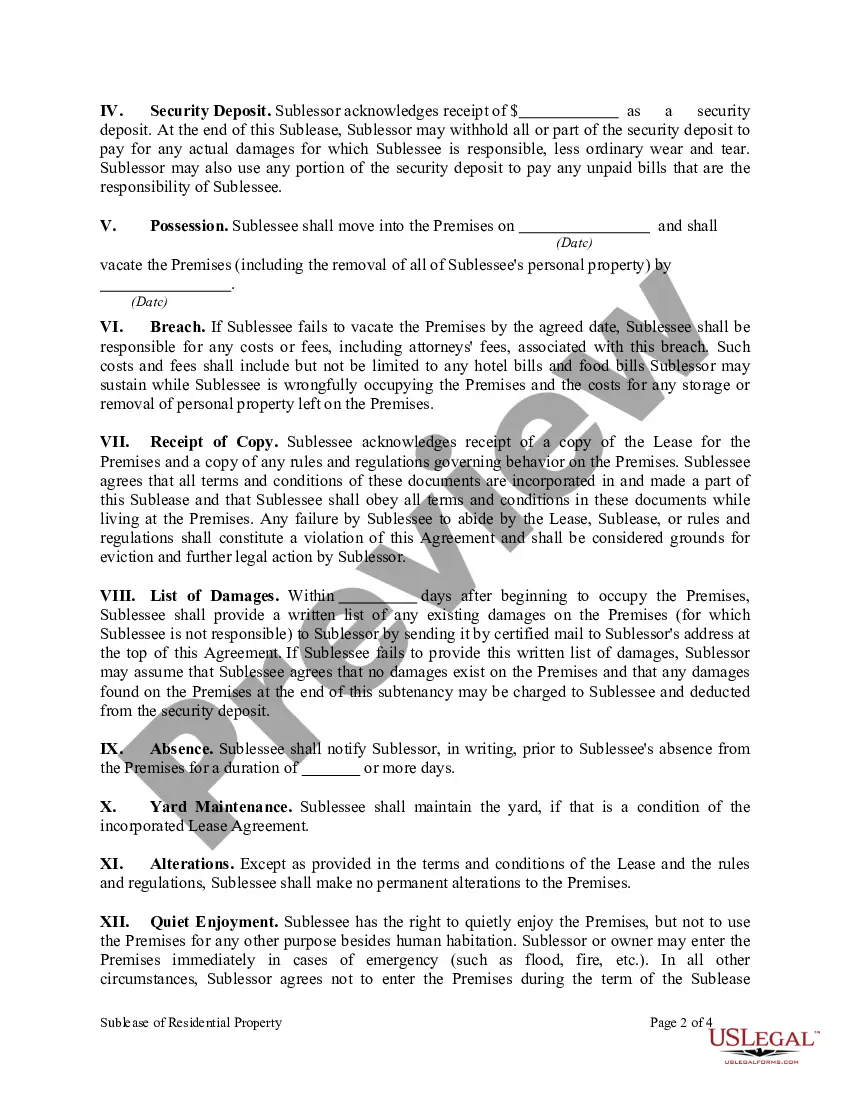
The terms sublet and sublease are often used synonymously, but they have very different meanings. The gist is that a sublet occurs when you find a new renter for the property who will sign a new lease with the landlord, while a sublease occupies the space without signing a lease directly with the landlord.
Cons of Subleasing Subleasing can get legally tricky. Many lease agreements have strict rules about subletting, often requiring landlord approval. Be sure to look over your lease agreement and have a conversation with your landlord or property manager to avoid disputes and penalties.
Subleasing is legal in California, but the landlord must give the initial renter approval before subletting the property. A sublease is required when the original tenant wants to lease a sizable piece of the property.
The landlord must give the initial renter approval before subletting the property. A sublease is required when the original tenant wants to lease a sizable piece of the property. When the original tenant wishes to lease the entire property to a different party, a sublease is also necessary.
Subletting Can Impact Property Values Parking becomes difficult, there are higher utility costs, and the neighborhood won't be as appealing to prospective buyers.
The terms sublet and sublease are often used synonymously, but they have very different meanings. The gist is that a sublet occurs when you find a new renter for the property who will sign a new lease with the landlord, while a sublease occupies the space without signing a lease directly with the landlord.
