Direct Lease Vs Sublease In Minnesota
Description


Get your form ready online
Our built-in tools help you complete, sign, share, and store your documents in one place.
Make edits, fill in missing information, and update formatting in US Legal Forms—just like you would in MS Word.
Download a copy, print it, send it by email, or mail it via USPS—whatever works best for your next step.
Sign and collect signatures with our SignNow integration. Send to multiple recipients, set reminders, and more. Go Premium to unlock E-Sign.
If this form requires notarization, complete it online through a secure video call—no need to meet a notary in person or wait for an appointment.
We protect your documents and personal data by following strict security and privacy standards.

Make edits, fill in missing information, and update formatting in US Legal Forms—just like you would in MS Word.

Download a copy, print it, send it by email, or mail it via USPS—whatever works best for your next step.

Sign and collect signatures with our SignNow integration. Send to multiple recipients, set reminders, and more. Go Premium to unlock E-Sign.

If this form requires notarization, complete it online through a secure video call—no need to meet a notary in person or wait for an appointment.

We protect your documents and personal data by following strict security and privacy standards.
Looking for another form?







Form popularity
FAQ
Is Subleasing the Best Option? Subleasing may be most advantageous to tenants if: Market rental rates have increased relative to the tenant's lease rates, particularly if the tenant is permitted to keep all or part of the increased rates under the sublease.
Minnesota law requires written consent from the original landlord for subleasing. This may be part of the initial lease or a separate agreement. If the lease does not mention subleasing, tenants might have the freedom to proceed, but it's crucial to consult the landlord first.
Direct leasing is a two-party transaction that involves an equipment supplier (manufacturer or dealer) and the asset's user (lessee), whereby the equipment is produced or purchased by the supplier and then leased directly to the customer by the supplier, either as an operating or finance lease.
Direct leasing is a two-party transaction that involves an equipment supplier (manufacturer or dealer) and the asset's user (lessee), whereby the equipment is produced or purchased by the supplier and then leased directly to the customer by the supplier, either as an operating or finance lease.
A lease is a rental contract between a landlord and a tenant, whereas a sublease is a contract between a tenant and a sub-tenant who has assumed obligations of the tenant's lease.
In a standard lease, the tenant has direct obligations to the landlord including paying rent, maintaining the property, and complying with lease terms. In a sublease, the original tenant retains these responsibilities to the landlord, even after subleasing the property.
Cons of a sublease agreement A sublease contract means less control over apartment changes. Lack of renewal opportunities or security with future lease. Limited amenities on the rental property. Heavy reliance on original tenant's obligations. Legal protection. Sublease agreements are normally cheaper.
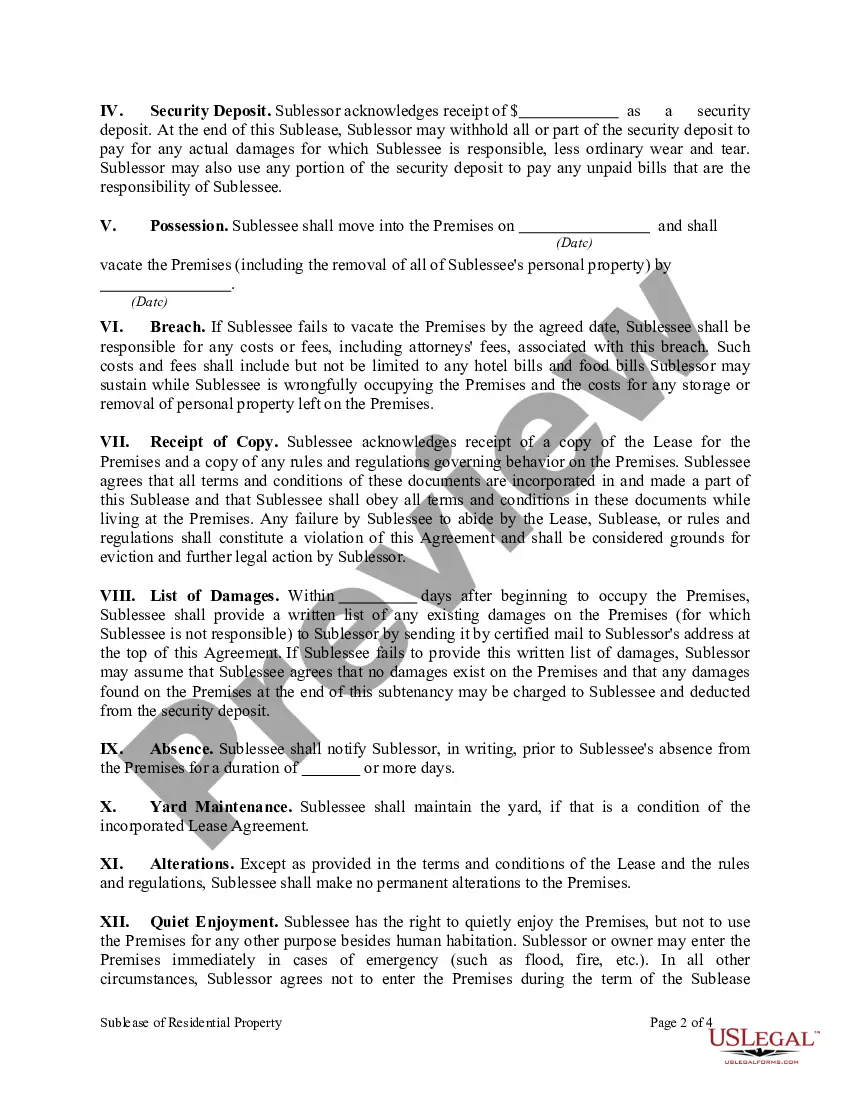
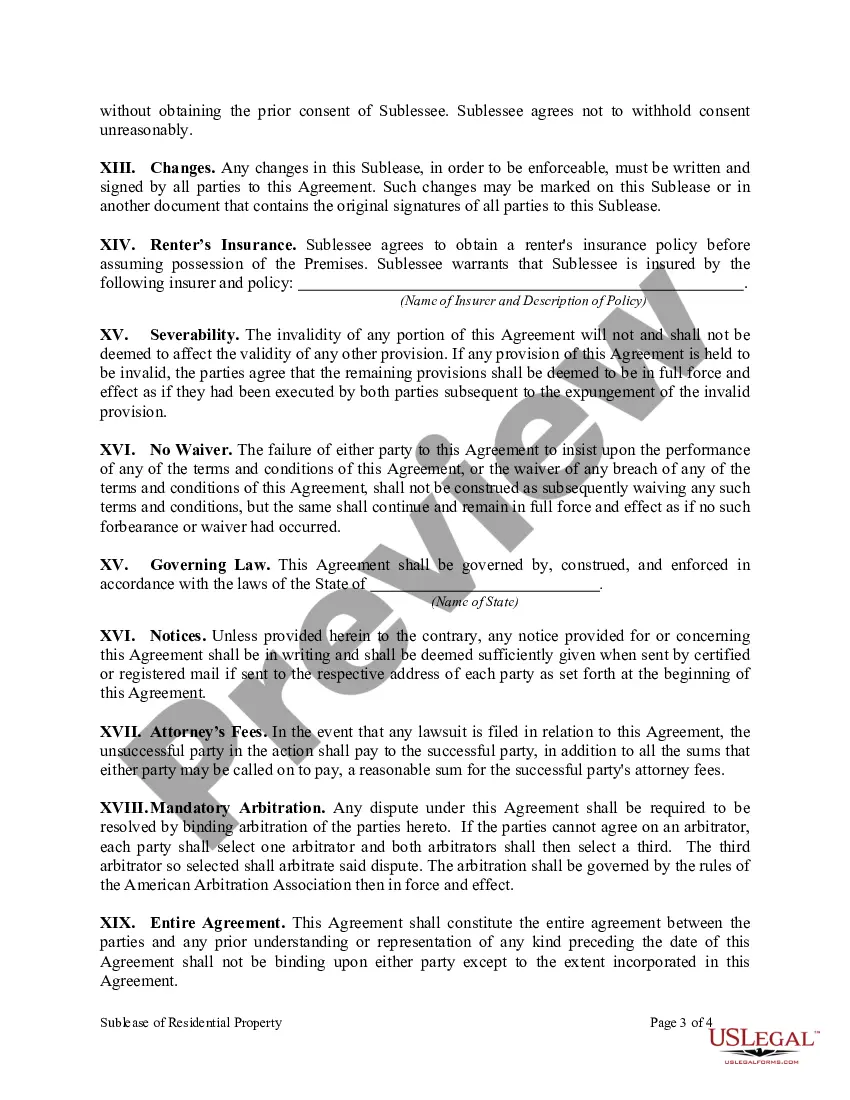
A Minnesota sublease agreement is the contract that lets the existing tenant rent all or some of a rental property to the new tenant. The subtenant then makes payments that are usually equivalent to the rent due on the original lease agreement. Sometimes, a primary tenant must leave the dwelling for long periods.
Subletting Can Impact Property Values Parking becomes difficult, there are higher utility costs, and the neighborhood won't be as appealing to prospective buyers.
