Residential Property Leases Within 30 Days In Florida
Description


Get your form ready online
Our built-in tools help you complete, sign, share, and store your documents in one place.
Make edits, fill in missing information, and update formatting in US Legal Forms—just like you would in MS Word.
Download a copy, print it, send it by email, or mail it via USPS—whatever works best for your next step.
Sign and collect signatures with our SignNow integration. Send to multiple recipients, set reminders, and more. Go Premium to unlock E-Sign.
If this form requires notarization, complete it online through a secure video call—no need to meet a notary in person or wait for an appointment.
We protect your documents and personal data by following strict security and privacy standards.

Make edits, fill in missing information, and update formatting in US Legal Forms—just like you would in MS Word.

Download a copy, print it, send it by email, or mail it via USPS—whatever works best for your next step.

Sign and collect signatures with our SignNow integration. Send to multiple recipients, set reminders, and more. Go Premium to unlock E-Sign.

If this form requires notarization, complete it online through a secure video call—no need to meet a notary in person or wait for an appointment.

We protect your documents and personal data by following strict security and privacy standards.
Looking for another form?







Form popularity
FAQ
Section 83.53(1), F.S. The tenant shall not unreasonably withhold consent to the landlord to enter the dwelling unit from time to time in order to inspect the premises. Section 83.53(2), F.S. ■ The landlord may enter the dwelling unit at any time for the protection or preservation of the premises.
If you need to terminate your month-to-month lease, you must give 30 days' notice prior to the end of any month. If you give less than 30 days, the notice will not be valid. As a result, the lease will not be terminated.
What Happens If You Don't Give 30-days' Notice To Vacate? If you do not provide your tenant with adequate notice, you will not have the legal grounds to end the tenancy. Likewise, if a tenant does not give you enough notice they could be subject to penalties (such as the landlord withholding their security deposit).
For month-to-month tenancies, the landlord or tenant must deliver a notice at least 30 days before the next time the rent is due informing the other party that the lease will be terminated. Any time period shorter is ineffective.
The landlord must provide such written notice to the tenant within 15 days before the start of the notification period contained in the lease. The written notice shall list all fees, penalties, and other charges applicable to the tenant under this subsection.
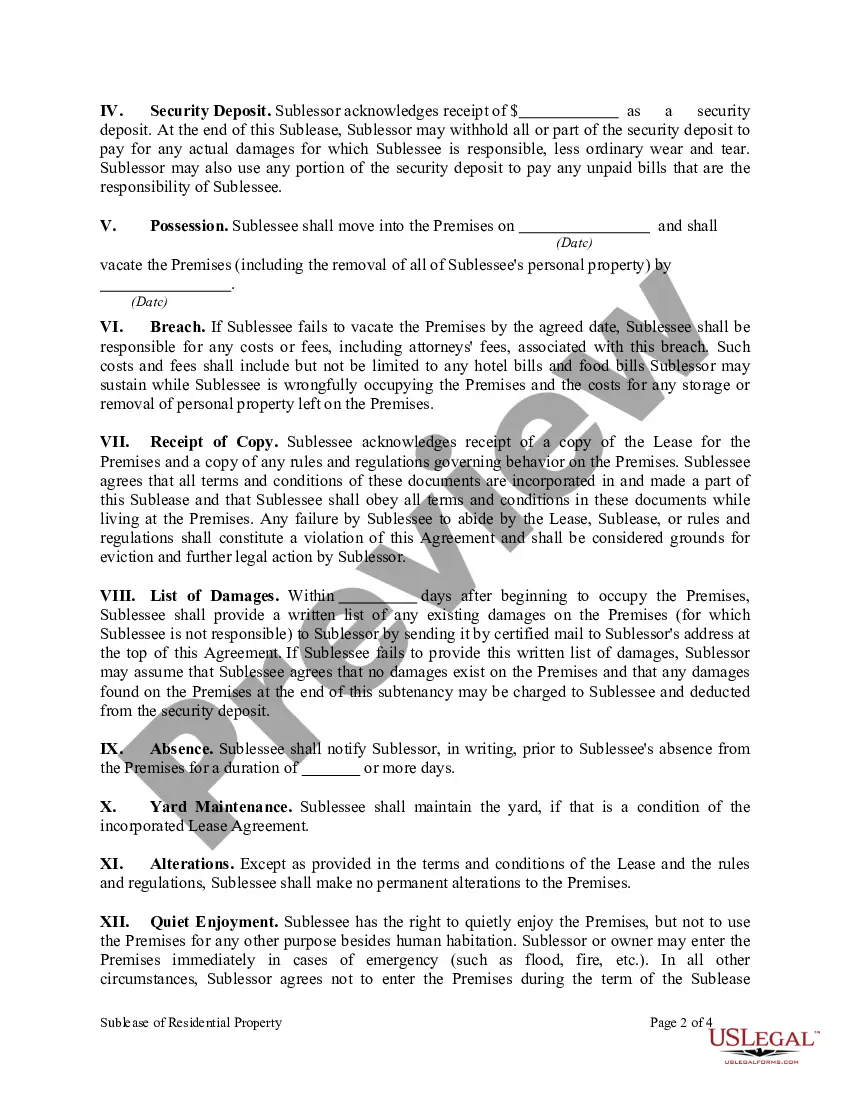
Tenants cannot be legally ordered to vacate their residential units unless they have been properly notified of the beginning of the eviction process. State law provides for 3 types of notices: 3-day notice, 7-day notice with a chance to 'cure,' and an 'unconditional quit' 7-day notice.
IF THE LANDLORD FAILS TO TIMELY MAIL YOU NOTICE, THE LANDLORD MUST RETURN THE DEPOSIT BUT MAY LATER FILE A LAWSUIT AGAINST YOU FOR DAMAGES. IF YOU FAIL TO TIMELY OBJECT TO A CLAIM, THE LANDLORD MAY COLLECT FROM THE DEPOSIT, BUT YOU MAY LATER FILE A LAWSUIT CLAIMING A REFUND.
Typically, you need to live in a property for at least 12 months before converting it to a rental. This timeframe may vary depending on your mortgage terms and local regulations.
Contact Eko Law today to work with our business attorney in Clearwater. While you can legally write your own commercial lease agreement in Florida, the risks often outweigh the benefits. For most landlords and business owners, the expertise of a qualified attorney is invaluable in this process.
