Request For Bid Meaning In San Diego
Description


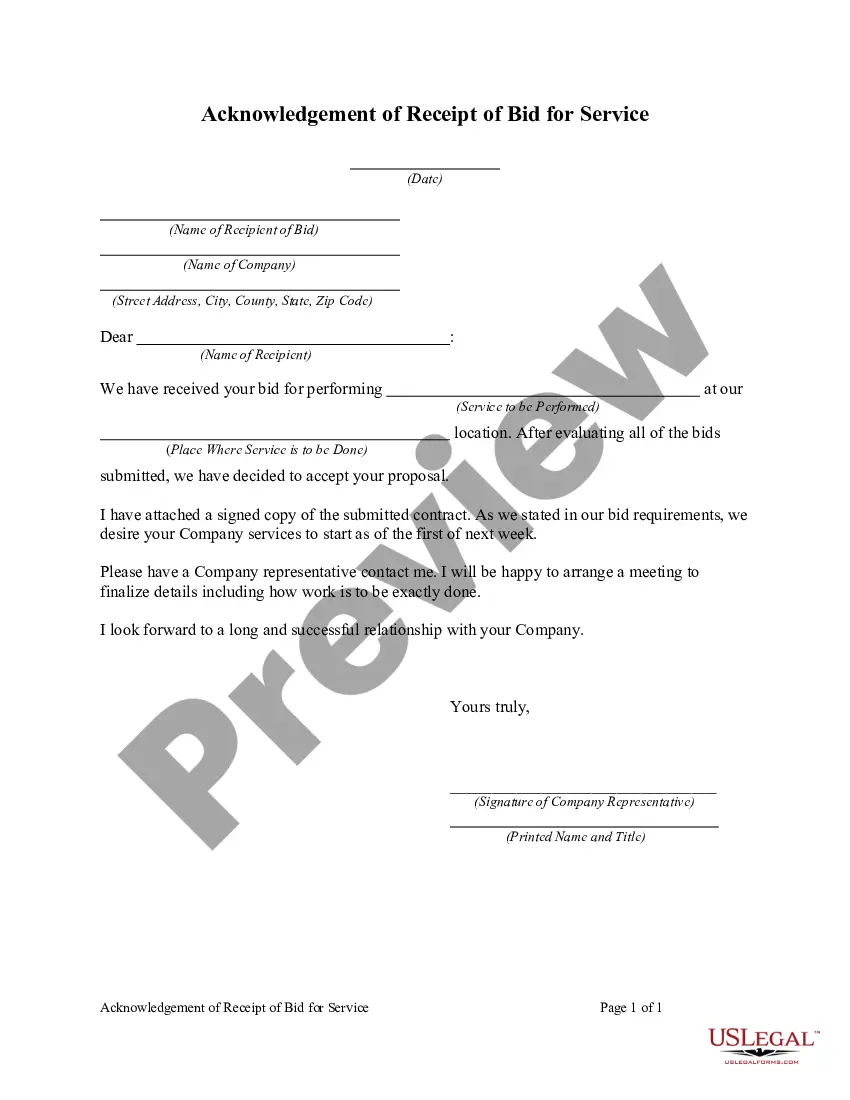
Get your form ready online
Our built-in tools help you complete, sign, share, and store your documents in one place.
Make edits, fill in missing information, and update formatting in US Legal Forms—just like you would in MS Word.
Download a copy, print it, send it by email, or mail it via USPS—whatever works best for your next step.
Sign and collect signatures with our SignNow integration. Send to multiple recipients, set reminders, and more. Go Premium to unlock E-Sign.
If this form requires notarization, complete it online through a secure video call—no need to meet a notary in person or wait for an appointment.
We protect your documents and personal data by following strict security and privacy standards.

Make edits, fill in missing information, and update formatting in US Legal Forms—just like you would in MS Word.

Download a copy, print it, send it by email, or mail it via USPS—whatever works best for your next step.

Sign and collect signatures with our SignNow integration. Send to multiple recipients, set reminders, and more. Go Premium to unlock E-Sign.

If this form requires notarization, complete it online through a secure video call—no need to meet a notary in person or wait for an appointment.

We protect your documents and personal data by following strict security and privacy standards.
Looking for another form?







Form popularity
FAQ
A Request for Qualifications (RFQ) usually refers to the pre-qualification stage of the procurement process. Only those proponents who successfully respond to the RFQ and meet the qualification criteria will be included in the subsequent Request for Proposals (RFP) solicitation process.
A letter of intent to bid is a formal way for prospective vendors to communicate their desire to submit a response to a request for proposal (RFP). Often, a buyer will request a letter of intent from interested vendors as part of the RFP process.
Companies that need certain jobs performed may solicit vendors for them using two types of requests: a request for qualifications (or RFQ), which determines the best fit for a job based on the qualifications of the applying vendor, and a request for proposal (or RFP), which is a much more detailed document that may be ...
Bid requests allow advertisers and publishers to work out a mutually beneficial ad spend deal. The information gathered makes it possible for the advertiser to target their ideal audience, but it also helps the publisher get the most out of each ad spot.
The world of procurement is brimming with terms and abbreviations. Among them, 'Invitation To Tender' is a common phrase, most often abbreviated as ITT. It can also be known as 'Invitation To Bid' (ITB), a term used similarly but more prevalent in the US, while ITT is widely used in Europe.
Bids – Bids are more formalized versions of a proposal that are submitted when two or more contractors compete for a project. They should be detailed to allow clients to compare costs, timelines, and other deciding factors that allow them to locate the best partner for their unique needs.
: an artificial bid in contract bridge that asks for certain information from the bidder's partner.
A bid request is a piece of code used to sell display ads and inventory details. It allows visitors to see ads most suited to them, and for multiple advertisers to utilize the same ad spot on a given publisher's platform.
Standard Bidding Documents play a vital role in ensuring a transparent, fair, and competitive procurement process. Their structure and content are designed to provide clear guidance to bidders and establish a solid foundation for contract formation.

