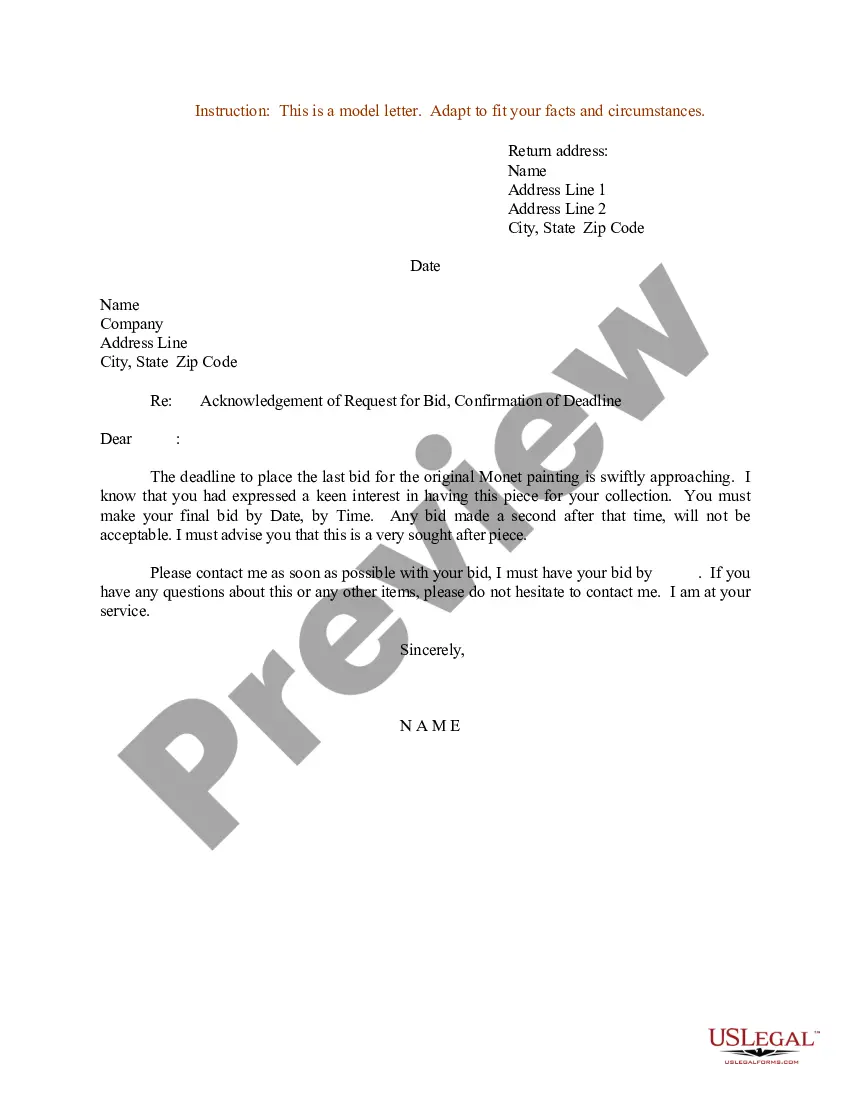
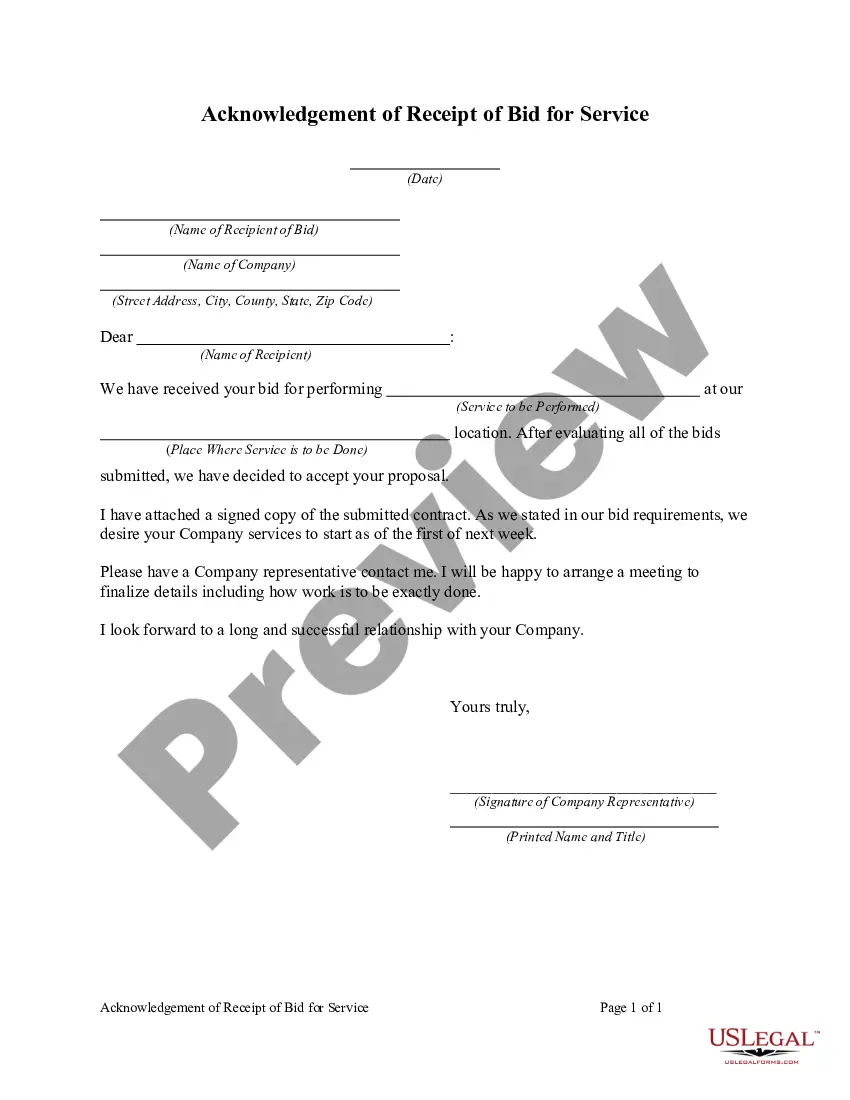
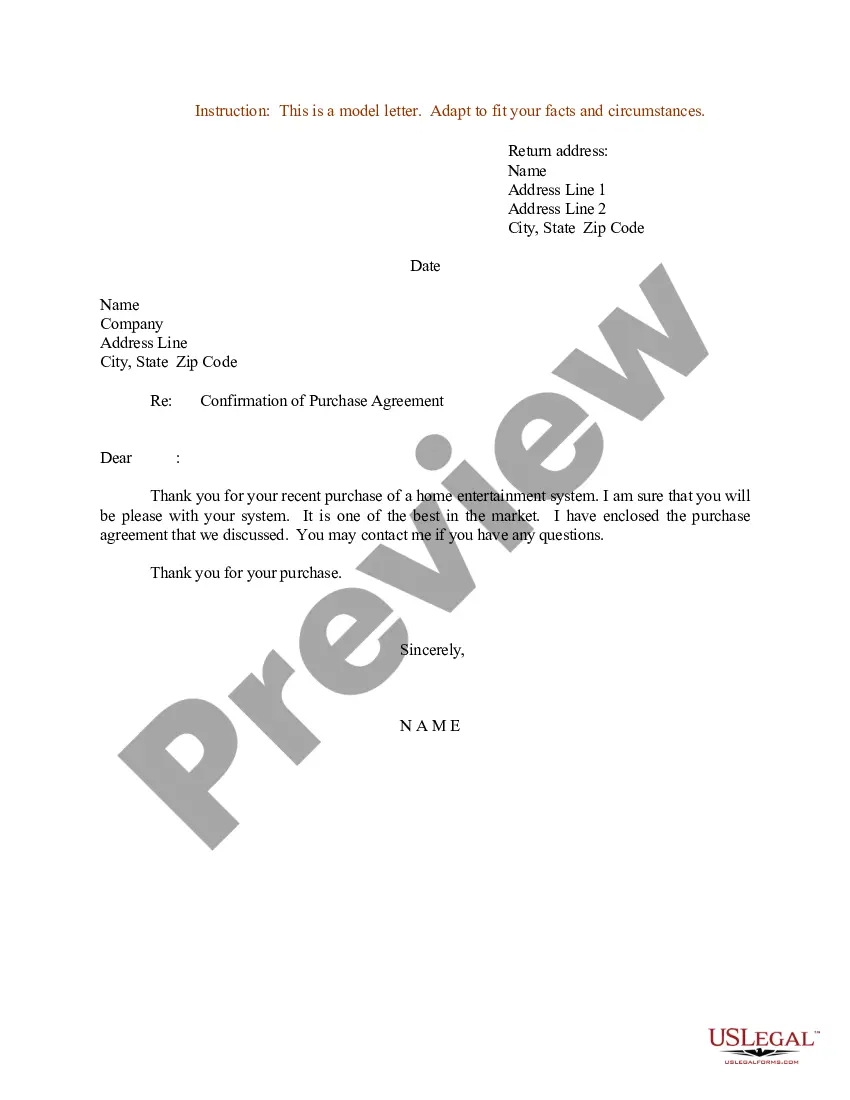
Request For Bid Example In Houston
Description


Get your form ready online
Our built-in tools help you complete, sign, share, and store your documents in one place.
Make edits, fill in missing information, and update formatting in US Legal Forms—just like you would in MS Word.
Download a copy, print it, send it by email, or mail it via USPS—whatever works best for your next step.
Sign and collect signatures with our SignNow integration. Send to multiple recipients, set reminders, and more. Go Premium to unlock E-Sign.
If this form requires notarization, complete it online through a secure video call—no need to meet a notary in person or wait for an appointment.
We protect your documents and personal data by following strict security and privacy standards.

Make edits, fill in missing information, and update formatting in US Legal Forms—just like you would in MS Word.

Download a copy, print it, send it by email, or mail it via USPS—whatever works best for your next step.

Sign and collect signatures with our SignNow integration. Send to multiple recipients, set reminders, and more. Go Premium to unlock E-Sign.

If this form requires notarization, complete it online through a secure video call—no need to meet a notary in person or wait for an appointment.

We protect your documents and personal data by following strict security and privacy standards.
Looking for another form?



Form popularity
FAQ
A request for proposal (RFP) is a business document that announces a project, describes it, and solicits bids from qualified contractors to complete it.
Your letter of intent to bid should include: The name of your company. Name of the proposal contact. The name or reference number of the RFP you're responding to. A clear statement of your intention to submit a proposal. Your sign off and signature.
How to Write an RFP That Will Get a Response Define Your Project and Needs. Write an Introduction. Explain Your Company's and Project's History. Describe Your Project's Requirements. Explain How Vendors Should Respond. Outline Your Selection Criteria. Note Your Timelines. Proofread and Revise Your RFP.
What are the 7 Steps in the RFP Process? Discovery: Defining the Business Case. Requirements Gathering: Understanding Business Needs. Create and Issue RFP. Vendor Comparison. Shortlisting Best-fit Solution Vendors. Demos and Decision-making. Selecting the Right Software Vendor.
Experts assert that a well-drafted RFP document should include: The purpose of the RFP. A clear description of project goals and results. A rubric or criteria that will be used to evaluate submitted proposals.
Good RFPs are highly-customized, clear, concise and thoughtful. Consequently, these RFPs tend to receive proposals that are likewise of a high-quality. On the other hand, there are some RFP red flags that may signal to your vendors that the project isn't worth their time.
Sites such as GovernmentContracts, BidSync, BidNet Direct and The RFP Database collect RFP and bid postings from various sources (just like our newly developed bid-finding tool, Bid Banana!). All of these sites list RFPs for public searching.
General contractors typically get on bid lists through referrals or recommendations made to the project owner. Doing good work and having a good reputation will help get you on a bid list, as will networking and getting to know key decision-makers within the industry.
What are the 7 steps in writing an RFP? Introduce the company and project. Outline project background. Provide bid deadline and proposal timeline. Specify budget. Outline project scope. Express concerns or roadblocks. Explain evaluation criteria.
How to write an RFP in 7 steps. Introduce the company and project. Outline project background. Provide bid deadline and proposal timeline. Specify budget. Outline project scope. Express concerns or roadblocks. Explain evaluation criteria.