Independent Contractor Work Agreement With Employer In Michigan
Description





Get your form ready online
Our built-in tools help you complete, sign, share, and store your documents in one place.
Make edits, fill in missing information, and update formatting in US Legal Forms—just like you would in MS Word.
Download a copy, print it, send it by email, or mail it via USPS—whatever works best for your next step.
Sign and collect signatures with our SignNow integration. Send to multiple recipients, set reminders, and more. Go Premium to unlock E-Sign.
If this form requires notarization, complete it online through a secure video call—no need to meet a notary in person or wait for an appointment.
We protect your documents and personal data by following strict security and privacy standards.

Make edits, fill in missing information, and update formatting in US Legal Forms—just like you would in MS Word.

Download a copy, print it, send it by email, or mail it via USPS—whatever works best for your next step.

Sign and collect signatures with our SignNow integration. Send to multiple recipients, set reminders, and more. Go Premium to unlock E-Sign.

If this form requires notarization, complete it online through a secure video call—no need to meet a notary in person or wait for an appointment.

We protect your documents and personal data by following strict security and privacy standards.
Looking for another form?






Form popularity
FAQ
Below are eight important points to consider including in an independent contractor agreement. Define a Scope of Work. Set a Timeline for the Project. Specify Payment Terms. State Desired Results and Agree on Performance Measurement. Detail Insurance Requirements. Include a Statement of Independent Contractor Relationship.
Freelancers: Writers, graphic designers, web developers, photographers, and other creative professionals often work as independent contractors. Consultants: Business consultants, human resources consultants, and management consultants often provide their services as independent contractors.
General contracting businesses working on projects valued at less than $600 do not require a license. Just about everyone else needs to carry one, and we'll go further into that in a bit. Also, all Michigan businesses have to register with the state's Department of Treasury.
To write a simple contract, title it clearly, identify all parties and specify terms (services or payments). Include an offer, acceptance, consideration, and intent. Add a signature and date for enforceability. Written contracts reduce disputes and offer better legal security than verbal ones.
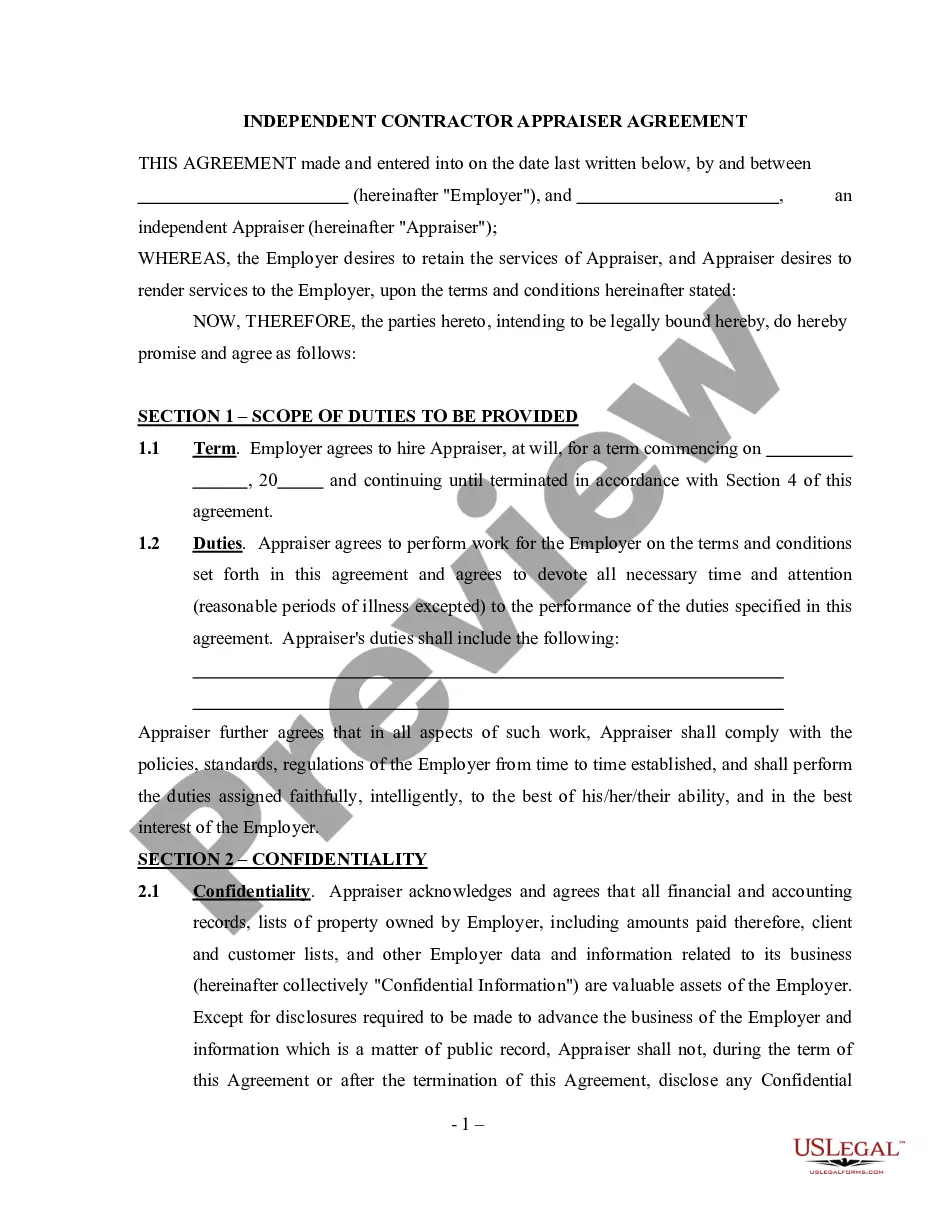
A Michigan independent contractor agreement establishes a working arrangement wherein an independent contractor is hired to perform a service for a client. The document should contain all the terms and conditions necessary to protect both parties and create a mutual understanding of the business relationship.
In Michigan, 1099 employees need workers' comp insurance coverage if they are considered an employee. Michigan law is specific about who is considered an employee for purposes of workers' comp. Services are considered “employment” when a person meets the requirements of IRS Revenue Ruling 87-41.
A contractor agreement should describe the scope of work, contract terms, contract duration, and the confidentiality agreement. It should also include a section for the two parties to sign and make the agreement official. If the contract doesn't meet these requirements, it may be inadmissible in a court of law.
Form W-9. The IRS requires contractors to fill out a Form W-9, a request for a Taxpayer Identification Number and Certification, which you should keep on file for at least four years after the hiring. This form is used to request the correct name and Taxpayer Identification Number, or TIN, of the worker or their entity ...
