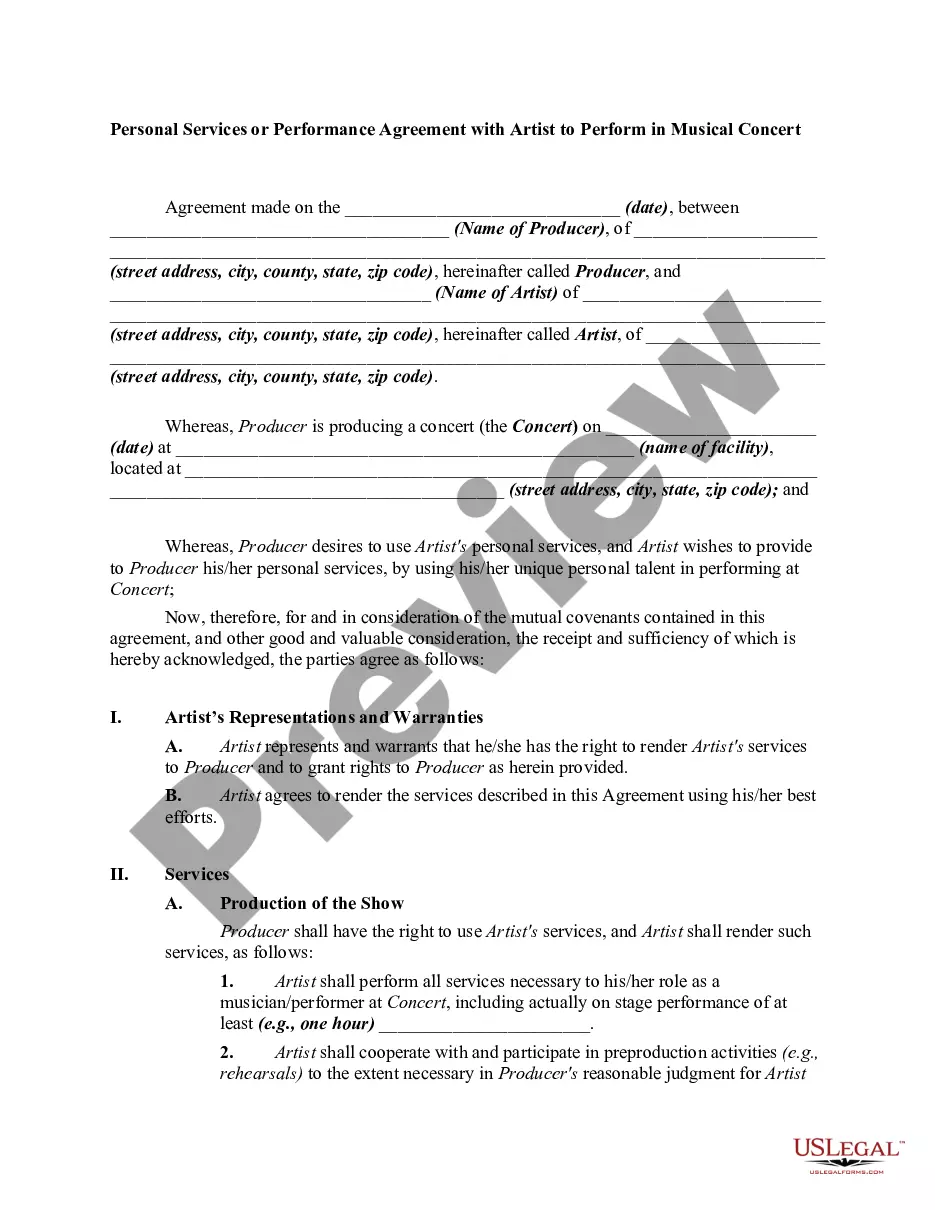
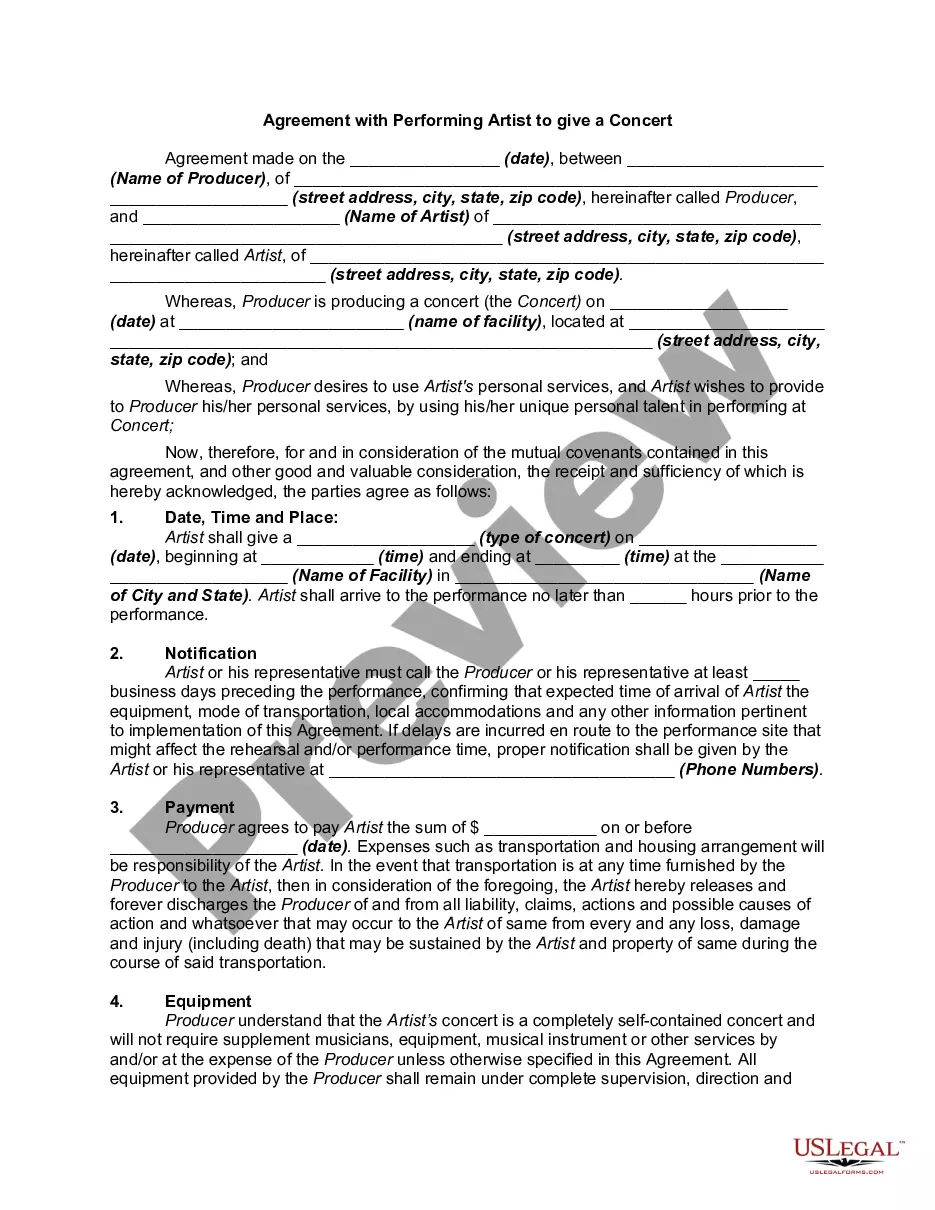
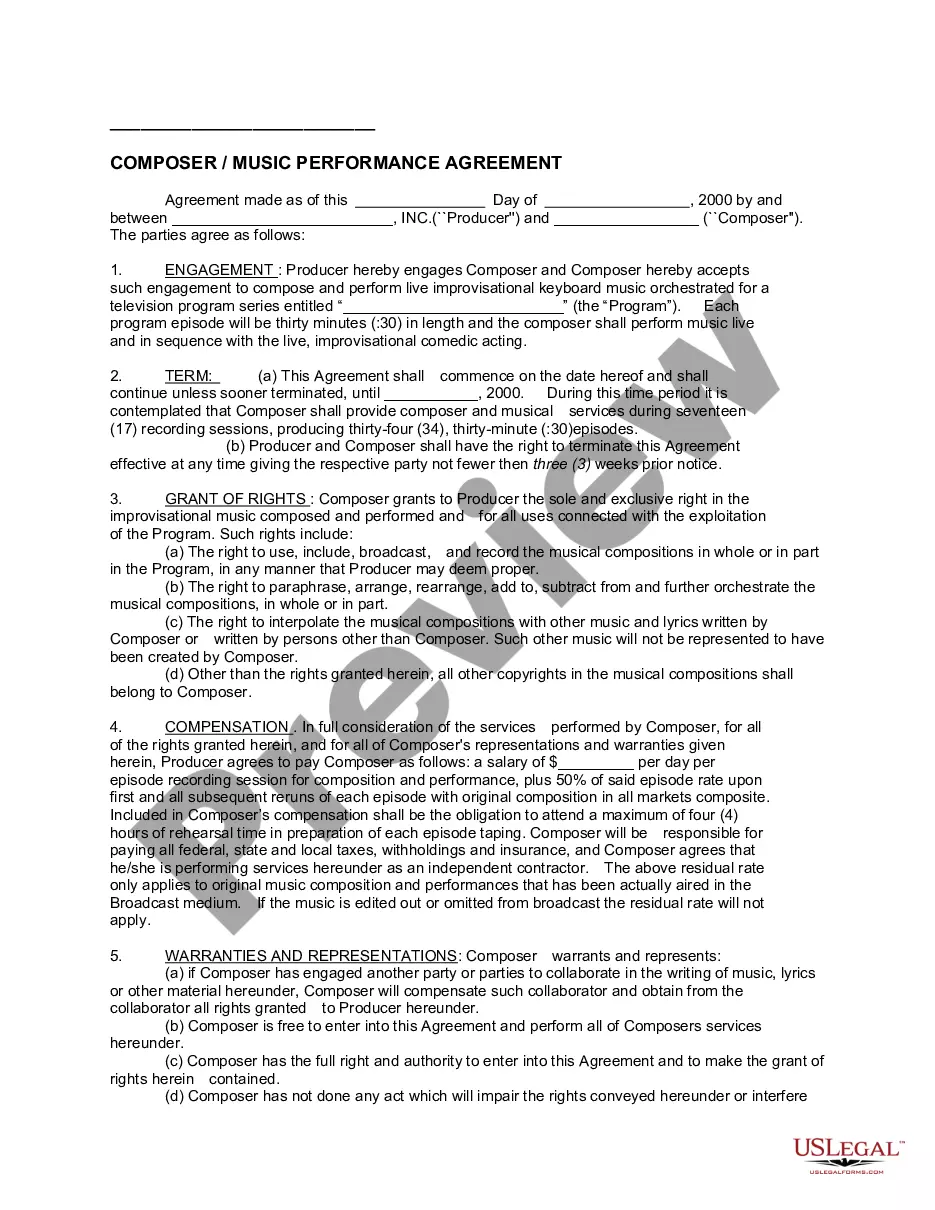
Performance Agreement For Personal Assistant In New York
Description

Get your form ready online
Our built-in tools help you complete, sign, share, and store your documents in one place.
Make edits, fill in missing information, and update formatting in US Legal Forms—just like you would in MS Word.
Download a copy, print it, send it by email, or mail it via USPS—whatever works best for your next step.
Sign and collect signatures with our SignNow integration. Send to multiple recipients, set reminders, and more. Go Premium to unlock E-Sign.
If this form requires notarization, complete it online through a secure video call—no need to meet a notary in person or wait for an appointment.
We protect your documents and personal data by following strict security and privacy standards.

Make edits, fill in missing information, and update formatting in US Legal Forms—just like you would in MS Word.

Download a copy, print it, send it by email, or mail it via USPS—whatever works best for your next step.

Sign and collect signatures with our SignNow integration. Send to multiple recipients, set reminders, and more. Go Premium to unlock E-Sign.

If this form requires notarization, complete it online through a secure video call—no need to meet a notary in person or wait for an appointment.

We protect your documents and personal data by following strict security and privacy standards.
Looking for another form?







Form popularity
FAQ
SUGGESTED ANSWER: “Thank you for this opportunity to become your personal assistant. I am a standards-driven, attentive, loyal, and reliable personal assistant who has the experience and knowledge required to maintain competence in the role and meet the requirements of the job description.
How to become a Personal Assistant Consider completing a bachelor degree in business administration or a related field. Gain workplace experience. You could pursue an internship in an administrative role to learn key skills for the role. Consider taking a Certified Personal Assistant or Virtual Assistant course.
How to be a great personal assistant Prioritize well. As a personal assistant, your manager's priorities are your priorities. Get to know your manager and the business inside out. Getting to know your manager's personality and working style will benefit you greatly. Be proactive. Keep topping up your knowledge and skills.
Good personal assistants understand, in detail, their boss's numerous tasks. A great personal assistant understands how these tasks fit into the overall scope of the business and is able to communicate with senior executives in all areas of his or her boss's work. Become an Expert in Communication.
Provide specific and constructive feedback on strengths, areas for improvement, and opportunities for growth, supported by examples and evidence if possible. Invite the assistant to reflect on their performance, identify strengths and areas for development, and share their perspective on the review process.
As a business and entertainment attorney, this issue impacts most of my clients on a regular basis. Recently, one client inquired, “Can my assistant be an independent contractor?” The short answer is NO.
Personal assistants require a diverse skill set, including excellent communication, organization, and time management skills. They must be proficient in software like Microsoft Office and possess strong research abilities. Additionally, adaptability, problem-solving, and discretion are crucial qualities.
Guide to writing contracts of employment Names of the parties. The full details of the business, and the employee's full name and address. Employment contract start date. Employee's job title and description. Workplace. Working hours. Probationary period. Salary. Deductions.
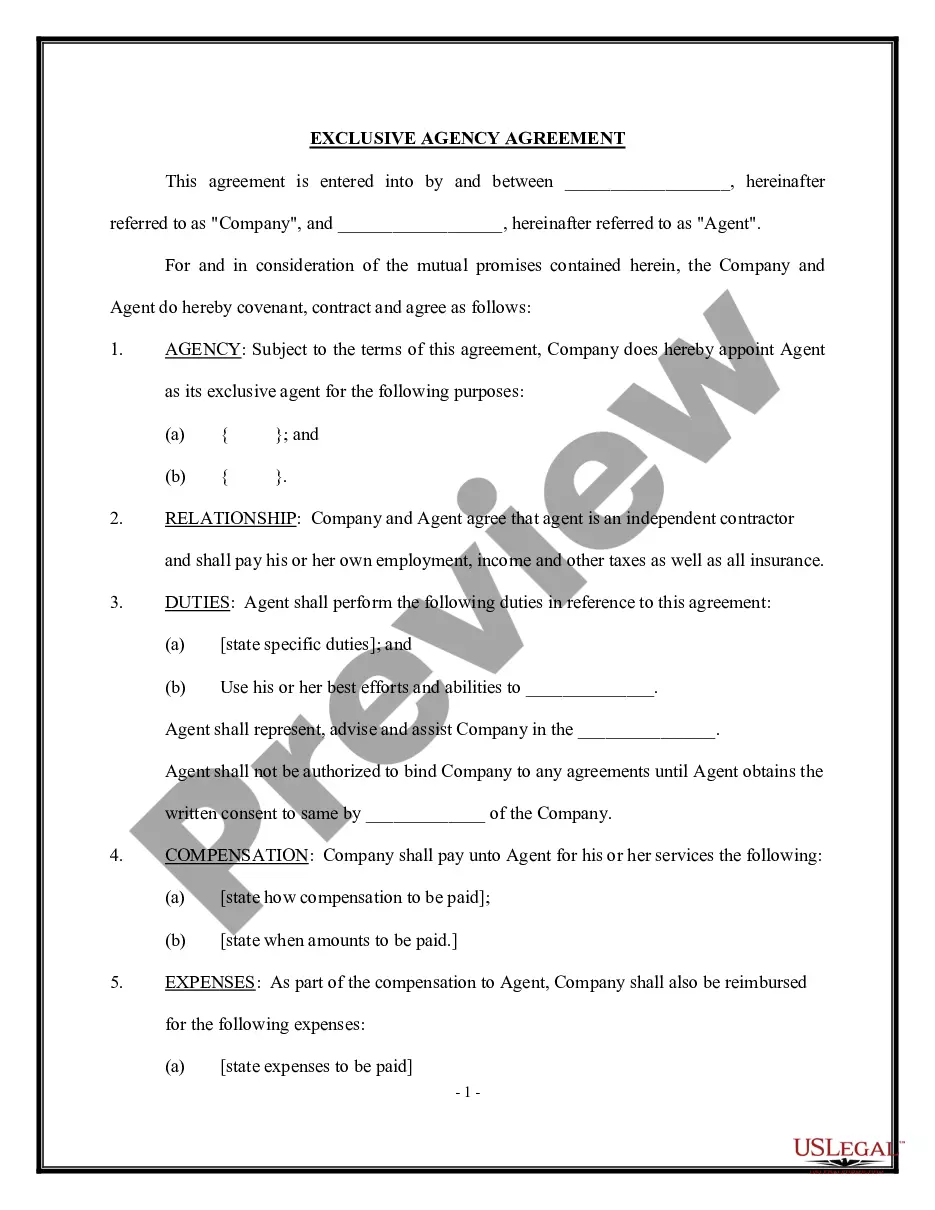
Performance Agreement: An arrangement between an employer and an employee, or a business and a contractor, which outlines the terms, expectations, goals, and standards of performance for each party. Scope: The range of activities, duties, and expectations covered by an agreement.
Simple, Direct, Honest, Personal, And Blunt: How The 5-Word Performance Review Works Wonders - Fast Company.
