Petition Visitation Form With Answer In Riverside
Description


Get your form ready online
Our built-in tools help you complete, sign, share, and store your documents in one place.
Make edits, fill in missing information, and update formatting in US Legal Forms—just like you would in MS Word.
Download a copy, print it, send it by email, or mail it via USPS—whatever works best for your next step.
Sign and collect signatures with our SignNow integration. Send to multiple recipients, set reminders, and more. Go Premium to unlock E-Sign.
If this form requires notarization, complete it online through a secure video call—no need to meet a notary in person or wait for an appointment.
We protect your documents and personal data by following strict security and privacy standards.

Make edits, fill in missing information, and update formatting in US Legal Forms—just like you would in MS Word.

Download a copy, print it, send it by email, or mail it via USPS—whatever works best for your next step.

Sign and collect signatures with our SignNow integration. Send to multiple recipients, set reminders, and more. Go Premium to unlock E-Sign.

If this form requires notarization, complete it online through a secure video call—no need to meet a notary in person or wait for an appointment.

We protect your documents and personal data by following strict security and privacy standards.
Looking for another form?







Form popularity
FAQ
To respond to a Petition for Custody and Support, your first step is to fill out a Response form. This tells the court how you want custody and support handled. If you don't file a response within 30 days of getting the Petition form, your child's other parent can ask for a default.
Draft an Answer. Pull the header information from the plaintiff's petition. Title your Answer “Answer to Plaintiff's Petition/Complaint.” Center this title and make it bold. Introduce yourself. Admit, deny, or claim that you lack sufficient knowledge to admit or deny each of the plaintiff's numbered allegations.
The Summons (FL-210) explains what you can do. You can respond by filing a Response (form FL-220) in court. If you don't file a Response within 30 days of getting these papers, the Petitioner can ask the court to decide the case without your input. This is called a default.
To respond to a request to determine a parental relationship (a Petition), your first step is to fill out a Response form. If you don't file a response within 30 days of getting the Petition form, the other person can ask for a default.
A petition to establish the parent-child relationship is essentially a proceeding to establish paternity. Who filed it? Either he filed it to establish paternity, or the state filed it to establish his paternity so that he will start paying for his child.
Be specific. Don't ramble or repeat yourself, and don't include irrelevant information. Don't lie or make assumptions not supported by facts and evidence — include only information that you have personal knowledge of. Don't use inflammatory language or rant about the other parent.
Send your Answer to the address stated in the Summons that was served on you with the petition. The Certificate of Service that you completed and filed with the court is your proof to the court that you did mail a copy of your Answer to the other side's attorney, or to him/her.
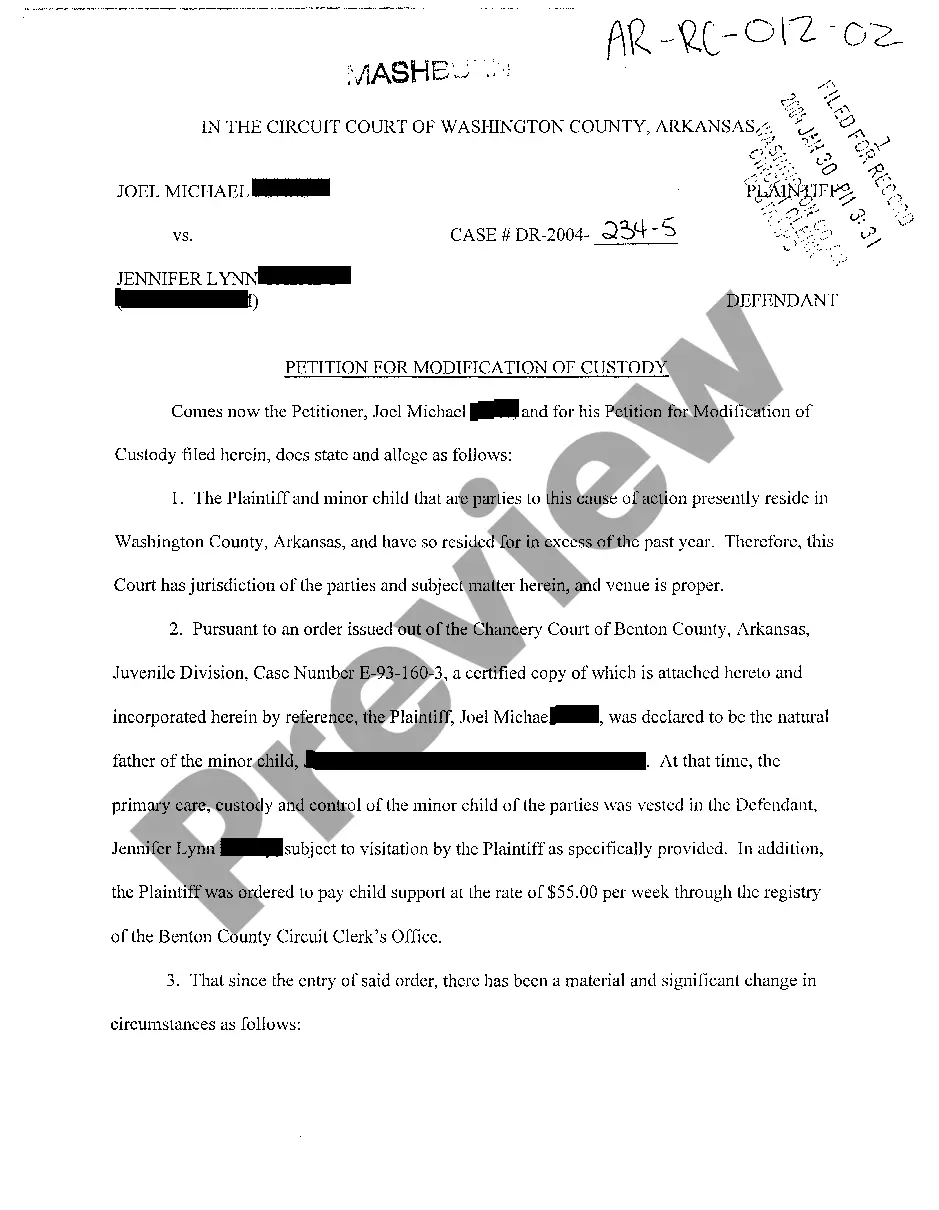
Mothers historically have won more custody battles due to traditional roles and perceptions of mothers as the primary caregivers.
Generally you must file a motion for child visitation in the county where the child has lived for the past six months. If there is an existing custody or parenting time order, however, you typically will need to file your motion with the court that entered that order.
