Habeas Corpus Petition Form With Attorney General In Riverside
Description

Get your form ready online
Our built-in tools help you complete, sign, share, and store your documents in one place.
Make edits, fill in missing information, and update formatting in US Legal Forms—just like you would in MS Word.
Download a copy, print it, send it by email, or mail it via USPS—whatever works best for your next step.
Sign and collect signatures with our SignNow integration. Send to multiple recipients, set reminders, and more. Go Premium to unlock E-Sign.
If this form requires notarization, complete it online through a secure video call—no need to meet a notary in person or wait for an appointment.
We protect your documents and personal data by following strict security and privacy standards.

Make edits, fill in missing information, and update formatting in US Legal Forms—just like you would in MS Word.

Download a copy, print it, send it by email, or mail it via USPS—whatever works best for your next step.

Sign and collect signatures with our SignNow integration. Send to multiple recipients, set reminders, and more. Go Premium to unlock E-Sign.

If this form requires notarization, complete it online through a secure video call—no need to meet a notary in person or wait for an appointment.

We protect your documents and personal data by following strict security and privacy standards.
Looking for another form?






Form popularity
FAQ
If an inmate meets all the requirements to file a petition for writ of habeas corpus, they will file their petition in the superior court in the court of conviction. Within 60 days, the court will review the petition to determine if the inmate raised a prima facie case entitling them to relief.
About 63% of issues raised in habeas corpus petitions by state court prisoners are dismissed on procedural grounds at the U.S. District Court level, and about 35% of those issues are dismissed based on the allegations in the petition on the merits (on the merits has a different meaning than what it's used for here).
James Liebman, Professor of Law at Columbia Law School, stated in 1996 that his study found that when habeas corpus petitions in death penalty cases were traced from conviction to completion of the case that there was "a 40 percent success rate in all capital cases from 1978 to 1995." Similarly, a study by Ronald Tabek ...
The writ of habeas corpus has been suspended four times since the Constitution was ratified: throughout the entire country during the Civil War; in eleven South Carolina counties overrun by the Ku Klux Klan during Reconstruction; in two provinces of the Philippines during a 1905 insurrection; and in Hawaii after the ...
It found that 3.2 percent of the petitions were granted in whole or in part, and only l. 8 percent resulted in any type of release of the petitioner.
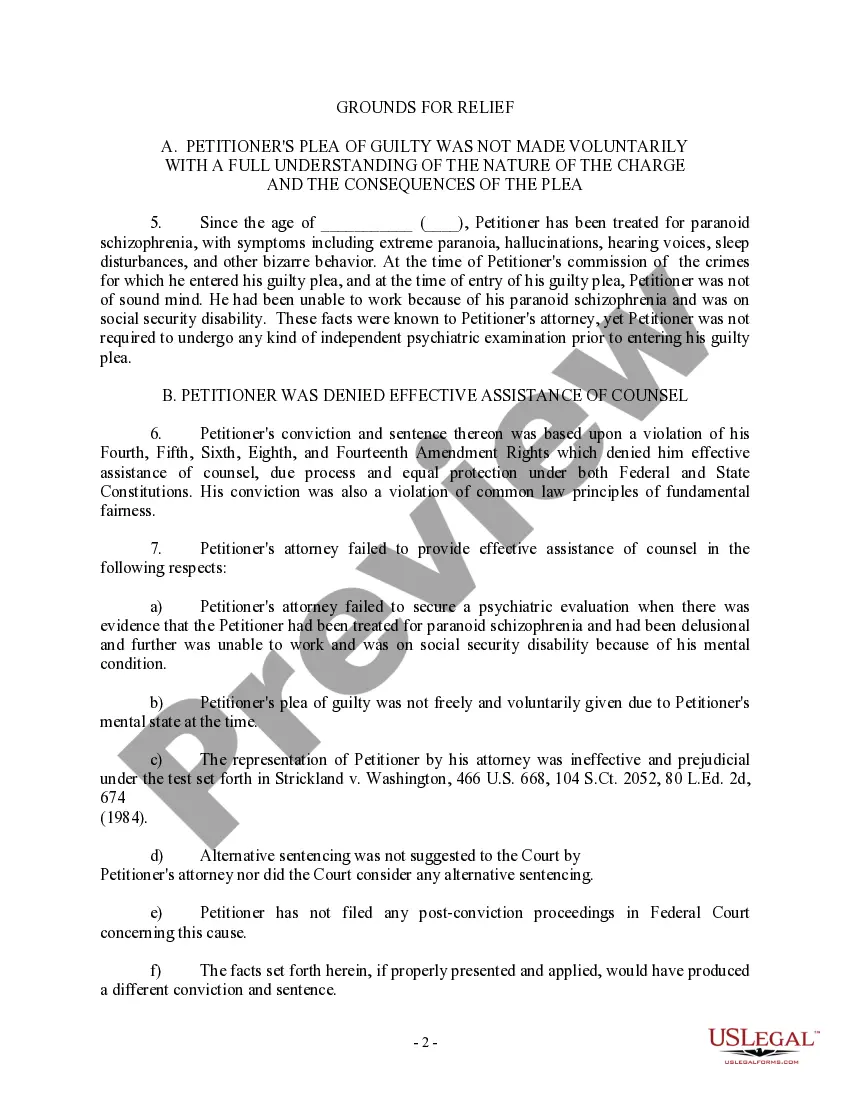
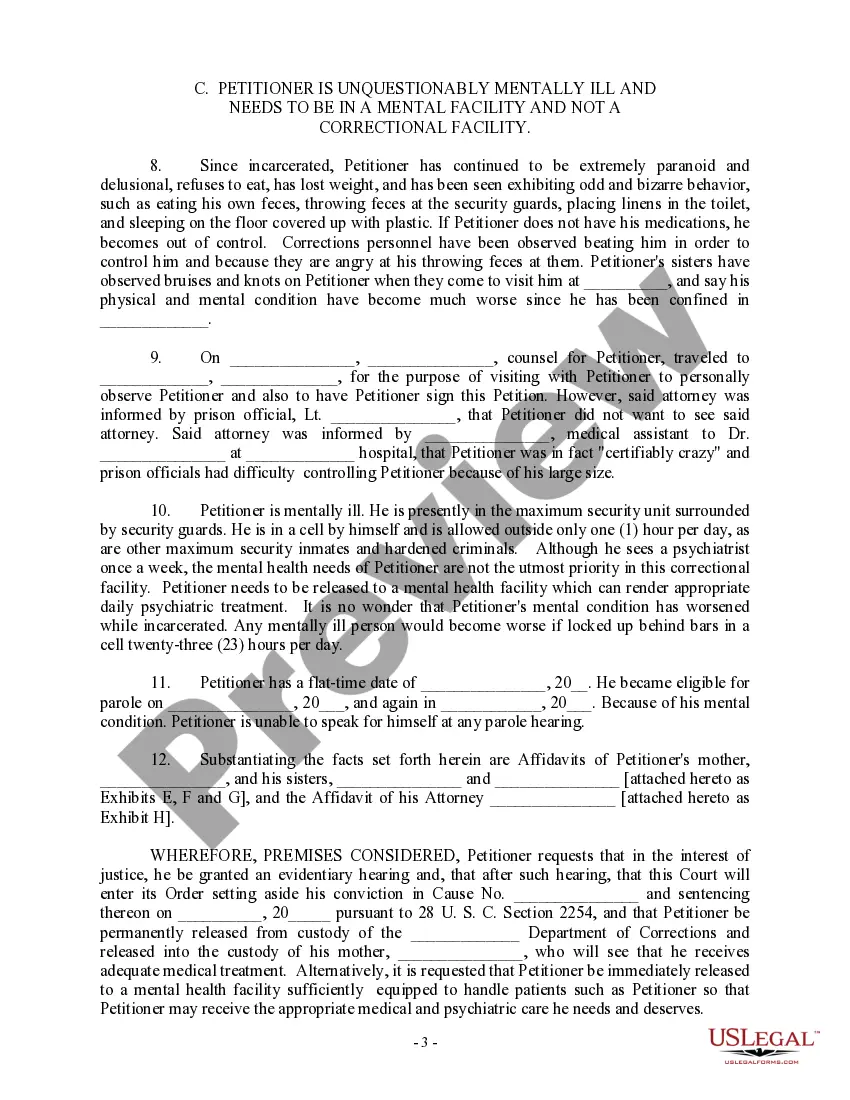
To file a state habeas corpus petition, individuals must use the official Judicial Council Form HC-001, which should be filled out completely and clearly. The petition should include detailed information about the grounds for relief, supporting facts, and relevant legal authorities.
All prisoners may file a writ of habeas corpus. However, judges receive a flood of habeas corpus petitions each year, including some that inmates prepare without the assistance of a lawyer. Strict procedures govern which petitions judges may consider.
Abraham Lincoln signed the bill into law on March 3, 1863, and suspended habeas corpus under the authority it granted him six months later. The suspension was partially lifted with the issuance of Proclamation 148 by Andrew Johnson, and the Act became inoperative with the end of the Civil War.
Common arguments for granting a habeas corpus petition include: You had incompetent legal counsel or a competent attorney was not provided. You were convicted under an unconstitutional law; You were convicted under a law that has since been changed, so what you did is no longer considered a crime;
Today, habeas corpus is mainly used as a post-conviction remedy for state or federal prisoners who challenge the legality of the application of federal laws that were used in the judicial proceedings that resulted in their detention.
