Habeas Corpus Petition Form With Court In Minnesota
Description


Form popularity
FAQ
A: 28 USC 2241 should be used for challenges related to the execution of the sentence, while section 2255 should be used to attack the validity of the conviction. Any challenge to conditions of confinement is properly brought under 28 USC 2241.
A petition for a writ of habeas corpus is a request for the Court to review the legality of your detention. Section 2241 of Title 28 of the United States Code (“28 U.S.C.
If an inmate meets all the requirements to file a petition for writ of habeas corpus, they will file their petition in the superior court in the court of conviction. Within 60 days, the court will review the petition to determine if the inmate raised a prima facie case entitling them to relief.
To file a state habeas corpus petition, individuals must use the official Judicial Council Form HC-001, which should be filled out completely and clearly. The petition should include detailed information about the grounds for relief, supporting facts, and relevant legal authorities.
PETITION FOR WRIT OF HABEAS CORPUS BY A PERSON IN FEDERAL CUSTODY UNDER 28 U.S.C.
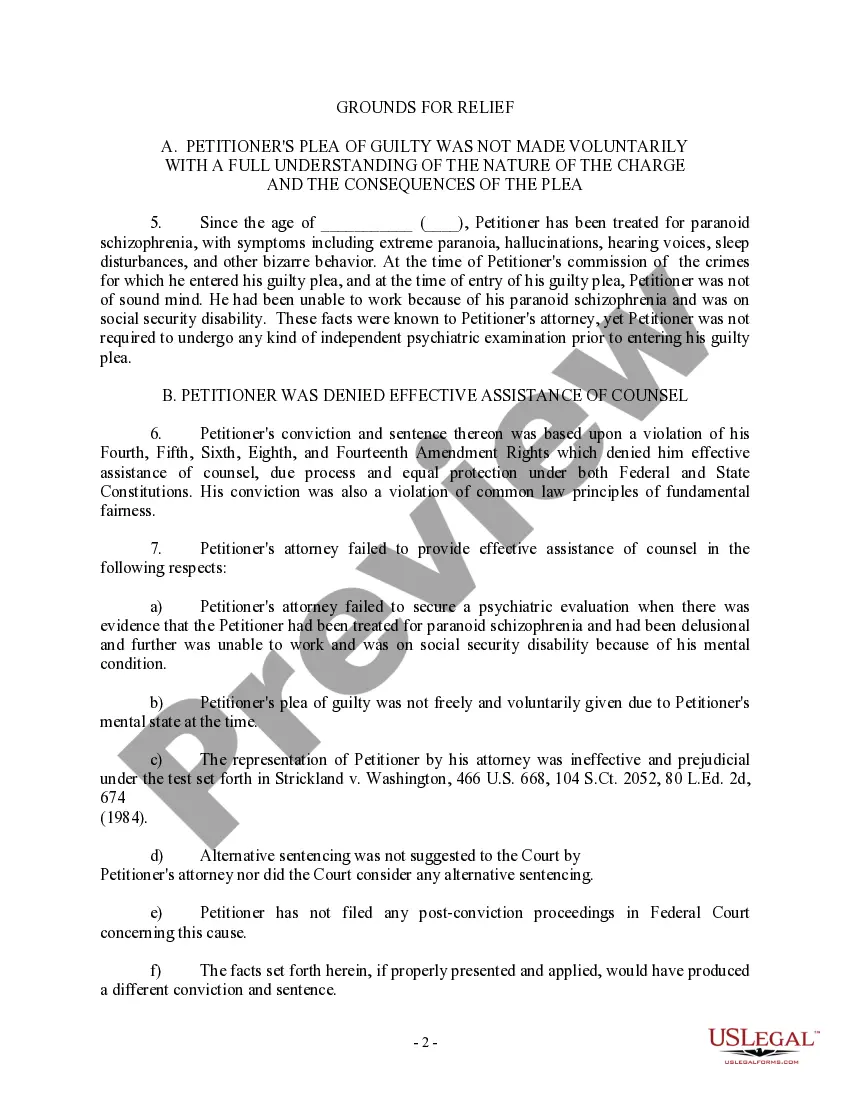
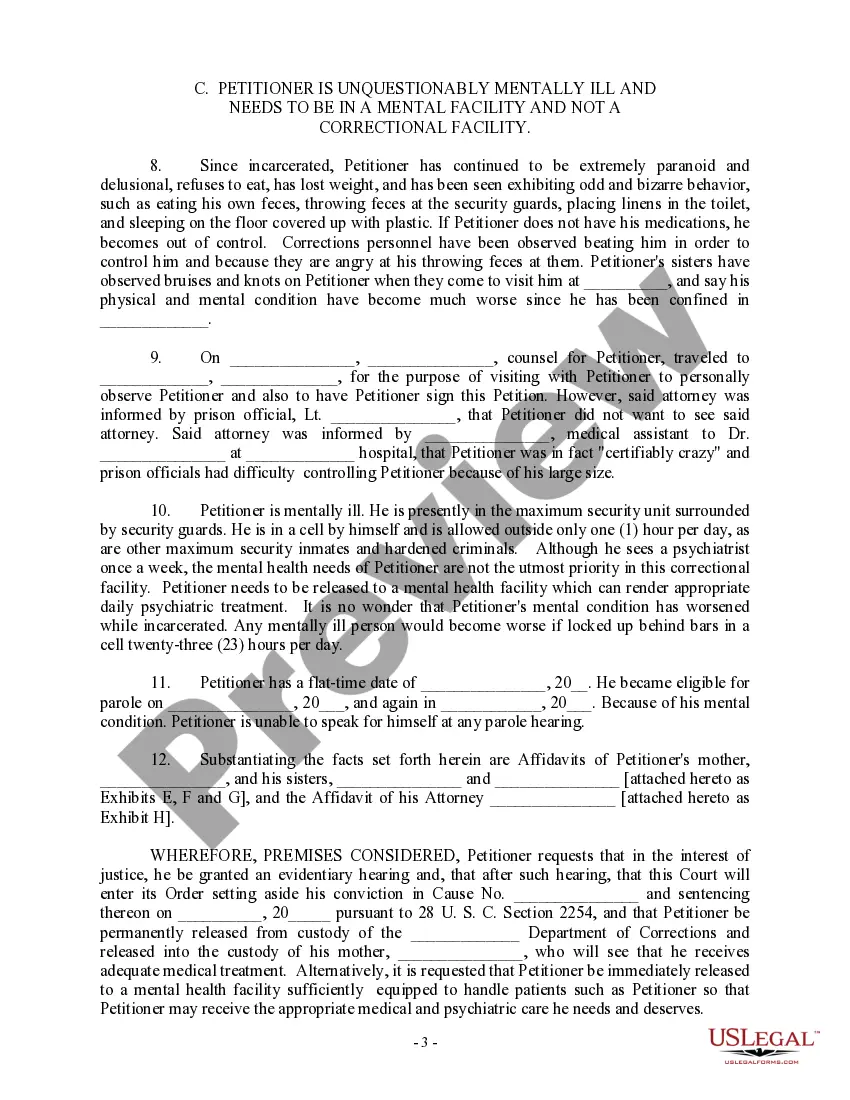
A writ of habeas corpus is used to bring a prisoner or other detainee (e.g. institutionalized mental patient) before the court to determine if the person's imprisonment or detention is lawful. A habeas petition proceeds as a civil action against the State agent (usually a warden) who holds the defendant in custody.
Regardless of whether the writ is positively guaranteed by the constitution, habeas corpus was first established by statute in the Judiciary Act of 1789.
The right to file a petition for writ of habeas corpus is guaranteed by the California constitution. In order to be eligible to petition for such relief, the petitioner must be “in custody,” either actually or constructively.
State every ground (reason) that supports your claim that you are being held in violation of the Constitution, laws, or treaties of the United States. Attach additional pages if you have more than four grounds. State the facts supporting each ground. Any legal arguments must be submitted in a separate memorandum.
