Define Habeas Corpus In Law In Florida
Description

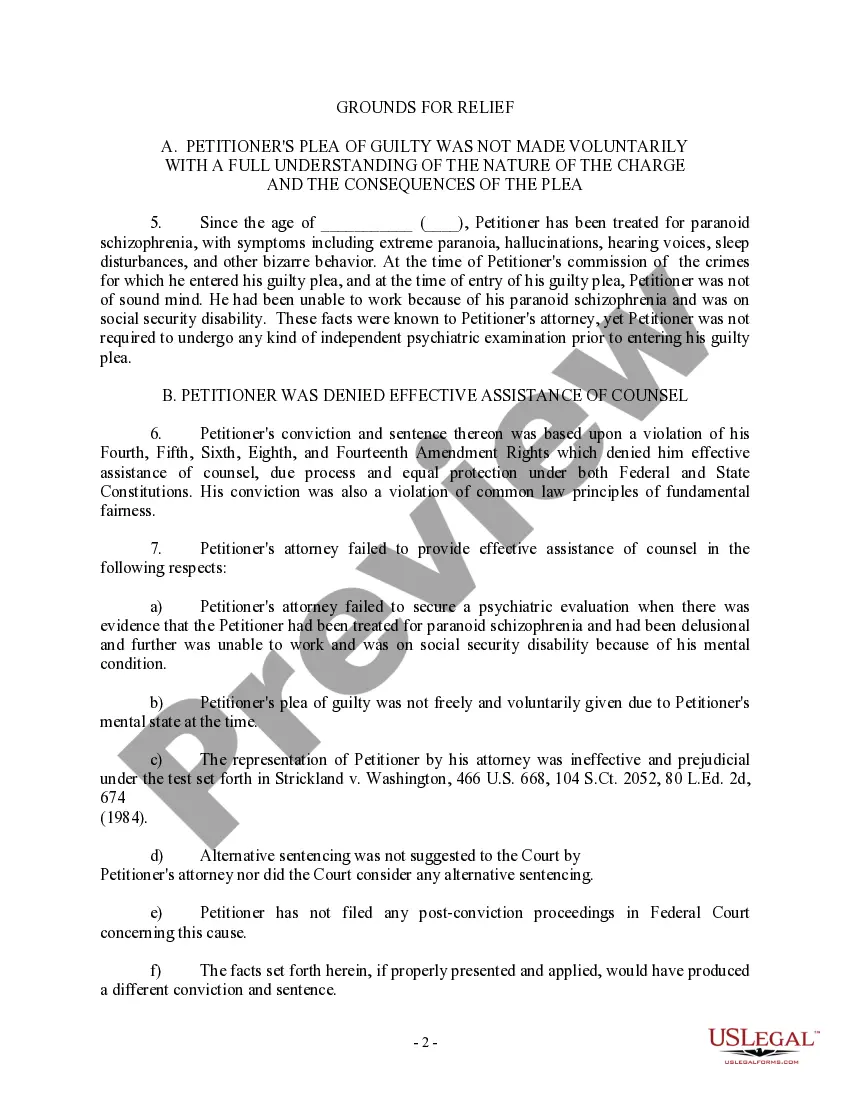
Get your form ready online
Our built-in tools help you complete, sign, share, and store your documents in one place.
Make edits, fill in missing information, and update formatting in US Legal Forms—just like you would in MS Word.
Download a copy, print it, send it by email, or mail it via USPS—whatever works best for your next step.
Sign and collect signatures with our SignNow integration. Send to multiple recipients, set reminders, and more. Go Premium to unlock E-Sign.
If this form requires notarization, complete it online through a secure video call—no need to meet a notary in person or wait for an appointment.
We protect your documents and personal data by following strict security and privacy standards.

Make edits, fill in missing information, and update formatting in US Legal Forms—just like you would in MS Word.

Download a copy, print it, send it by email, or mail it via USPS—whatever works best for your next step.

Sign and collect signatures with our SignNow integration. Send to multiple recipients, set reminders, and more. Go Premium to unlock E-Sign.

If this form requires notarization, complete it online through a secure video call—no need to meet a notary in person or wait for an appointment.

We protect your documents and personal data by following strict security and privacy standards.
Looking for another form?







Form popularity
FAQ
The following are some common grounds for writ of habeas corpus petitions: Introduction of new evidence that points to your innocence. Changes in the law. Incompetency during trial. Ineffective assistance of counsel. Conviction under unconstitutional law. Prosecutorial misconduct. No jurisdiction.
The individual filing the petition for habeas corpus relief bears the burden of proving that federal law was violated by a “preponderance of the evidence.” As a general rule, the federal court will presume that the findings of the state court during the appeal or state habeas corpus process are correct, unless there is ...
With almost ten thousand petitions filed per year, and a paltry 3.2% success rate, federal habeas petitions occupy a unique role in the criminal justice system. 2 Federal habeas is one of my favorite areas of the law because it offers a fascinating crossroads of criminal law and constitutional law.
A writ of habeas corpus is used to bring a prisoner or other detainee (e.g. institutionalized mental patient) before the court to determine if the person's imprisonment or detention is lawful. A habeas petition proceeds as a civil action against the State agent (usually a warden) who holds the defendant in custody.
Finally, habeas corpus is used to determine preliminary matters in criminal cases, such as: (i) an adequate basis for detention; (ii) removal to another federal district court; (iii) the denial of bail or parole; (iv) a claim of double jeopardy; (v) the failure to provide for a speedy trial or hearing; or (vi) the ...
The Supreme Court has the constitutional authority to issue the extraordinary writs of prohibition, mandamus, quo warranto, and habeas corpus and to issue all other writs necessary to the complete exercise of its jurisdiction.
Brown v. Allen is examined as the case that firmly established that all Federal constitutional claims may be heard through the writ of habeas corpus. This decision is believed to be a sound reading of Congress' intent in the 1867 habeas corpus statute. However, the Court's decision in Fay v.
Under the Florida and United States Constitutions, you have the right to file a writ of habeas corpus if you are being locked up in a federal or state correctional facility. This type of writ in state or federal court. When you file your petition, you are asking the judge to decide whether your imprisonment is lawful.
Individuals detained under the Baker Act may petition for a writ of habeas corpus (1) questioning the cause and legality of such detention, or (2) alleging that the patient is being unjustly denied a right or privilege or that a procedure is being abused.
Filing of Papers “When any person detained in custody, whether charged with a criminal offense or not, applies to the Supreme Court or any justice thereof, or to any district court of appeal or any judge thereof or to any circuit judge for a writ of habeas corpus and shows by affidavit or evidence probable cause to ...
