Habeas Corpus Petition Form With Attorney General In Cuyahoga
Description


Get your form ready online
Our built-in tools help you complete, sign, share, and store your documents in one place.
Make edits, fill in missing information, and update formatting in US Legal Forms—just like you would in MS Word.
Download a copy, print it, send it by email, or mail it via USPS—whatever works best for your next step.
Sign and collect signatures with our SignNow integration. Send to multiple recipients, set reminders, and more. Go Premium to unlock E-Sign.
If this form requires notarization, complete it online through a secure video call—no need to meet a notary in person or wait for an appointment.
We protect your documents and personal data by following strict security and privacy standards.

Make edits, fill in missing information, and update formatting in US Legal Forms—just like you would in MS Word.

Download a copy, print it, send it by email, or mail it via USPS—whatever works best for your next step.

Sign and collect signatures with our SignNow integration. Send to multiple recipients, set reminders, and more. Go Premium to unlock E-Sign.

If this form requires notarization, complete it online through a secure video call—no need to meet a notary in person or wait for an appointment.

We protect your documents and personal data by following strict security and privacy standards.
Looking for another form?










Form popularity
FAQ
Section 2725.01 | Persons entitled to writ of habeas corpus. Whoever is unlawfully restrained of his liberty, or entitled to the custody of another, of which custody such person is unlawfully deprived, may prosecute a writ of habeas corpus, to inquire into the cause of such imprisonment, restraint, or deprivation.
Where can I file a state writ of habeas corpus? You can file in a common pleas court, a court of appeals, or the Ohio Supreme Court. Because a writ challenges the power of the person detaining you, you must file your petition in a court that has power over that person.
Personal integrity and physical liberty are well protected by the law, for example by habeas corpus and the criminal law. Can he issue a writ of habeas corpus? If he was brought before a court, he could apply for habeas corpus and be released.
If an inmate meets all the requirements to file a petition for writ of habeas corpus, they will file their petition in the superior court in the court of conviction. Within 60 days, the court will review the petition to determine if the inmate raised a prima facie case entitling them to relief.
If an inmate meets all the requirements to file a petition for writ of habeas corpus, they will file their petition in the superior court in the court of conviction. Within 60 days, the court will review the petition to determine if the inmate raised a prima facie case entitling them to relief.
James Liebman, Professor of Law at Columbia Law School, stated in 1996 that his study found that when habeas corpus petitions in death penalty cases were traced from conviction to completion of the case that there was "a 40 percent success rate in all capital cases from 1978 to 1995." Similarly, a study by Ronald Tabek ...
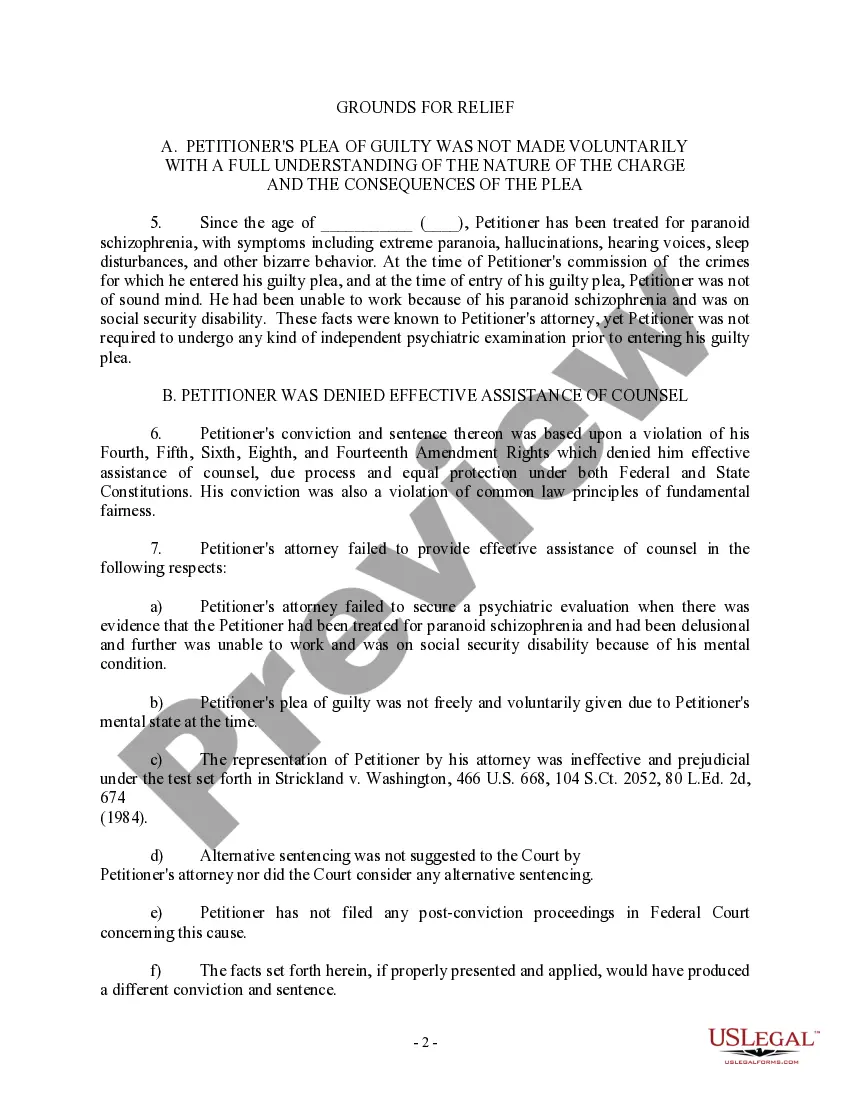
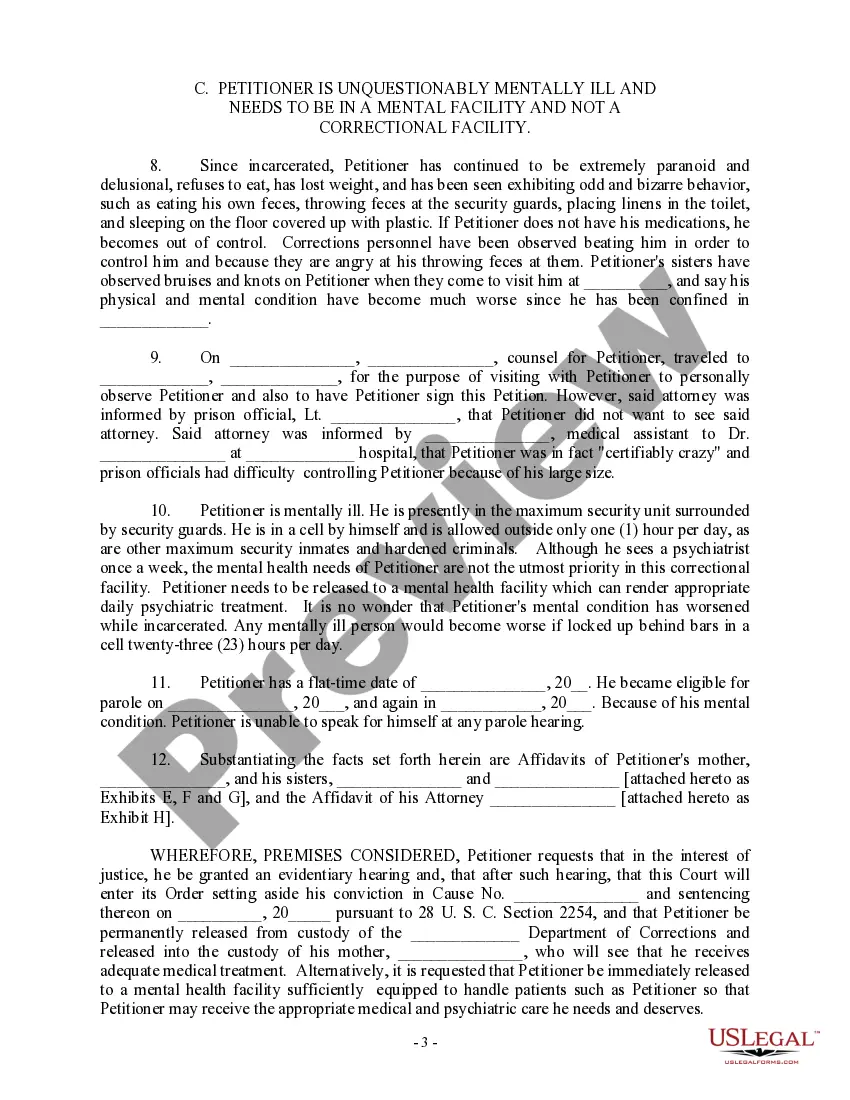
State every ground (reason) that supports your claim that you are being held in violation of the Constitution, laws, or treaties of the United States. Attach additional pages if you have more than four grounds. State the facts supporting each ground. Any legal arguments must be submitted in a separate memorandum.
A 2255 petition may be filed by a person in federal custody to challenge a federal criminal conviction and/or sentence. Unlike a 2254 petition, which challenges a state-court conviction and/or sentence, a 2255 petition is not limited to federal constitutional claims.
§ 2254 by a person in custody challenging his or her current or future custody under a state-court judgment on the grounds that such custody violates the Constitution or laws or treaties of the United States.
