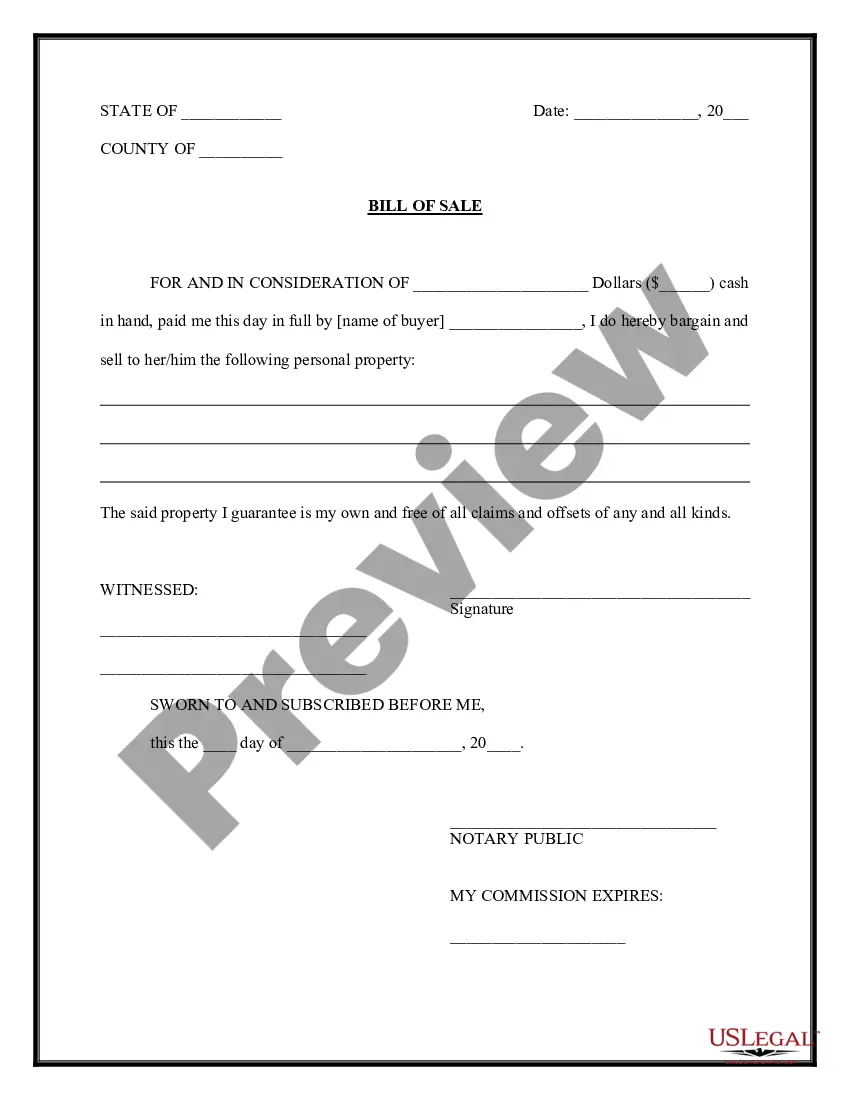
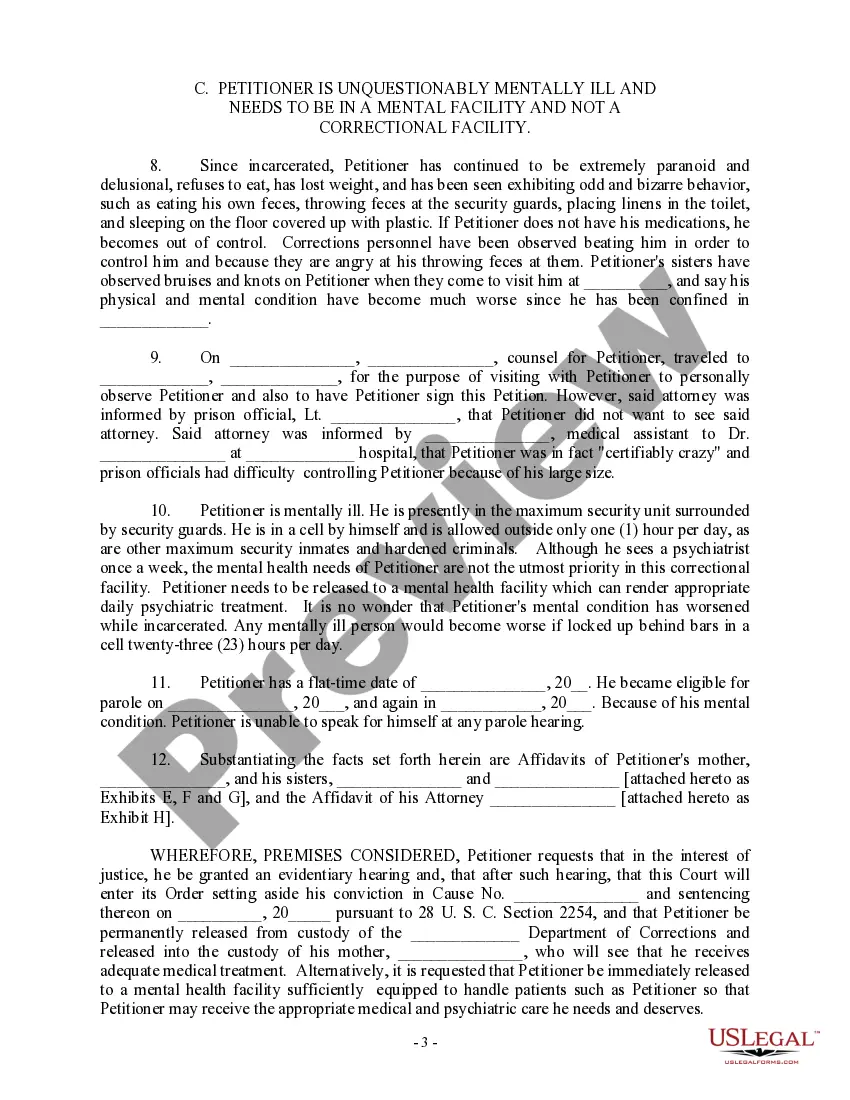
Federal Habeas Corpus Form 2241 In Alameda
Description


Get your form ready online
Our built-in tools help you complete, sign, share, and store your documents in one place.
Make edits, fill in missing information, and update formatting in US Legal Forms—just like you would in MS Word.
Download a copy, print it, send it by email, or mail it via USPS—whatever works best for your next step.
Sign and collect signatures with our SignNow integration. Send to multiple recipients, set reminders, and more. Go Premium to unlock E-Sign.
If this form requires notarization, complete it online through a secure video call—no need to meet a notary in person or wait for an appointment.
We protect your documents and personal data by following strict security and privacy standards.

Make edits, fill in missing information, and update formatting in US Legal Forms—just like you would in MS Word.

Download a copy, print it, send it by email, or mail it via USPS—whatever works best for your next step.

Sign and collect signatures with our SignNow integration. Send to multiple recipients, set reminders, and more. Go Premium to unlock E-Sign.

If this form requires notarization, complete it online through a secure video call—no need to meet a notary in person or wait for an appointment.

We protect your documents and personal data by following strict security and privacy standards.
Looking for another form?




Form popularity
FAQ
Section 2241 of Title 28 of the United States Code (“28 U.S.C. § 2241”) permits courts to issue writs of habeas corpus where a prisoner establishes that he is in custody in violation of the Constitution or laws or treaties of the United States.
An example of a habeas corpus case is when a person believes they have been wrongfully imprisoned for a crime they did not commit. They may file a writ of habeas corpus to present new evidence or information that could potentially exonerate them.
The habeas petition must be in writing and signed and verified either by the petitioner seeking relief or by someone acting on his or her behalf. The petition must name the custodian as the respondent and state the facts concerning the applicant's custody and include the legal basis for the request.
The following are some common grounds for writ of habeas corpus petitions: Introduction of new evidence that points to your innocence. Changes in the law. Incompetency during trial. Ineffective assistance of counsel. Conviction under unconstitutional law. Prosecutorial misconduct. No jurisdiction.
With almost ten thousand petitions filed per year, and a paltry 3.2% success rate, federal habeas petitions occupy a unique role in the criminal justice system.
The following are some common grounds for writ of habeas corpus petitions: Introduction of new evidence that points to your innocence. Changes in the law. Incompetency during trial. Ineffective assistance of counsel. Conviction under unconstitutional law. Prosecutorial misconduct. No jurisdiction.
Sound it Out: Break down the word 'writ of habeas corpus' into its individual sounds "rit uhv kaw" + "puhs". Say these sounds out loud, exaggerating them at first. Practice until you can consistently produce them clearly.
A Writ of Habeas Corpus is a legal request for release from a facility or institution and entitles a person to a hearing in Superior Court. You may request a writ from any staff member. You will be asked to sign your name on the official request form.
How To Say Habeas - YouTube YouTube Start of suggested clip End of suggested clip <S> ous ous ous ous </S> <S> heas heas </S> y </S>.More<S> ous ous ous ous </S> <S> heas heas </S> y </S>.
Examples of 'writ of habeas corpus' in a sentence A number of people arrested and detained throughout the country sought writs of habeas corpus before the courts. He wanted them released through writs of habeas corpus, a right hitherto granted only to human prisoners.