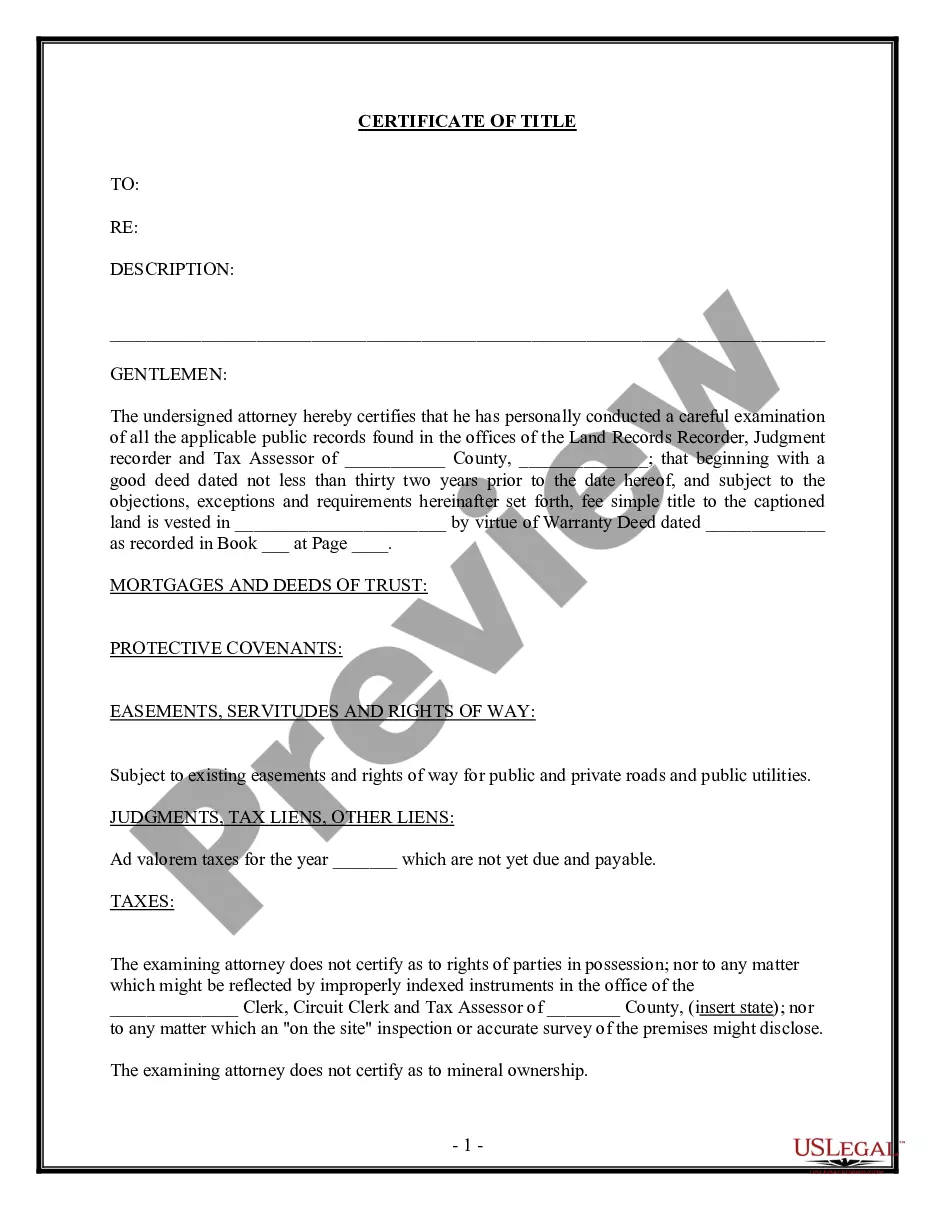
Judgment Against Property With No In Maryland
Description




Get your form ready online
Our built-in tools help you complete, sign, share, and store your documents in one place.
Make edits, fill in missing information, and update formatting in US Legal Forms—just like you would in MS Word.
Download a copy, print it, send it by email, or mail it via USPS—whatever works best for your next step.
Sign and collect signatures with our SignNow integration. Send to multiple recipients, set reminders, and more. Go Premium to unlock E-Sign.
If this form requires notarization, complete it online through a secure video call—no need to meet a notary in person or wait for an appointment.
We protect your documents and personal data by following strict security and privacy standards.

Make edits, fill in missing information, and update formatting in US Legal Forms—just like you would in MS Word.

Download a copy, print it, send it by email, or mail it via USPS—whatever works best for your next step.

Sign and collect signatures with our SignNow integration. Send to multiple recipients, set reminders, and more. Go Premium to unlock E-Sign.

If this form requires notarization, complete it online through a secure video call—no need to meet a notary in person or wait for an appointment.

We protect your documents and personal data by following strict security and privacy standards.
Looking for another form?










Form popularity
FAQ
If you're married and own a home, Maryland assumes that you hold it under “tenancy by the entirety.” Tenancy by the entirety protects your home from creditors who come after the debts of one spouse. It doesn't protect you from jointly held debts, however.
Key Takeaways. A judgment lien is a court ruling that gives a creditor the right to take possession of a debtor's property if the debtor fails to fulfill their contractual obligations. Judgment liens are nonconsensual because they are attached to property without the owner's consent or agreement.
A judgment lasts for 12 years and the plaintiff can renew the judgment for another 12 years.
Generally, the party seeking to sell or transfer the property will need to satisfy the judgment by paying the amount owed to the judgment creditor, or negotiate a settlement or release with the creditor.
Statute of limitations on debt for all states StateWrittenOral Maryland 3 years 3 Massachusetts 6 years 6 Michigan 6 years 6 Minnesota 6 years 646 more rows •
In Maryland, a judgment is only valid for twelve (12) years. If you have not been able to collect your judgment within that time, you will have to renew the judgment to continue your collection efforts. Complete the Request to Renew Judgment (form DC-CV-023) and file it with the court.
At any time before expiration of the judgment, the judgment holder may file a notice of renewal and the clerk shall enter the judgment renewed. Committee note: This Rule does not extinguish an unrenewed judgment held by the State. See Code, Courts Article, § 5-102; Comptroller of Md.
Yes. There are time limits governing when a creditor can sue you for a debt. These laws are called the statute of limitations. In Maryland, the statute of limitations requires that a lawsuit be filed within three years for written contracts, and 3 years for open accounts, such as credit cards.
Statute of Limitations in Maryland Maryland is a consumer-friendly state. The statute of limitations allows a creditor three years to collect on debts. That's a shorter timeframe than many states.