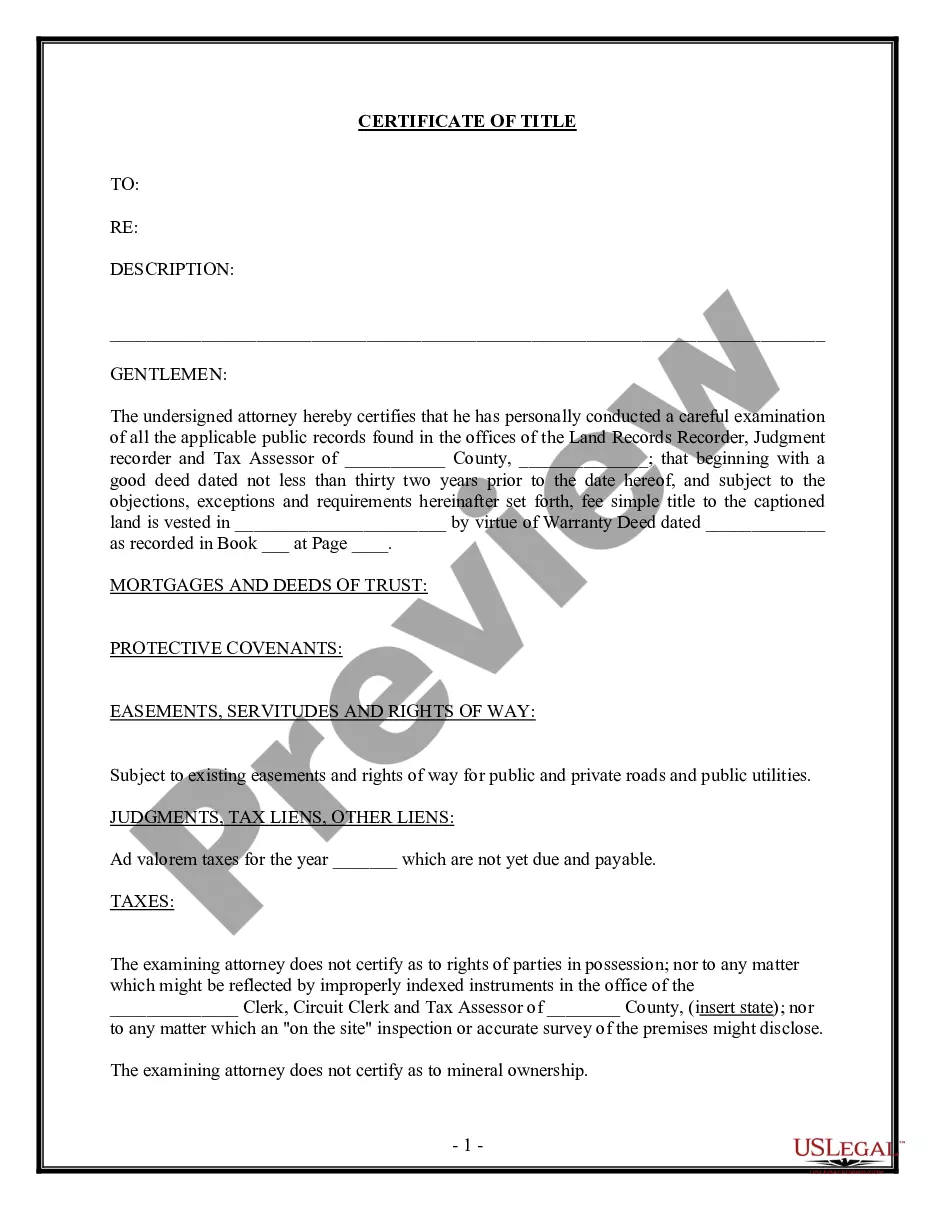
Judgment Against Property With No In Cook
Description




Get your form ready online
Our built-in tools help you complete, sign, share, and store your documents in one place.
Make edits, fill in missing information, and update formatting in US Legal Forms—just like you would in MS Word.
Download a copy, print it, send it by email, or mail it via USPS—whatever works best for your next step.
Sign and collect signatures with our SignNow integration. Send to multiple recipients, set reminders, and more. Go Premium to unlock E-Sign.
If this form requires notarization, complete it online through a secure video call—no need to meet a notary in person or wait for an appointment.
We protect your documents and personal data by following strict security and privacy standards.

Make edits, fill in missing information, and update formatting in US Legal Forms—just like you would in MS Word.

Download a copy, print it, send it by email, or mail it via USPS—whatever works best for your next step.

Sign and collect signatures with our SignNow integration. Send to multiple recipients, set reminders, and more. Go Premium to unlock E-Sign.

If this form requires notarization, complete it online through a secure video call—no need to meet a notary in person or wait for an appointment.

We protect your documents and personal data by following strict security and privacy standards.
Looking for another form?





Form popularity
FAQ
It depends but generally, no, a judgement should not be entered unless you have been served. After filing, a petitioner must also file a proof of service showing that you were properly served with the court. If you were not properly served, the judgement entered against you can be overturned.
Judgements can become a first lien against a property. Lenders generally want to be first lien when it comes to mortgages. So yes, it will be deal breaker for most mortgage companies. I've seen mortgages get denied because of a $6000 judgement.
Judgements can become a first lien against a property. Lenders generally want to be first lien when it comes to mortgages. So yes, it will be deal breaker for most mortgage companies. I've seen mortgages get denied because of a $6000 judgement.
After a default has been taken, a judgment can be taken by either submitting documentation with a declaration as to the truth of the documents, or by having a prove-up hearing, where testimony is taken and documents are submitted. So the answer is yes. They can't execute the judgment without finding you, though.
This can happen if you didn't receive the original summons due to an outdated address or improper service, or if you missed a court date. If a judgment has been entered against you without your knowledge, it's important to act quickly.
Judgments may be classified as in personam, in rem, or quasi in rem. An in personam, or personal, judgment, the type most commonly rendered by courts, imposes a personal liability or obligation upon a person or group to some other person or group.
Judgment is a court decision that settles a dispute between two parties by determining the rights and obligations of each party. Judgments are classified as in personam, in rem, or quasi in rem. Judgments are usually monetary, but can also be non-monetary, and are legally enforceable.
Judgements can become a first lien against a property. Lenders generally want to be first lien when it comes to mortgages. So yes, it will be deal breaker for most mortgage companies. I've seen mortgages get denied because of a $6000 judgement.