Payment For Judgement In Los Angeles
Description
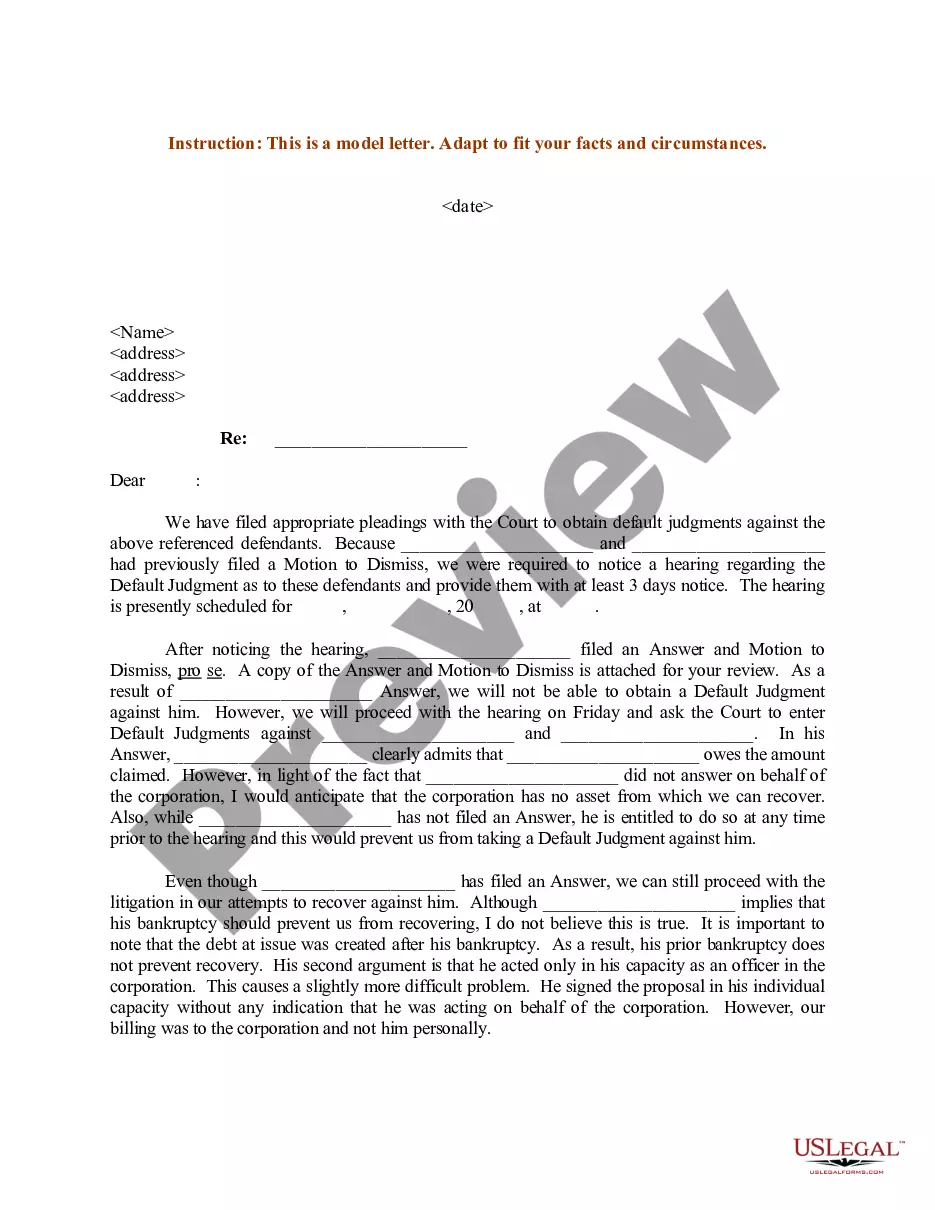




Get your form ready online
Our built-in tools help you complete, sign, share, and store your documents in one place.
Make edits, fill in missing information, and update formatting in US Legal Forms—just like you would in MS Word.
Download a copy, print it, send it by email, or mail it via USPS—whatever works best for your next step.
Sign and collect signatures with our SignNow integration. Send to multiple recipients, set reminders, and more. Go Premium to unlock E-Sign.
If this form requires notarization, complete it online through a secure video call—no need to meet a notary in person or wait for an appointment.
We protect your documents and personal data by following strict security and privacy standards.

Make edits, fill in missing information, and update formatting in US Legal Forms—just like you would in MS Word.

Download a copy, print it, send it by email, or mail it via USPS—whatever works best for your next step.

Sign and collect signatures with our SignNow integration. Send to multiple recipients, set reminders, and more. Go Premium to unlock E-Sign.

If this form requires notarization, complete it online through a secure video call—no need to meet a notary in person or wait for an appointment.

We protect your documents and personal data by following strict security and privacy standards.
Looking for another form?









Form popularity
FAQ
Exemption from the Enforcement of Judgments Type of PropertyCode Automobiles, Trucks, and other motor vehicles, including proceeds traced to the sale of the vehicle. CCP § 704.010 Art and Heirlooms & Jewelry CCP § 704.040 Relocation Benefits CCP § 704.180 Health Insurance Benefits and Disability Insurance Benefits CCP § 704.13027 more rows
Here are four ways to avoid paying a judgment: 1) Use asset protection tools such as an asset protection trust, 2) use legal exemptions, 3) negotiate with the creditor, 4) file for bankruptcy.
You may be able to negotiate a voluntary payment plan with the debt collector. Second, you can file to have the judgment vacated or removed. And third, you can file bankruptcy to discharge the debt and stop all collection efforts, including those related to a court judgment.
On application a default judgment where the plaintiff has agreed in writing can be rescinded or varied. “On application” means that the applicant needs to serve on the plaintiff a copy of the application and file with the clerk of the court the application.
To do this, fill out an EJ-001 Abstract of Judgment form and take it to the clerk's office. After the clerk stamps it, record it at the County Recorder's Office in the county where the property is located. Place a lien on a business.
If default judgment has been entered incorrectly then the court will set it aside, although an application will usually need to be made.
In a debt collection lawsuit, a judgment is a court order that allows the debt collector to use stronger tools, like garnishment, to collect the debt. A judgment is an official result of a lawsuit in court.
Judgment is a court decision that settles a dispute between two parties by determining the rights and obligations of each party. Judgments are classified as in personam, in rem, or quasi in rem. Judgments are usually monetary, but can also be non-monetary, and are legally enforceable.
: the process of forming an opinion or evaluation by discerning and comparing. careful judgment of the odds. b. : an opinion or estimate so formed.
A judgment is nothing more than a decision by a court that has been entered into the public record. In order for that decision to be made, someone must file a lawsuit. You get time to formally Answer (that's a technical term, which is why it's capitalized) and fight the lawsuit.

