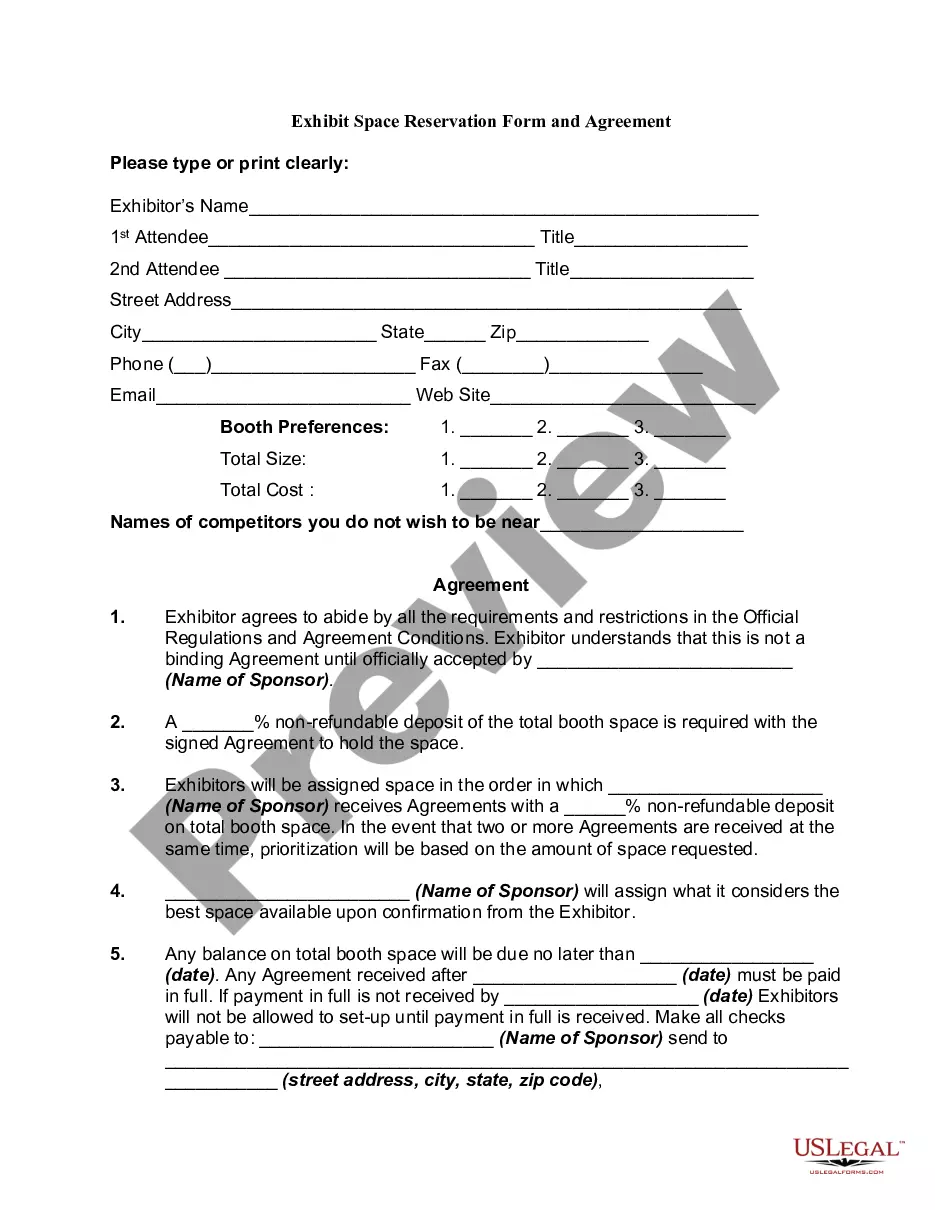
Exhibition Contract Template With Stock Options In Wake
Description
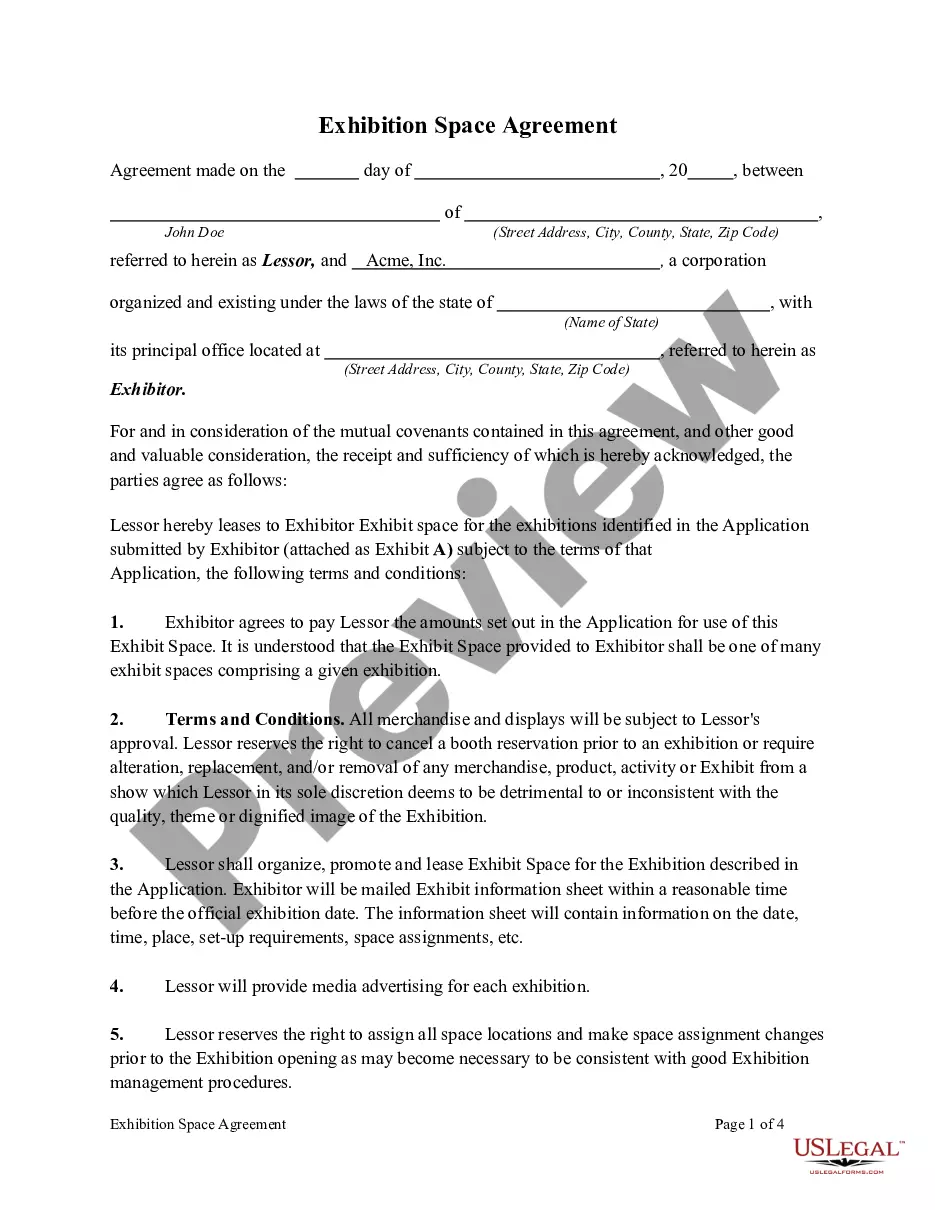
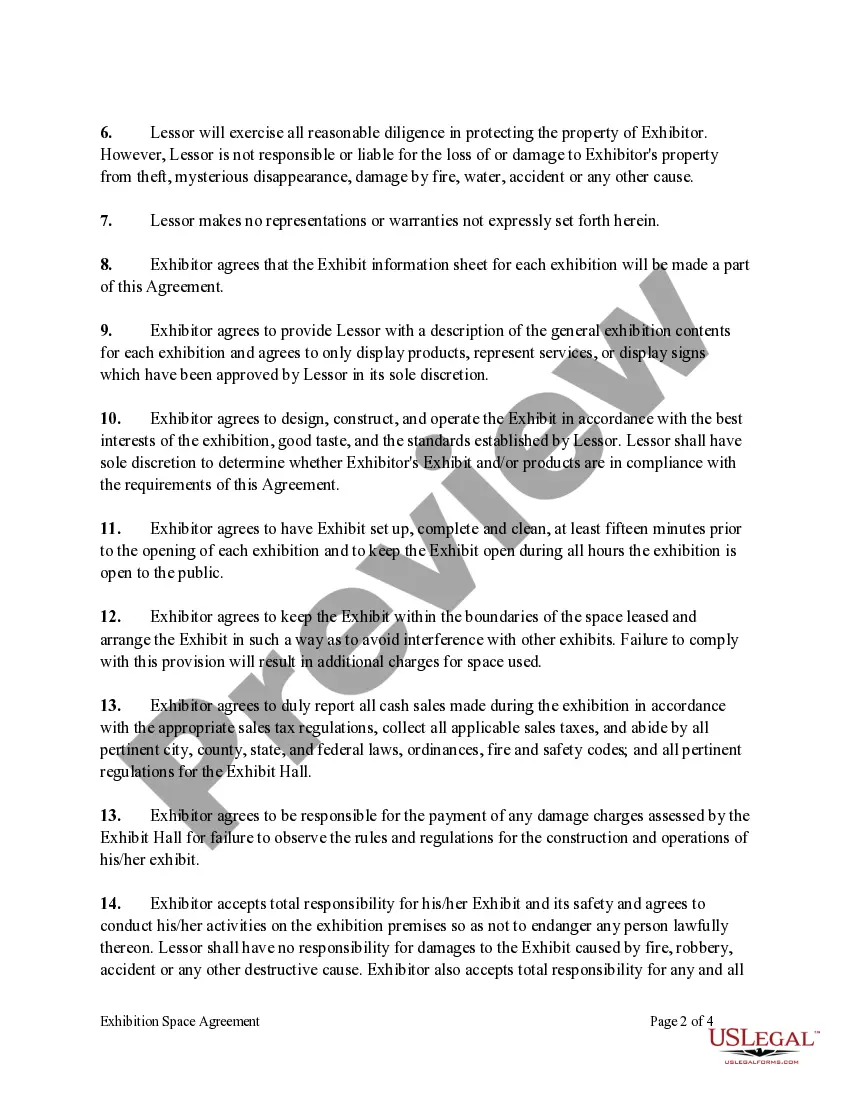
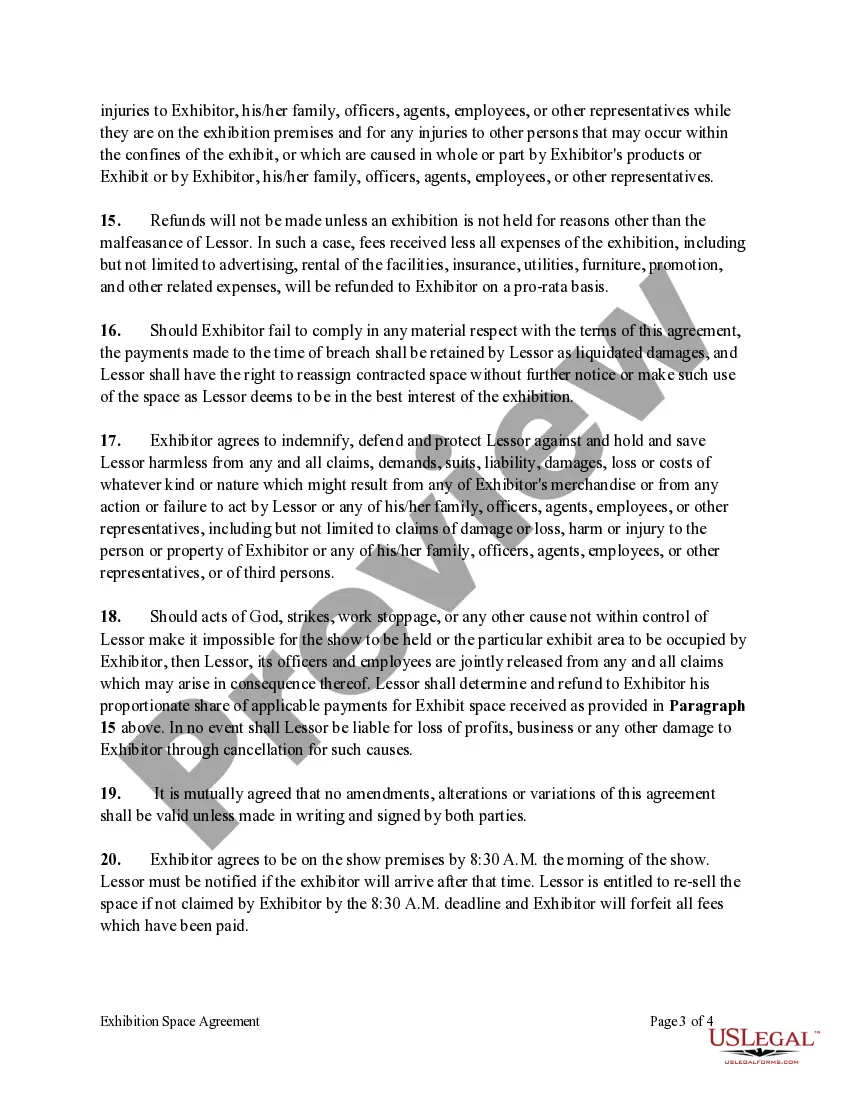
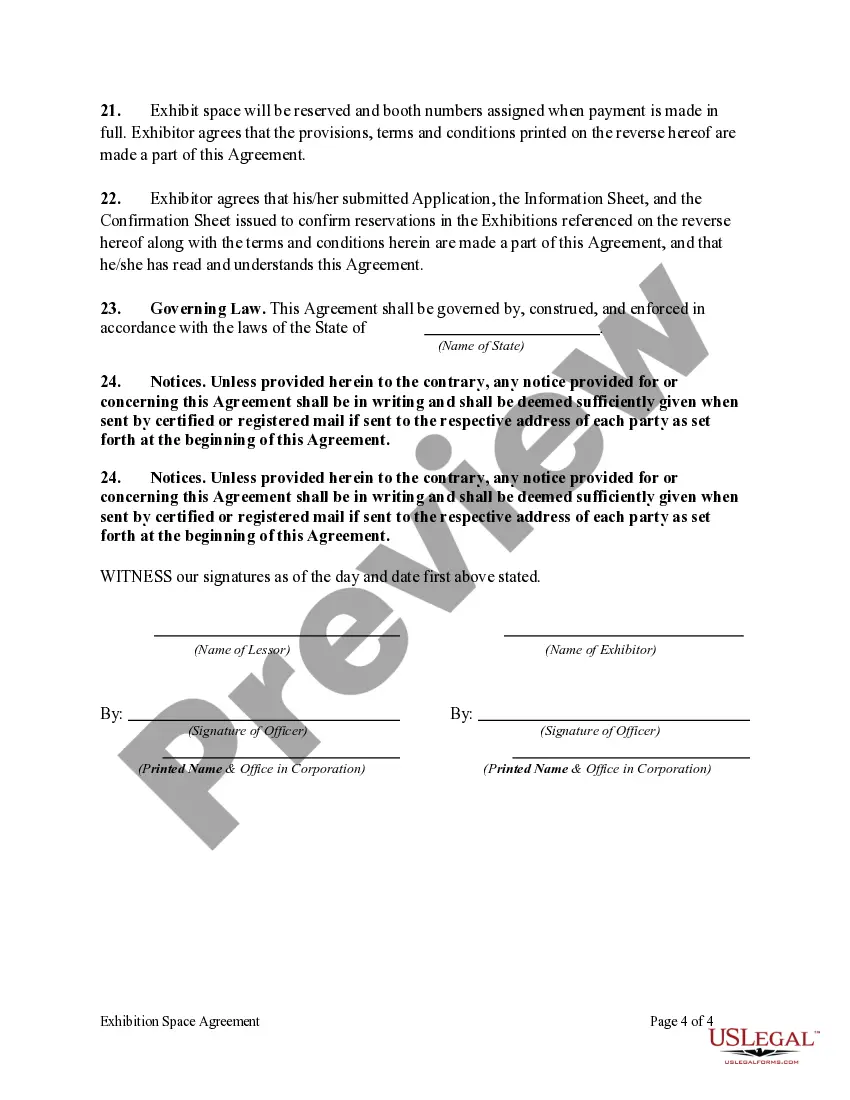

Get your form ready online
Our built-in tools help you complete, sign, share, and store your documents in one place.
Make edits, fill in missing information, and update formatting in US Legal Forms—just like you would in MS Word.
Download a copy, print it, send it by email, or mail it via USPS—whatever works best for your next step.
Sign and collect signatures with our SignNow integration. Send to multiple recipients, set reminders, and more. Go Premium to unlock E-Sign.
If this form requires notarization, complete it online through a secure video call—no need to meet a notary in person or wait for an appointment.
We protect your documents and personal data by following strict security and privacy standards.

Make edits, fill in missing information, and update formatting in US Legal Forms—just like you would in MS Word.

Download a copy, print it, send it by email, or mail it via USPS—whatever works best for your next step.

Sign and collect signatures with our SignNow integration. Send to multiple recipients, set reminders, and more. Go Premium to unlock E-Sign.

If this form requires notarization, complete it online through a secure video call—no need to meet a notary in person or wait for an appointment.

We protect your documents and personal data by following strict security and privacy standards.
Looking for another form?








Form popularity
FAQ
The short answer is yes. However, you have to ensure that your offering is compliant with all the relevant regulations in both your and your contractor's country.
Between these two main types of stock options, NSO and ISO, you want to know which one to use for your startup's requirements. Some important distinctions between NSO and ISO: NSO may be granted to employees and non-employees (advisors, consultants, board members), whereas ISOs can only be granted to employees.
Assignment occurs when an option holder exercises his option by notifying his broker, who then notifies the Options Clearing Corporation (OCC). The OCC fulfills the contract, then selects, randomly, a member firm who was short the same option contract. The OCC then notifies the firm.
The short answer is yes. However, you have to ensure that your offering is compliant with all the relevant regulations in both your and your contractor's country. In some regions, for instance, your contractor may be eligible to receive non-qualifying stock options, but your contractors in other countries may not.
Private limited companies especially companies in early stages of business or startups typically like to grant employee stock options (ESOPs) to part time employees, advisors, mentors, consultants and co-founders.
Employee Stock Option: Pursuant to clause (b) of Sub Section (1) of Section 62 of Companies Act, 2013, the Company can offer shares through employee stock option to their employees if shareholders approve such scheme by way of passing special resolution subject to the conditions specified under Rule 12, of Companies ( ...
Vesting is the process of earning an asset, like stock options or employer-matched contributions to your 401(k), over time. Companies often use vesting to encourage you to stay longer at the company. Unless your company allows early exercising, you can only exercise stock options that have vested.