Exhibition Contract Template With Stock Options In Maryland
Description
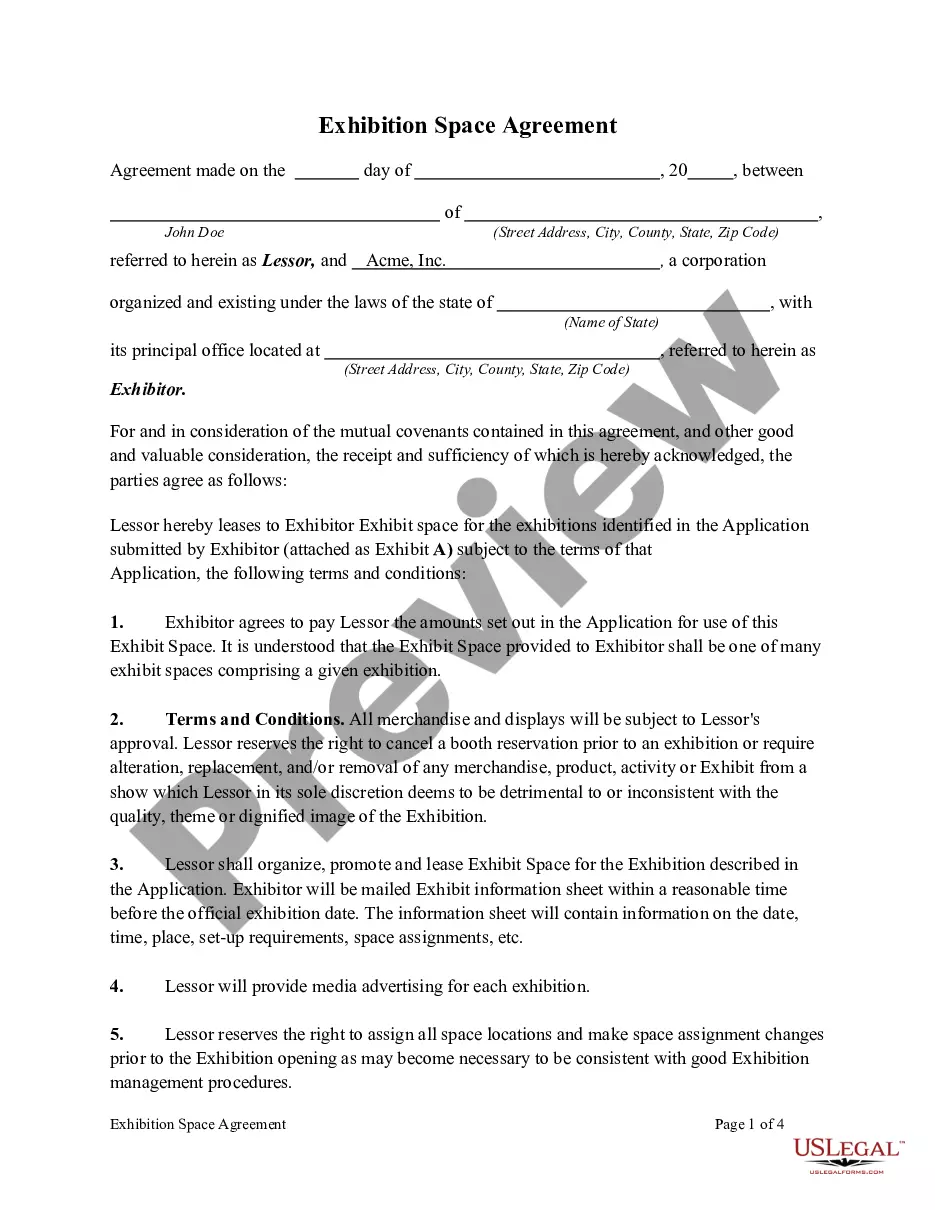
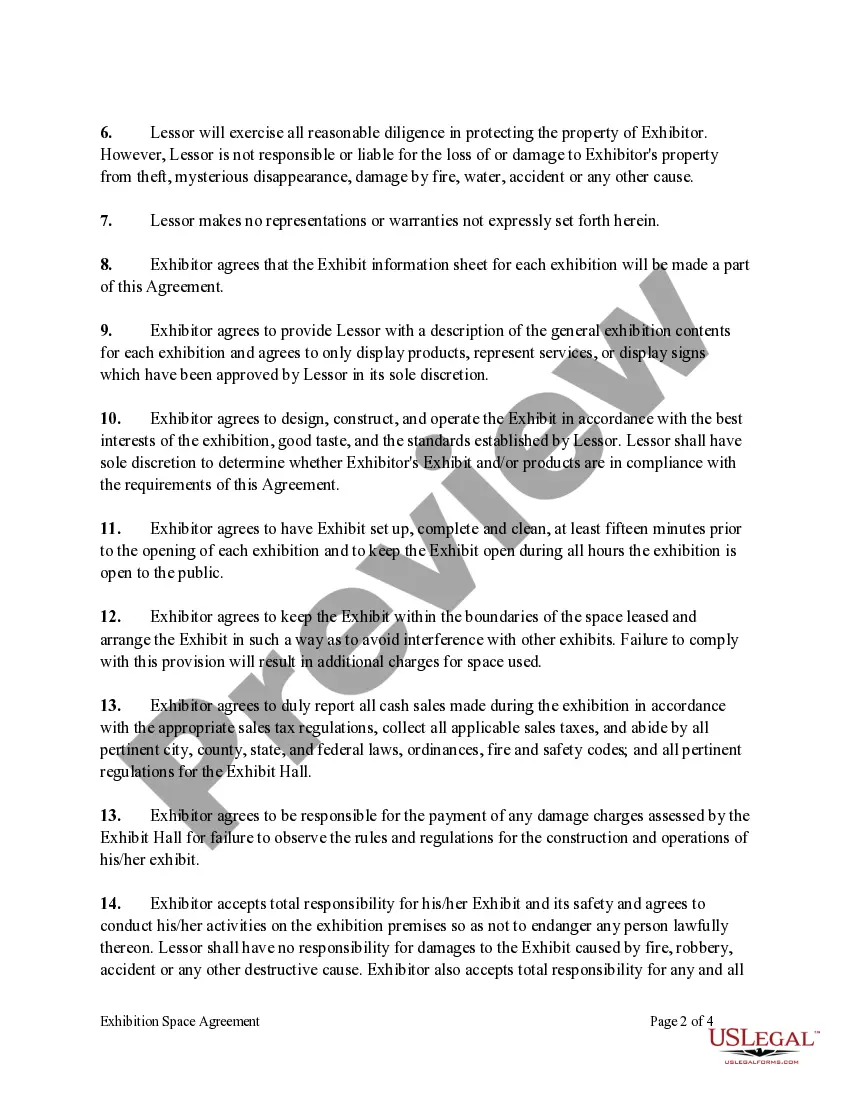
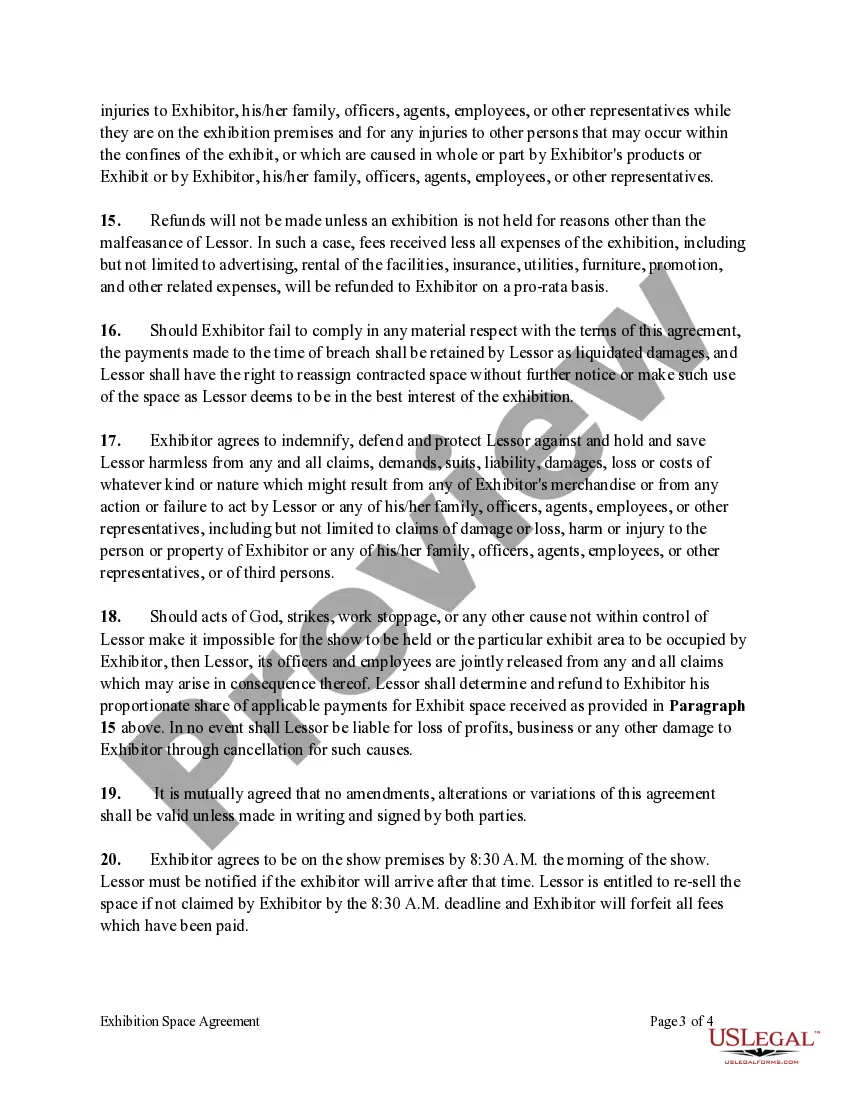
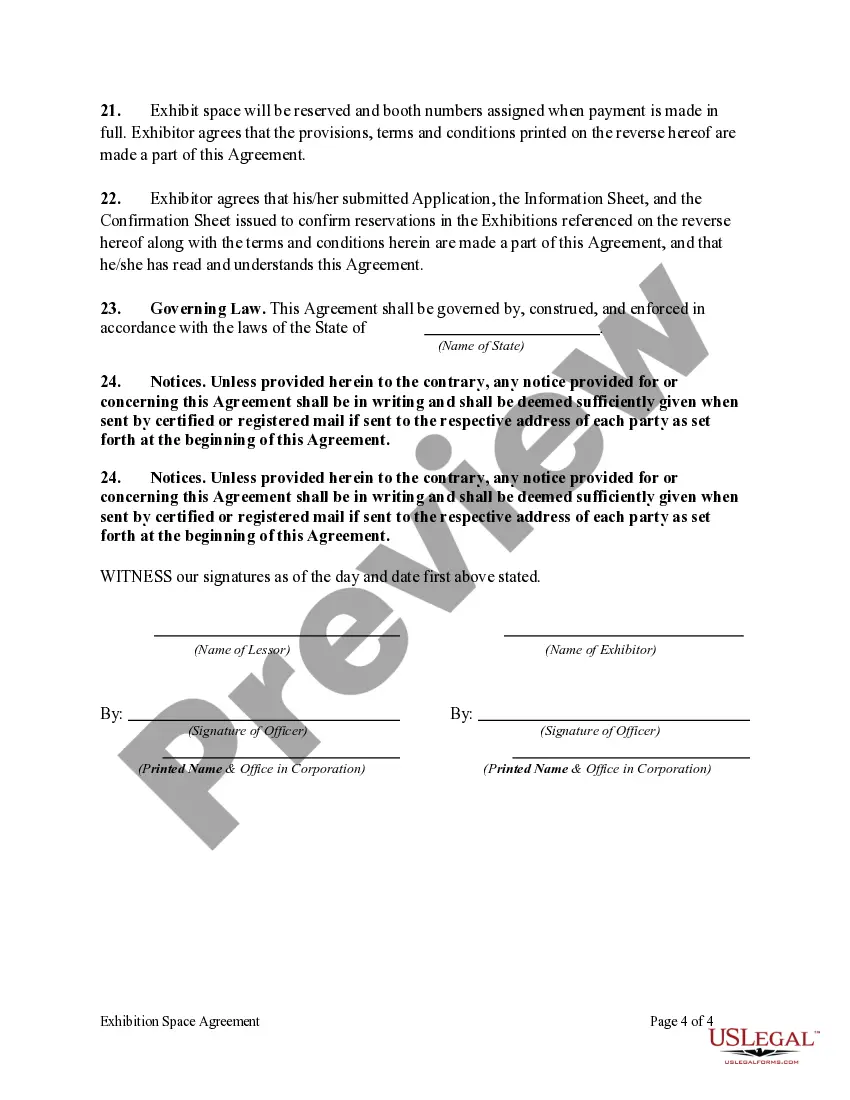
Get your form ready online
Our built-in tools help you complete, sign, share, and store your documents in one place.
Make edits, fill in missing information, and update formatting in US Legal Forms—just like you would in MS Word.
Download a copy, print it, send it by email, or mail it via USPS—whatever works best for your next step.
Sign and collect signatures with our SignNow integration. Send to multiple recipients, set reminders, and more. Go Premium to unlock E-Sign.
If this form requires notarization, complete it online through a secure video call—no need to meet a notary in person or wait for an appointment.
We protect your documents and personal data by following strict security and privacy standards.

Make edits, fill in missing information, and update formatting in US Legal Forms—just like you would in MS Word.

Download a copy, print it, send it by email, or mail it via USPS—whatever works best for your next step.

Sign and collect signatures with our SignNow integration. Send to multiple recipients, set reminders, and more. Go Premium to unlock E-Sign.

If this form requires notarization, complete it online through a secure video call—no need to meet a notary in person or wait for an appointment.

We protect your documents and personal data by following strict security and privacy standards.
Looking for another form?




Form popularity
FAQ
Stock options are only for people While it's usually fine to grant stock options to an individual consultant under the option plan, grants generally can't be made to an entity. If you want to grant options to non-individuals, consult your attorney.
Allotment of ESOP Vest: Vest means the right of the employees to apply for the shares granted to them. There shall be a minimum of one year between the grant of option and vesting of option for the ESOP scheme. Exercise: The exercise period is where the employees can exercise the option of buying the shares.
ESOPs are inflexible in some respects… While ESOPs are flexible in many ways, they are subject to legal constraints. ESOP rules require that contributions be allocated based on relative compensation (ignoring compensation above a certain level) or some more level formula.
The short answer is yes. However, you have to ensure that your offering is compliant with all the relevant regulations in both your and your contractor's country. In some regions, for instance, your contractor may be eligible to receive non-qualifying stock options, but your contractors in other countries may not.
Stock options are often a better fit for startups or early-stage companies that are unprofitable, but have high growth potential. On the other hand, RSUs tend to be more advantageous at larger, well-established companies that are financially stable with predictable stock performance.
However, there are some downsides: Options being worthless if the stock value of the company doesn't grow. The possible dilution of other shareholders' equity when option-holders exercise their stock options. Complex tax implications for ISOs, especially the concept of AMT.
It states that employees can't receive more than $100,000 worth of exercisable ISOs in a given calendar year. Any amount beyond that will be taxed as if the ISOs are NSOs.
Understand the basics of private company stock options Besides the benefits, here are some basics about options that employees need to know: Type of stock options granted: There are typically two types of stock options – Non-qualified stock options (NSOs) and Incentive stock options (ISOs).
