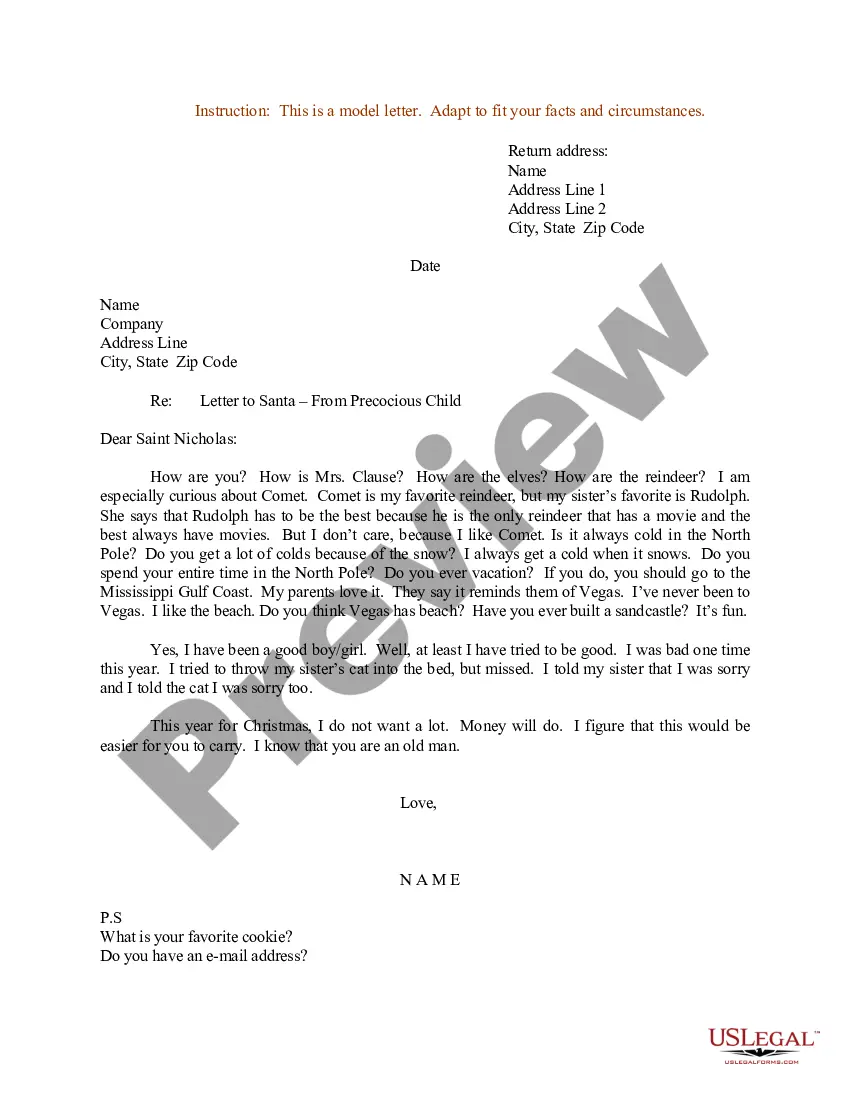
Santa Letter Examples For Older Child In Contra Costa
Description

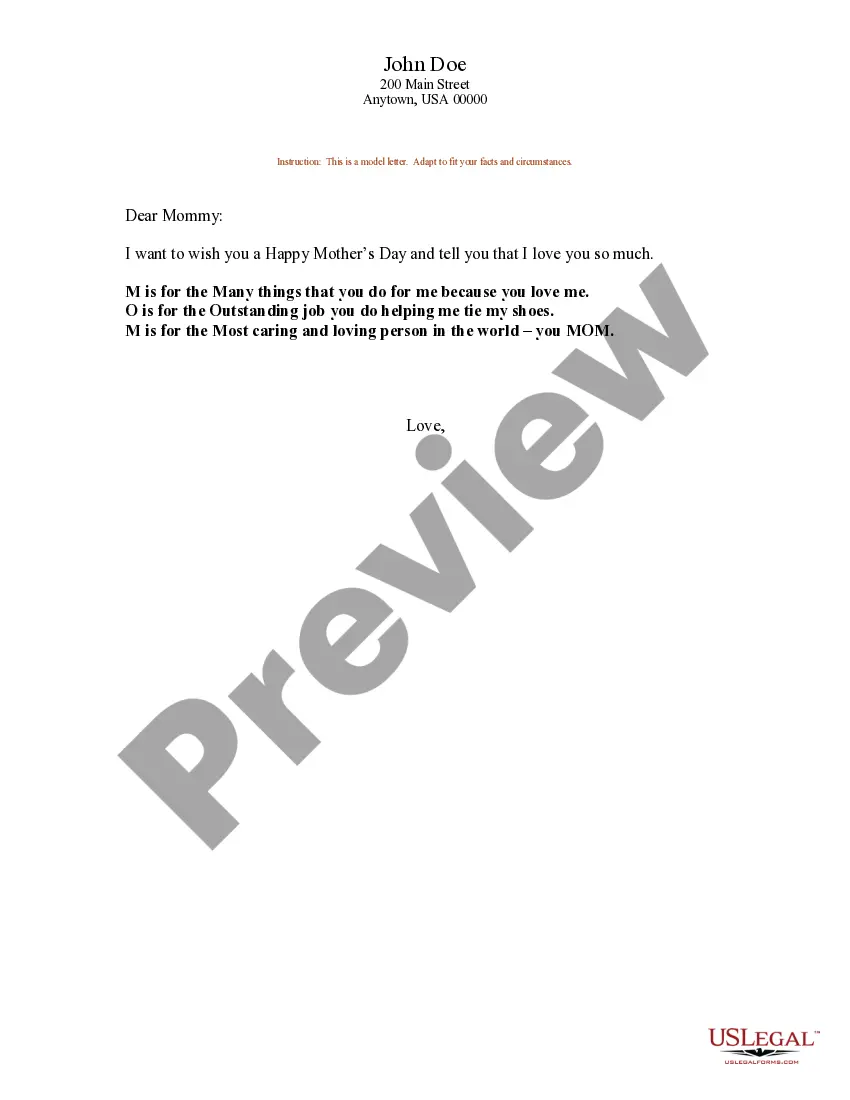
Get your form ready online
Our built-in tools help you complete, sign, share, and store your documents in one place.
Make edits, fill in missing information, and update formatting in US Legal Forms—just like you would in MS Word.
Download a copy, print it, send it by email, or mail it via USPS—whatever works best for your next step.
Sign and collect signatures with our SignNow integration. Send to multiple recipients, set reminders, and more. Go Premium to unlock E-Sign.
If this form requires notarization, complete it online through a secure video call—no need to meet a notary in person or wait for an appointment.
We protect your documents and personal data by following strict security and privacy standards.

Make edits, fill in missing information, and update formatting in US Legal Forms—just like you would in MS Word.

Download a copy, print it, send it by email, or mail it via USPS—whatever works best for your next step.

Sign and collect signatures with our SignNow integration. Send to multiple recipients, set reminders, and more. Go Premium to unlock E-Sign.

If this form requires notarization, complete it online through a secure video call—no need to meet a notary in person or wait for an appointment.

We protect your documents and personal data by following strict security and privacy standards.
Looking for another form?






Form popularity
FAQ
The USPS Operation Santa® program invites everyone in the continental U.S., Hawaii, Puerto Rico and the U.S. Virgin Islands to write letters to Santa. Letters will be posted on USPSOperationSanta without personal identifying information, so others can respond to the holiday wishes.
Yes, of course it's all right for young children to believe in Santa Claus. It's a cultural game of let's pretend that little kids enjoy for several years, until they mature enough to realize that the story isn't plausible. (They typically figure this out when they're somewhere between 7 and 10.)
Christmas After Claus: Keeping it Special When Your Child No Longer Believes Remind them how grown-up they are. Delegate an important Santa-Task. Reveal your magic tricks. Keep your old traditions and give them something to look forward to. Don't forget to remind them to keep the secret.
The key is to approach it with sensitivity and understanding. The timing of talking about the existence of Santa is paramount for some kids. Timing is so important with this, and if you must ruin Christmas for a child, as I did – do it off-season! I highly suggest making it a June conversation and not a December one.
Tell your child Santa is a fictional character people like to believe in – like the Easter Bunny, mermaids, or unicorns. You can stress that this is pretend, and we can choose to believe in it or not. Tell your child some people like to believe and pretend Santa is real.
"What should I write to Santa?" Tell Santa what you do for fun. Tell Santa what you would do if you had a reindeer. Tell Santa what you do to help your mom. Tell Santa about where you live. Tell him about your favorite snacks. Tell Santa what you might leave out for him. Tell Santa how you wrote and sent this letter.
Tell him that he can enjoy the stories around Santa Claus as much as he enjoys fairy tales, novels, and movies. Tell him that, if he wants, he can be a Santa's helper and help get toys to poor kids who might otherwise not get any.
You could share this story with your child like this: “Santa Claus lives in the North Pole. Each year on Christmas Eve, he loads up his big, red sleigh and delivers the toys to every house. Even though these presents are so special, the most important thing about Santa is the excitement and kindness he spreads.
Be Honest and Gentle: If they seem ready, share the truth in a gentle way. You can say something like, ``Santa is a fun tradition that many families enjoy. The spirit of Santa is about giving and kindness.'' Emphasize the Spirit of Christmas: Highlight the values associated with Santa, such as generosity and joy.
Amy Morin is a therapist whose clients ofter ask when to tell their kids the truth about Santa. Morin said there's no magic age or single right way for when parents need to reveal the truth. She said the truth should depend on the parent's values and what they want their child to learn.