Accident And Injury Insurance In Wayne
Description

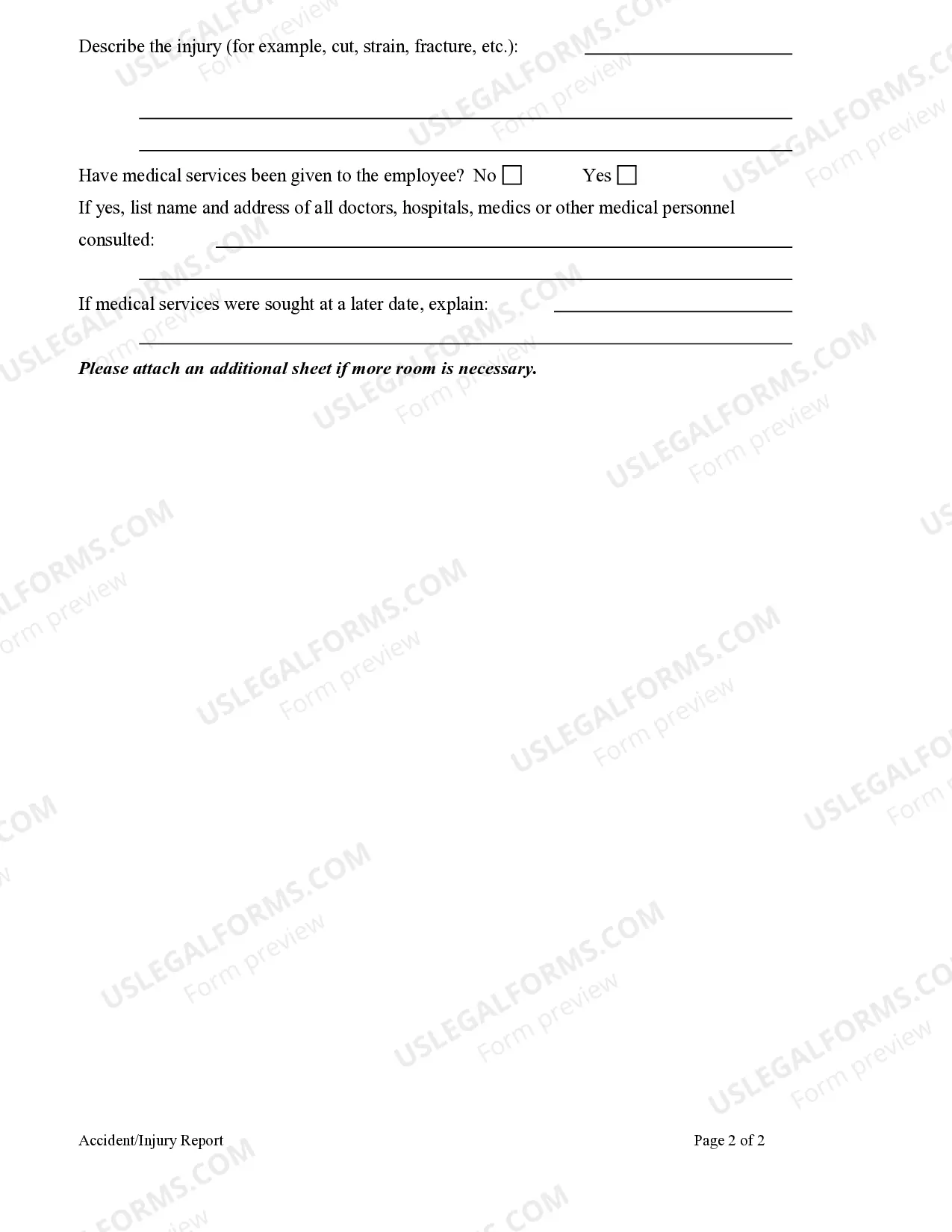
Get your form ready online
Our built-in tools help you complete, sign, share, and store your documents in one place.
Make edits, fill in missing information, and update formatting in US Legal Forms—just like you would in MS Word.
Download a copy, print it, send it by email, or mail it via USPS—whatever works best for your next step.
Sign and collect signatures with our SignNow integration. Send to multiple recipients, set reminders, and more. Go Premium to unlock E-Sign.
If this form requires notarization, complete it online through a secure video call—no need to meet a notary in person or wait for an appointment.
We protect your documents and personal data by following strict security and privacy standards.

Make edits, fill in missing information, and update formatting in US Legal Forms—just like you would in MS Word.

Download a copy, print it, send it by email, or mail it via USPS—whatever works best for your next step.

Sign and collect signatures with our SignNow integration. Send to multiple recipients, set reminders, and more. Go Premium to unlock E-Sign.

If this form requires notarization, complete it online through a secure video call—no need to meet a notary in person or wait for an appointment.

We protect your documents and personal data by following strict security and privacy standards.
Looking for another form?




Form popularity
FAQ
How long after a car accident can you claim injury? StateStatute of Limitations on Car Insurance Claims California 2 years Colorado 3 years Connecticut 2 years Delaware 2 years47 more rows •
Always File a Claim, Regardless of Who Was At-Fault One of the primary questions we receive from clients who have been in an accident is whether they should report the accident to their own auto insurance carrier, particularly when the accident was not their fault. And the answer to that question is: always.
Accident insurance provides benefits if you suffer a covered accidental injury like a severe burn, broken bone, or have to visit an emergency room. It will also cover the diagnostic testing needed to determine if your bone is broken — like for an x-ray.
Always File a Claim, Regardless of Who Was At-Fault One of the primary questions we receive from clients who have been in an accident is whether they should report the accident to their own auto insurance carrier, particularly when the accident was not their fault. And the answer to that question is: always.
Steps to File a Car Insurance Claim After an Accident Step 1: Safety first. Step 2: File a First Information Report (FIR) ... Step 3: Document the Accident. Step 4: Report the Accident to the Insurance Company. Step 5: File a Claim. Step 6: Understand Your Motor Insurance Coverage. Step 7: Complete the Survey and Assessment.
Submit your claim within 30 days after the incident, or as soon as reasonably possible. Submit your claim online. Please submit your claims through our online portal instead of in-person at our service centers. Mail us your original documents. We'll be in touch.
Most insurance companies will allow you to file a claim online or through a mobile app, by phone with one of their agents, or by filling out a claims form and sending it to them via email or fax.
A health insurance claim form has two sections, i.e., Part A and Part B. While Part A is to be filled out by the policyholder, Part B is for the hospital. 2. In Part A of the form, you must fill out your name, residential address, policy number, email ID, phone number, medical history, details of hospitalisation, etc.
Yes, it is possible to sue your own insurance company after a car accident if the other driver has no insurance, or less than an adequate amount to compensation you for your injuries and damages. These benefit options are called Uninsured and Underinsured Motorists Benefits (UM/UIM).
If you need to make a claim contact your insurer as soon as possible and ask them to send you a claim form. They may be able to email this to you to speed things up. Complete the claim form carefully and keep a copy for yourself.
