Accident With Injury In Philadelphia
Description

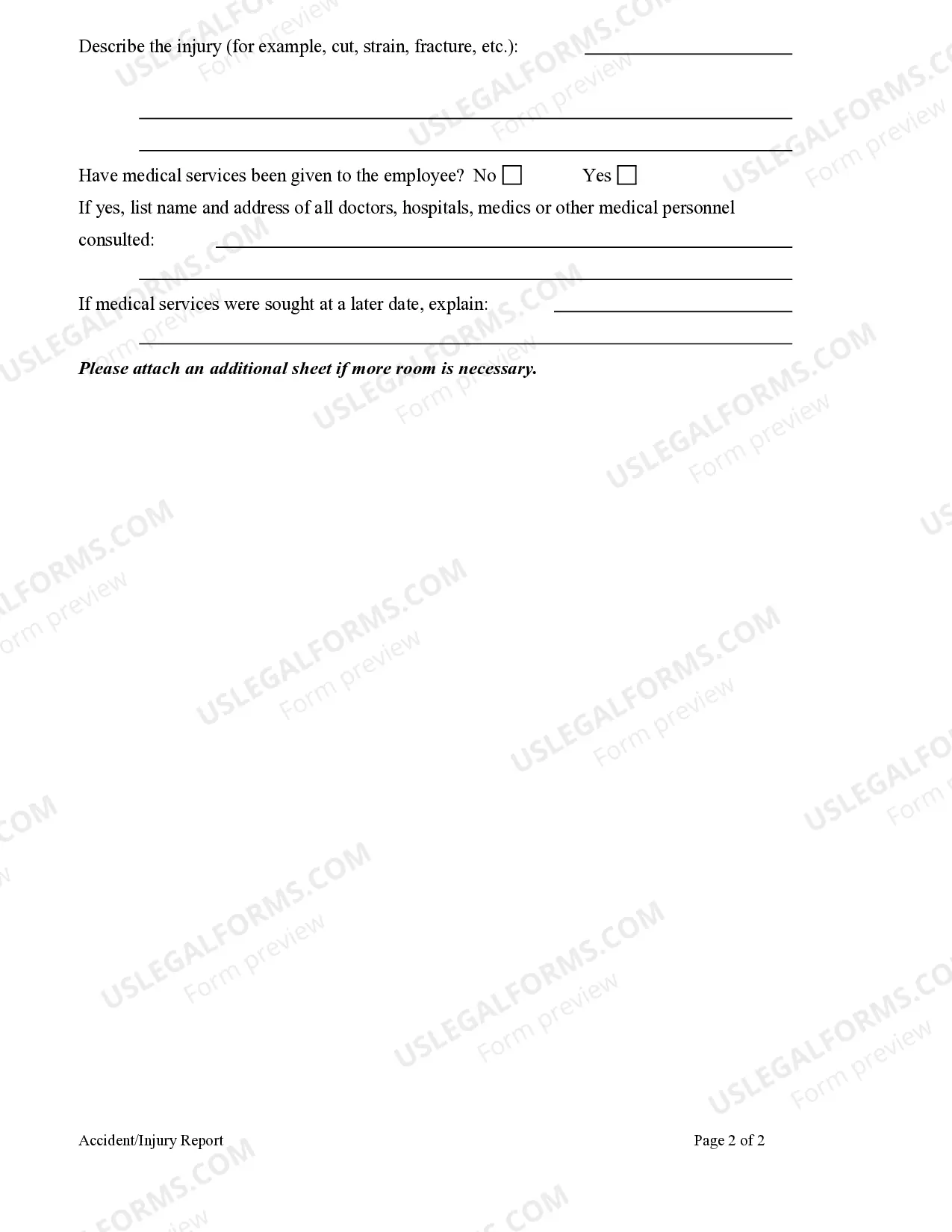
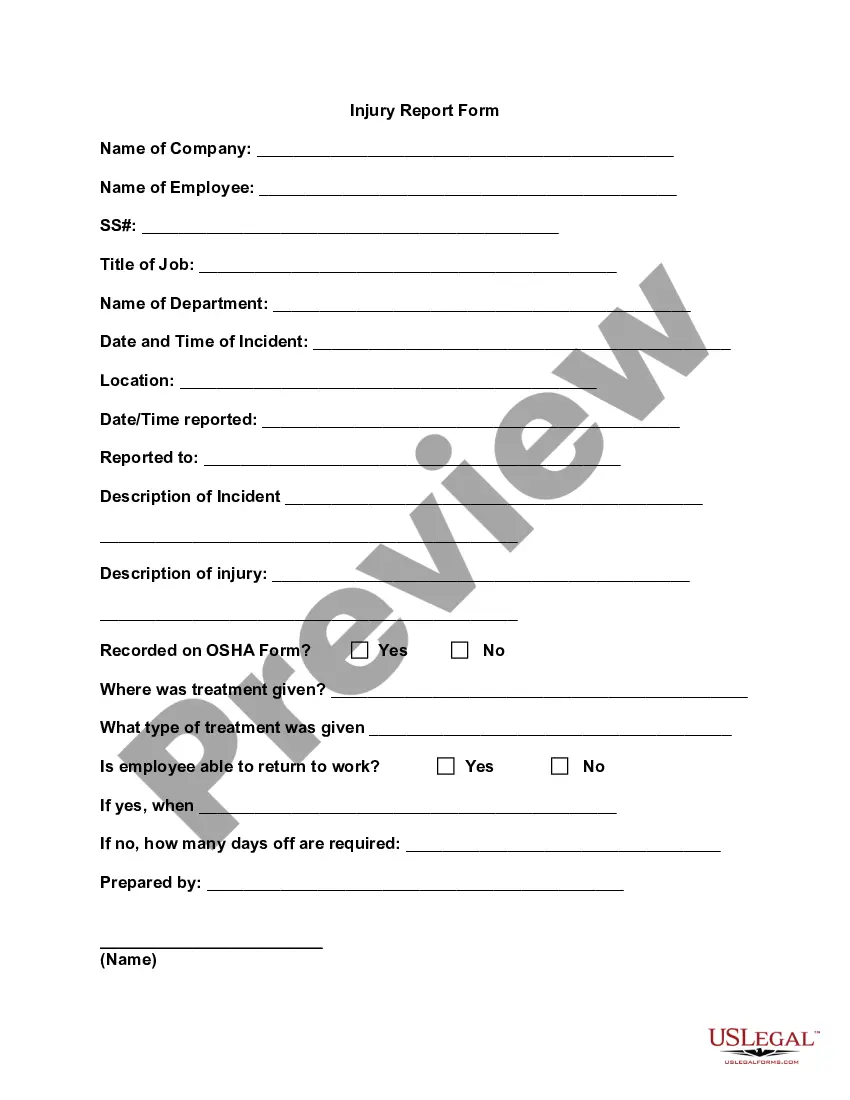
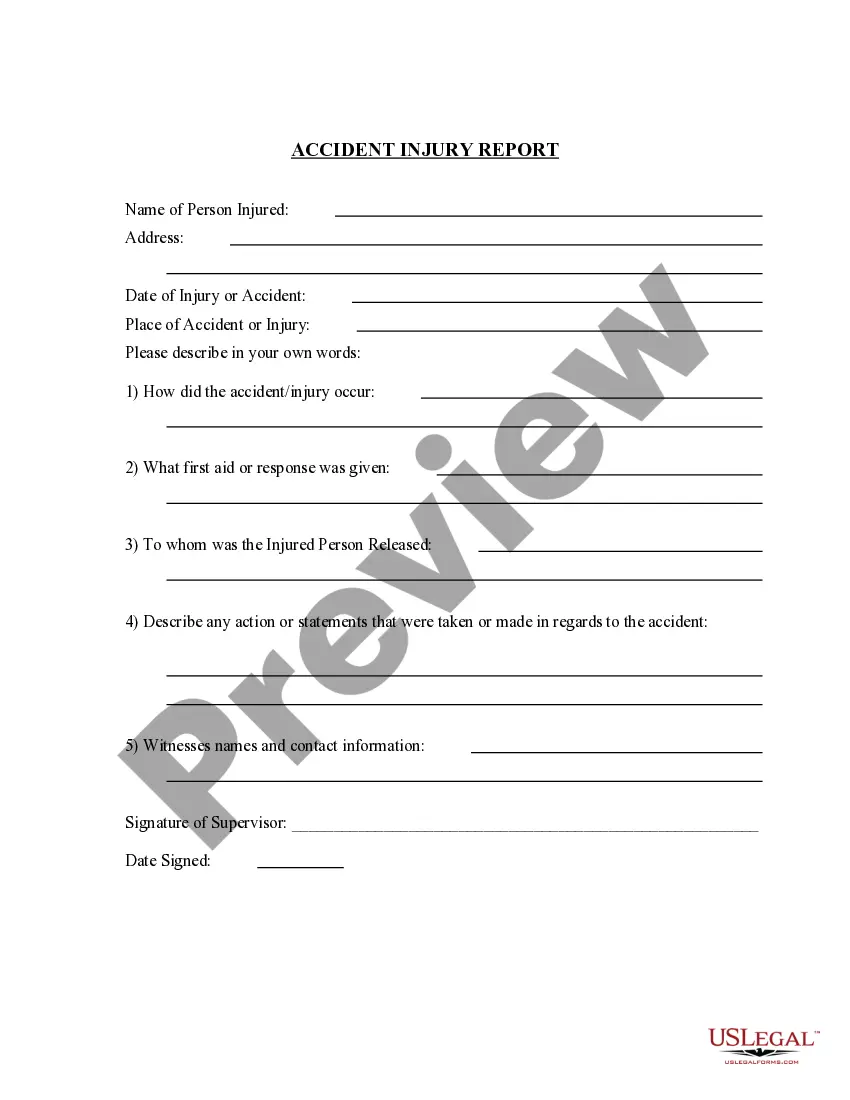
Get your form ready online
Our built-in tools help you complete, sign, share, and store your documents in one place.
Make edits, fill in missing information, and update formatting in US Legal Forms—just like you would in MS Word.
Download a copy, print it, send it by email, or mail it via USPS—whatever works best for your next step.
Sign and collect signatures with our SignNow integration. Send to multiple recipients, set reminders, and more. Go Premium to unlock E-Sign.
If this form requires notarization, complete it online through a secure video call—no need to meet a notary in person or wait for an appointment.
We protect your documents and personal data by following strict security and privacy standards.

Make edits, fill in missing information, and update formatting in US Legal Forms—just like you would in MS Word.

Download a copy, print it, send it by email, or mail it via USPS—whatever works best for your next step.

Sign and collect signatures with our SignNow integration. Send to multiple recipients, set reminders, and more. Go Premium to unlock E-Sign.

If this form requires notarization, complete it online through a secure video call—no need to meet a notary in person or wait for an appointment.

We protect your documents and personal data by following strict security and privacy standards.
Looking for another form?





Form popularity
FAQ
Pennsylvania law requires that you carry Bodily Injury Liability limits of at least $15,000 per-person and $30,000 per-accident. You also must have Property Damage liability limits of at least $5,000.
Reportable Accidents A reportable accident is one involving one or more of the following: Death of a person. Personal injuries which require medical attention.
In Pennsylvania, insurance companies use a comparative negligence system to determine fault in multi-car accidents. This means that each driver's degree of fault is assessed, and their insurance company is responsible for covering damages proportionate to their level of fault.
Broken legs, ribs, arms, ankles, and wrists are common in car accidents. Some car accident victims suffer a broken pelvis. Severity ranges from simple breaks that require a cast to serious breaks or compound fractures that may require surgery to repair.
The definition of a car accident is an event where two or more vehicles collide, or a motorist crashes into a pedestrian or object.
Preserve Evidence. The jury is going to decide your case by looking at the evidence. Get Medical Treatment. Value Your Claim Fully. Don't Be Too Eager. Explain Why the Offer Is Inadequate. Don't Forget Future Damages. Build Your Case. Don't Wait to File Your Case.
Here's how penalties for driving without insurance in Pennsylvania, specifically in the case of a car accident where you're not at fault, work: $300 fine – Civil penalties for uninsured drivers will be charged a $300 fine by PennDOT for a first offense.
Always File a Claim, Regardless of Who Was At-Fault One of the primary questions we receive from clients who have been in an accident is whether they should report the accident to their own auto insurance carrier, particularly when the accident was not their fault. And the answer to that question is: always.
Generally speaking, in Pennsylvania, there is a two-year statute of limitations that applies to any civil action in which an individual seeks to recover damages for personal injuries, or for the death of an individual, caused by the wrongful act or negligence of another person.
Exceptions to the Statute of Limitations Another exception is the discovery rule, which states the victim has two years to file a lawsuit after he or she has discovered he or she was injured by the defendant. Finally, mental incompetence at the time of the crime can also affect the statute of limitations.
