Accident With Injury In Massachusetts
Description

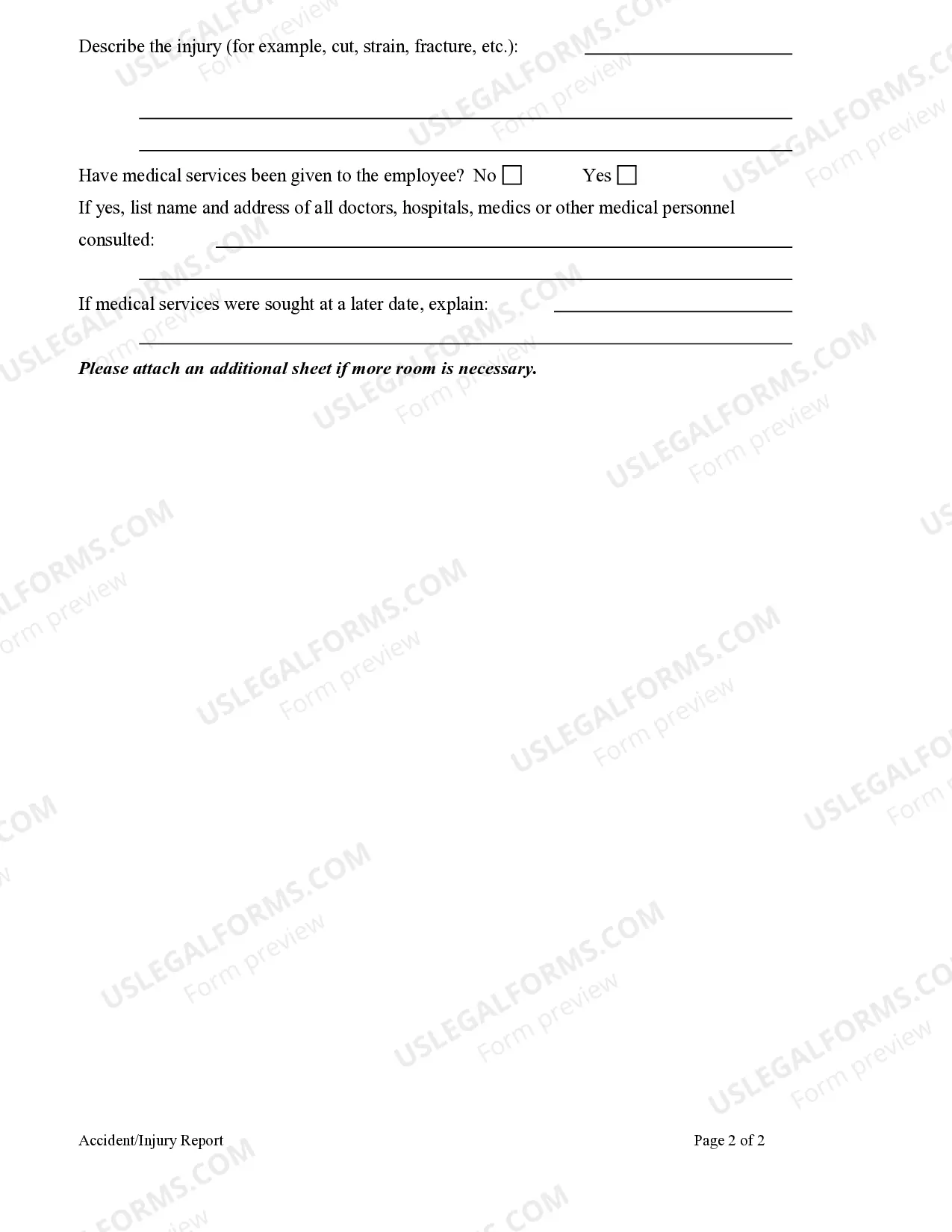
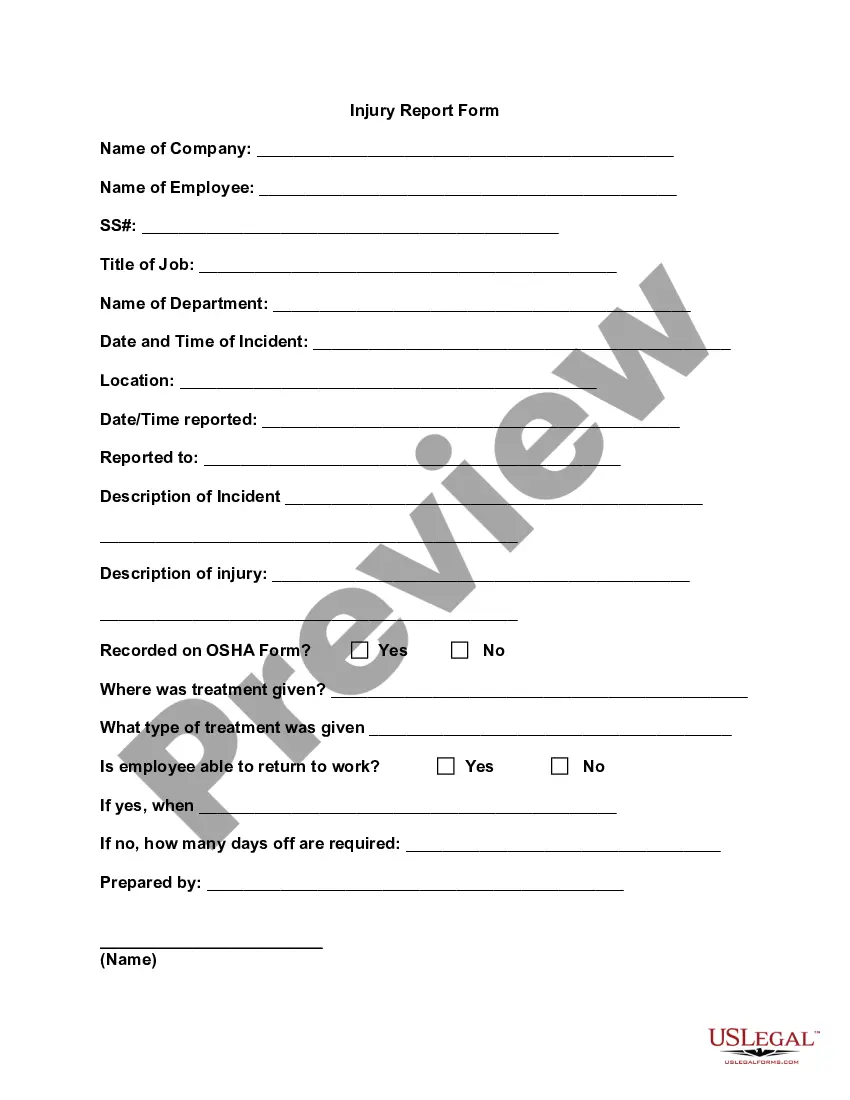
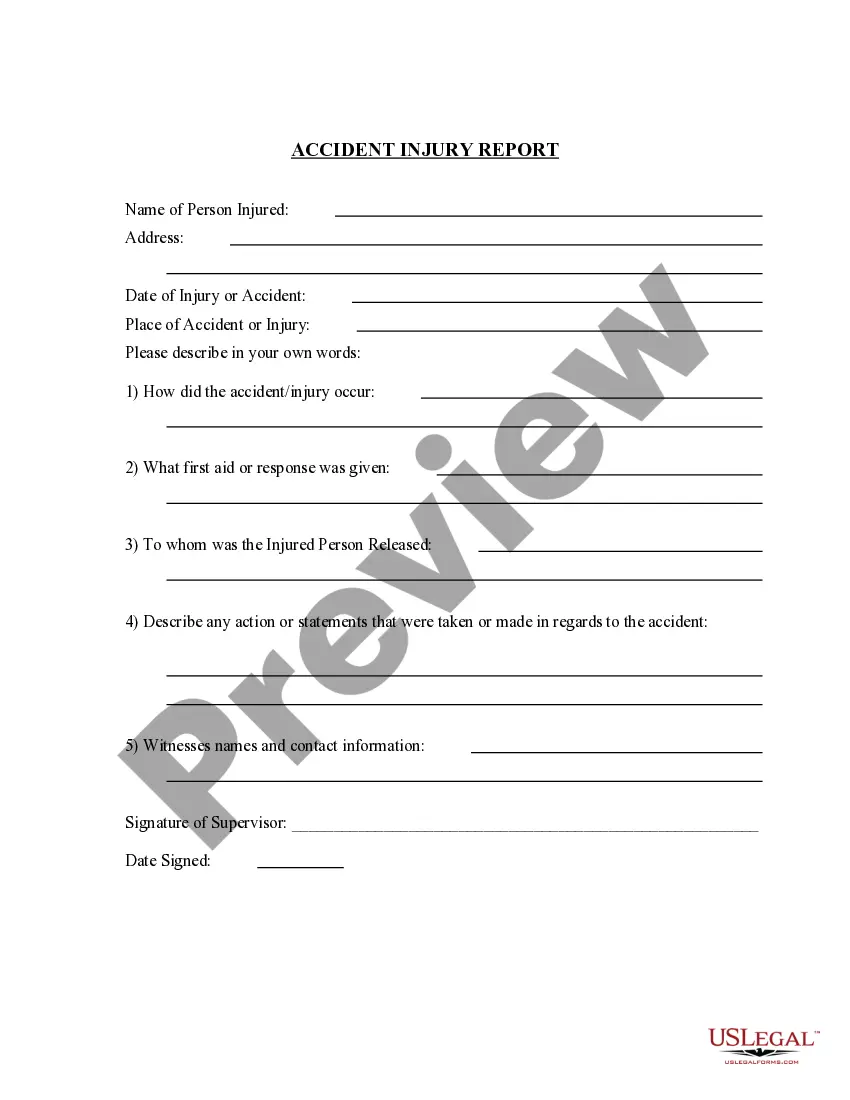
Get your form ready online
Our built-in tools help you complete, sign, share, and store your documents in one place.
Make edits, fill in missing information, and update formatting in US Legal Forms—just like you would in MS Word.
Download a copy, print it, send it by email, or mail it via USPS—whatever works best for your next step.
Sign and collect signatures with our SignNow integration. Send to multiple recipients, set reminders, and more. Go Premium to unlock E-Sign.
If this form requires notarization, complete it online through a secure video call—no need to meet a notary in person or wait for an appointment.
We protect your documents and personal data by following strict security and privacy standards.

Make edits, fill in missing information, and update formatting in US Legal Forms—just like you would in MS Word.

Download a copy, print it, send it by email, or mail it via USPS—whatever works best for your next step.

Sign and collect signatures with our SignNow integration. Send to multiple recipients, set reminders, and more. Go Premium to unlock E-Sign.

If this form requires notarization, complete it online through a secure video call—no need to meet a notary in person or wait for an appointment.

We protect your documents and personal data by following strict security and privacy standards.
Looking for another form?






Form popularity
FAQ
Understanding the Massachusetts Statute of Limitations In Massachusetts, personal injury claims generally have a 3-year statute of limitations. This means you have 3 years from the date of your accident to file a lawsuit in court.
Depending on the state you live in, you typically have three years or less after the accident date to file a claim. If you file later than is mandated, the insurer may have the right to reject your claim.
What Should You Do at the Scene of a Massachusetts Car Accident? Get to Safety. Call 911. Take Pictures and Video. Get Information from Other Drivers. Talk to Witnesses. Get Medical Attention. Request or File an Accident Report. Talk to a Massachusetts Car Accident Lawyer.
In Massachusetts, the statute of limitations for car accident injury lawsuits runs for three years after the accident.
There are five key details of accidents legally required: Full name, address and occupation of the injured person (a) Date and time of the accident (b) Location of the accident (c) Cause and nature of the injury (d) Name, address and occupation of the person giving the notice, if other than the injured person (e).
There is no California law per se about notifying your insurance company after a collision, but your auto insurance policy is a contract. When you signed it, you agreed to the stipulations in the contract, which will almost certainly include the requirement to notify the insurance company promptly after an accident.
Meeting the Tort Threshold In Massachusetts, to file a tort claim for pain and suffering, your medical expenses must exceed $2,000 or you must have severe injuries as discussed above. If you don't meet these criteria, you can't claim for pain and suffering, limiting your compensation.
How Is Fault Determined in Massachusetts? A driver is considered at-fault for an accident if the following requirements are met: The involved driver is more than 50% at fault, as determined by the Standards of Fault. The vehicle involved is a private passenger motor vehicle.
In Massachusetts, you have 3 years to file a personal injury lawsuit. The 3 year window applies to most injury cases in the state.
Massachusetts is a modified comparative fault state, meaning that even if you are partially at fault for causing the car accident, you may still recover some damages. A plaintiff whose fault is greater than 50% is barred from recovery (M.G.L.A. 231 § 85).
